Blackstone Griddle vs Gas Grill: Which Should You Buy?
So you’re standing in your backyard trying to figure out whether to stick with your gas grill or pull the trigger on a Blackstone griddle. I get it. I was in the exact same spot a few weeks ago, and honestly, I went back and forth for longer than I’d like to admit. Then I bought a 36-inch Blackstone in April, and let me tell you, the whole debate kind of shifted for me once I actually started cooking on a flat top.
Here’s the thing: this isn’t really about which one is “better.” They’re completely different tools that happen to both cook food outdoors with propane. It’s more like asking whether a truck or a sports car is better. Depends what you’re trying to do, right? But after using my Blackstone pretty regularly since I got it, I’ve got some real thoughts on when you’d want one versus the other, and why I’ve been reaching for the griddle way more than I expected.
The Fundamental Difference
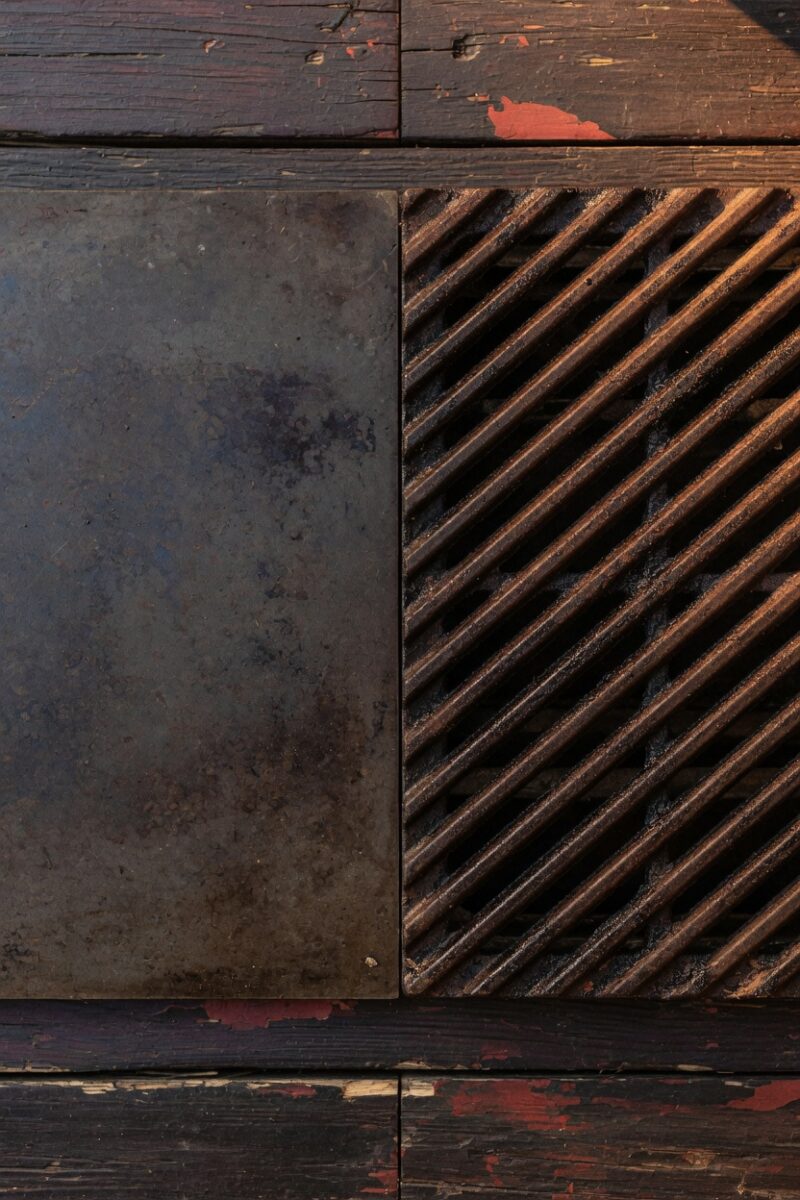
A gas grill cooks with direct flame under grates. You get those char marks, you get flare-ups from dripping fat, and you’re basically cooking food suspended over heat. A Blackstone griddle is a giant flat piece of cold-rolled steel that gets hot and stays hot. You’re cooking on direct contact with a solid surface.
That difference changes literally everything about how you cook. On a grill, small stuff falls through the grates. On a griddle, nothing goes anywhere unless you push it off the side. On a grill, you’re managing hot spots and trying not to burn stuff. On a griddle, you’ve got this massive even heat surface where you can have different temperature zones just by adjusting the burners.
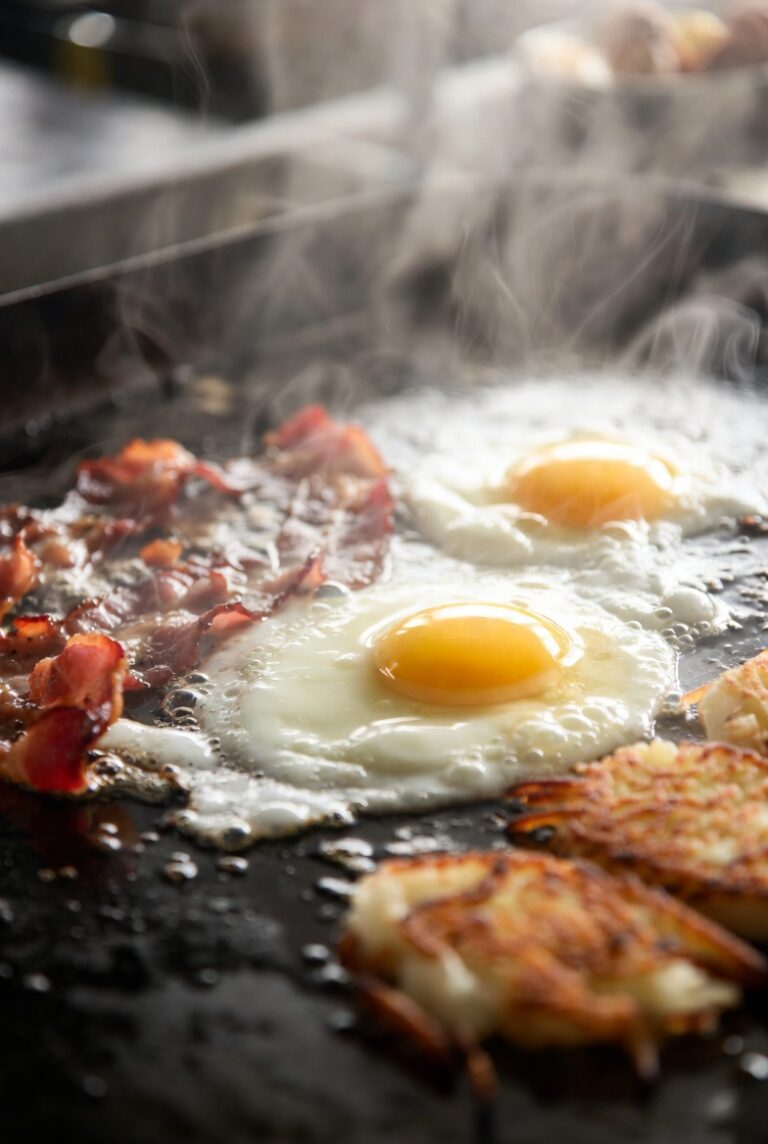
The first time I cracked eggs directly on my Blackstone, it clicked. You just can’t do that on a grill. But you also can’t get that smoky char from direct flame on a flat top. Both things are true.
What a Blackstone Griddle Does Better
Let me start with where the griddle absolutely wins, because this is what surprised me most.
Breakfast
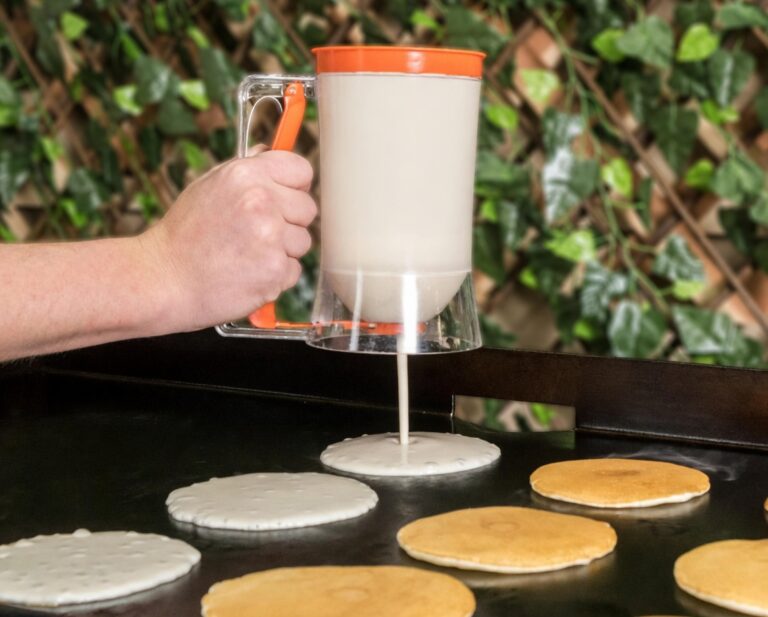
This isn’t even close. If you want to cook a real breakfast outside, a griddle destroys a grill. Eggs, bacon, pancakes, hash browns, all of it happening at the same time on one surface. I’ve been making weekend breakfast on mine and it’s honestly become my favorite thing to cook. Bronco and Gunner have figured out the sound of the igniter and they’re at the back door before the griddle even gets hot.
On a grill? You’re trying to balance a pan on grates, dealing with uneven heat, and basically wishing you’d just stayed inside.
Smash Burgers
If you want an actual smash burger with crispy edges and that crust that comes from pressing beef into a screaming hot flat surface, you need a flat surface. A grill can make a great burger, don’t get me wrong. But it’s a different burger. The griddle burger has this crispy, almost fried texture on the outside that you just cannot replicate on grates.
Same goes for any kind of smashed sandwich or anything where you want direct contact and pressure. Griddle wins.
Small or Delicate Foods
Diced vegetables. Shrimp. Chopped up chicken for fajitas. Rice. Anything that would either fall through grill grates or require you to use a grill basket. On a Blackstone, you just cook it. No special equipment needed. The amount of surface area on a 36-inch griddle means you can have peppers and onions going on one zone, chicken on another, and you’re just moving stuff around with a long handled spatula.
Hibachi-Style Cooking
Fried rice, stir fry, anything where you’re tossing ingredients together with sauce and high heat. This is griddle territory. You’ve got the heat, you’ve got the space, and everything stays put while you work. I made fried rice on mine last week and it finally made sense why hibachi restaurants use flat tops.
Cleanup
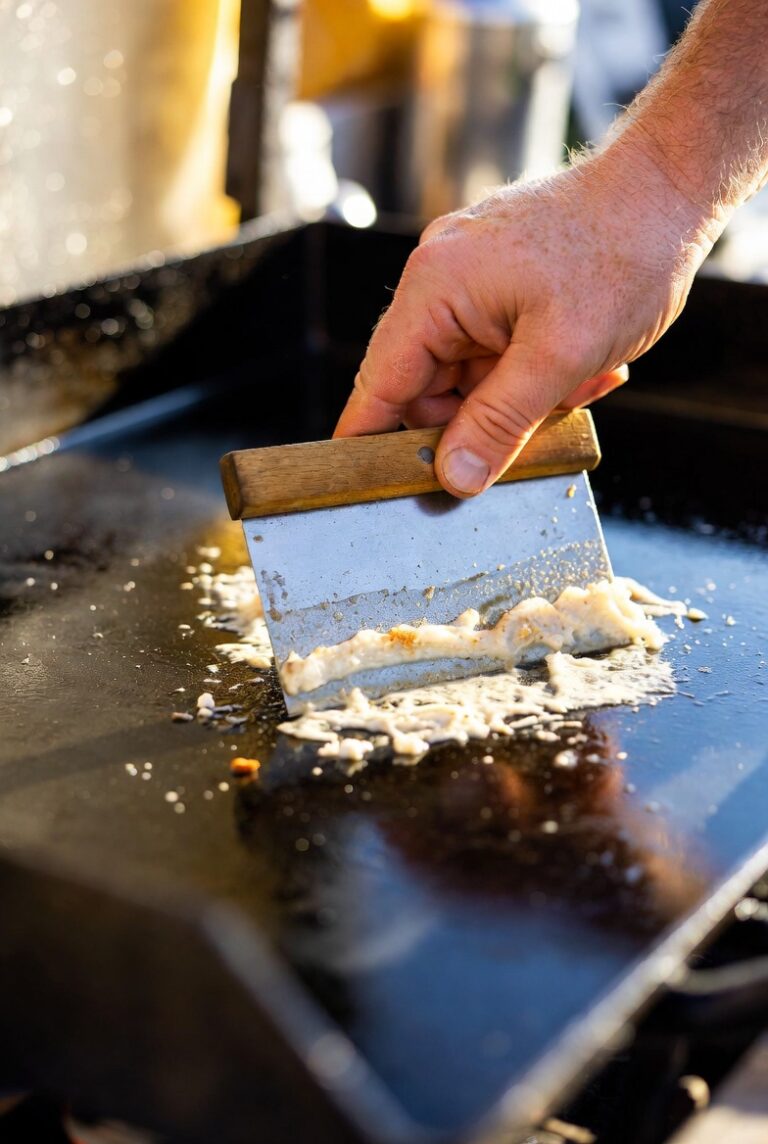
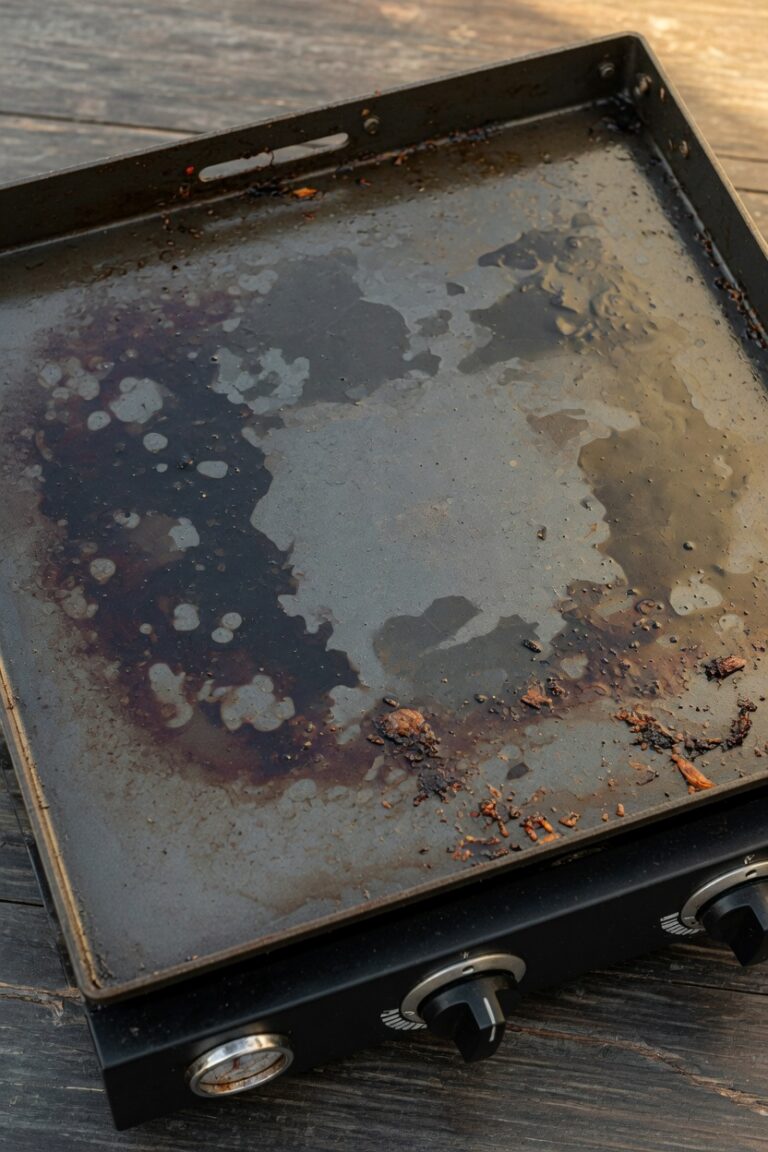
This one’s going to be controversial but I’m saying it anyway: the griddle is easier to clean. Hear me out. On a grill, you’ve got grates to scrub, grease traps to empty, burner covers that get disgusting, and all these nooks where stuff hides. On a griddle, you scrape the flat surface while it’s still hot, wipe it down, and hit it with a thin layer of oil. Takes maybe five minutes and you’re done.
The flat surface is just simpler. There’s nowhere for crud to hide.
If you want the full step-by-step, here’s how I clean my Blackstone after cooking.
What a Gas Grill Does Better
Okay, so the griddle isn’t a magic solution to everything. There are real things a gas grill does that a flat top just can’t match.
That Char and Smoke Flavor
If you want actual grill marks and that smoky flavor that comes from fat dripping onto flames and smoking back up onto the meat, you need a grill. A Blackstone can’t do this. You’re cooking on steel. There’s no flame contact, no smoke, no char lines.
For a steak, this matters. I love a griddle steak and the crust you get is fantastic, but it’s not the same as a grilled steak. They’re different experiences, and if you’re craving that outdoor grilled flavor, the flat top isn’t going to scratch that itch.
Certain Cuts of Meat
Bone-in chicken, thick pork chops, anything where you want to use indirect heat and let it cook slower with the lid closed. Grills have lids for a reason. You can turn them into little ovens and cook stuff low and slow with ambient heat.
A Blackstone has a lid (well, you can get one), but it’s really not the same. It’s designed for high-heat direct contact cooking. You’re not doing a beer can chicken on a flat top.
Whole Vegetables
Corn on the cob in the husk. Whole peppers you want to char. Stuff where you actually want the exterior to get hit with direct flame. You can cook corn on a griddle, but it’s not going to have that charred husk and smoky taste.
Traditional BBQ
If your idea of outdoor cooking is ribs, brisket, or anything that belongs in the barbecue category, you’re not using either of these. But if we’re just talking about weeknight grilling, a gas grill can at least get you in the ballpark of BBQ flavors. A griddle doesn’t even pretend to.
The Real Question: What Do You Actually Cook?
Here’s what it comes down to. Think about what you actually make outside. Not what you imagine yourself making or what you think you should make. What do you really cook?
If it’s mostly burgers, hot dogs, chicken breasts, and vegetables, both will do the job fine. But if you ever make breakfast, if you cook a lot of smaller foods, if you like the idea of fajitas or fried rice or hibachi-style meals, the griddle opens up a whole category of cooking that’s honestly kind of a pain on a grill.
On the other hand, if you’re really into steaks with char marks, if you love grilled bone-in chicken, if the smell of a gas grill firing up is part of the whole experience for you, don’t get rid of your grill thinking a Blackstone will replace it. It won’t. At least not for that stuff.
Can You Have Both?
I still have my gas grill. It’s sitting about ten feet from my Blackstone, and I’m not getting rid of it. Some days I want a grilled steak. Most days lately, I’m firing up the flat top because it’s just easier for the kind of cooking I end up doing.
If you’ve got the space and the budget, having both is pretty great. They’re different enough that they don’t really overlap. But if you’re trying to decide on one or the other, think about your cooking style. The griddle is more versatile for everyday stuff, but the grill does specific things that nothing else can match.
Common Mistakes People Make When Comparing Them
Here’s where people get tripped up when they’re trying to figure this out.
Thinking a Griddle Is Just a Grill Without Grates
It’s really not. It’s a completely different cooking method. You’re not just avoiding things falling through. The whole technique changes. You’re using the thermal mass of the steel, you’re managing oil on the surface, you’re working with direct conductive heat instead of radiant heat. It’s closer to cooking on a giant cast iron pan than it is to grilling.
Assuming You Can’t Get a Good Sear on a Griddle
You absolutely can. A properly heated Blackstone gets screaming hot, and the sear you get on a smash burger or a steak is legit. It’s just a different kind of sear. It’s more of a crust than a char. Both are good. Neither is better. They’re just different.
Thinking Griddles Are Just for Breakfast
Breakfast is amazing on a griddle, but that’s honestly just the beginning. The first time most people use a flat top, they make breakfast because it’s obvious. Then you realize you can make pretty much anything that doesn’t require a grill specifically. Dinner, lunch, appetizers, whatever. The surface area and heat control make it incredibly versatile.
Worrying Too Much About “Authenticity”
Some people get hung up on whether a burger is a “real” burger if it’s not grilled, or whether you’re “really” cooking outside if you’re using a flat top. This is silly. Cook food the way that tastes good and makes sense for what you’re making. A griddle burger is different from a grilled burger, and both are better than whatever take-out option you were considering.
The Practical Stuff: Cost, Space, and Maintenance
Let’s talk logistics for a second.
A decent gas grill and a decent Blackstone griddle are in the same general price range. You can spend anywhere from a few hundred bucks to way too much on either one. My 36-inch Blackstone was right around what I’d pay for a mid-range gas grill with similar BTU output.
Mine actually came from Costco, but if you’re shopping online, the 36-inch Blackstone Omnivore is the same size class and the one I’d point you toward.
Space-wise, they take up about the same footprint. A 36-inch griddle is big, but so is a four-burner gas grill. Neither one is fitting on a tiny apartment balcony.
Maintenance is different. A grill needs the grates cleaned, burners checked, grease managed. A griddle needs to be seasoned and kept from rusting. The griddle maintenance is simpler in my opinion, but it’s also more frequent. Every time you cook, you’re scraping and re-oiling. It becomes routine pretty quick, but it’s something you do every single time.
Propane usage feels about the same to me so far. Both are pretty efficient for what they do.
Frequently Asked Questions
Can you get grill marks on a Blackstone?
No. It’s a flat surface. No grates means no grill marks. You can get a fantastic sear and crust, but if the visual of grill marks matters to you, you need an actual grill.
Is a Blackstone healthier than a gas grill?
It’s basically the same. Both use high heat and propane. On a grill, fat drips away from the food. On a griddle, fat stays on the surface but you can push it to the grease trap. You can cook healthy or unhealthy food on either one.
Which one heats up faster?
A gas grill heats up almost instantly since you’re just heating air and grates. A Blackstone takes about 10-15 minutes to properly preheat because you’re heating a big slab of steel. You want that steel evenly hot before you start cooking. It’s not a huge difference, but the grill technically wins on preheat time.
Can you use a Blackstone in the winter?
People do. It takes longer to heat up in cold weather since you’re fighting to get that steel surface hot, and you’ll use more propane. I got mine in April so I haven’t tested this personally yet, but from what I understand, it works fine, just less efficiently. Same goes for a gas grill in winter though.
Does a griddle use more propane than a grill?
Probably slightly more since you’re heating a big steel surface instead of just grates, but it’s not a dramatic difference. I haven’t noticed my propane costs going up significantly.
What if I only have space for one?
Think about what you cook most often. If it’s breakfast, stir-fries, smash burgers, fajitas, and everyday quick meals, I’d go with the griddle. If it’s steaks, chicken, and traditional grilled foods where you really want that char and smoke, stick with the grill. For most people doing weeknight cooking, the griddle is probably more useful day-to-day.
My Take After a Few Weeks
I thought the Blackstone would be a fun addition for making breakfast outside. What actually happened is it became my default for most outdoor cooking. It’s just easier. Everything stays on the surface, the heat is even and controllable, and cleanup is quick with a good metal scraper. Sierra made a comment the other day about how I’m using it more than the grill, and she’s right.
But I’m keeping the grill. There are times when I want a grilled steak with char marks and that smoky flavor. That’s not going away. The griddle didn’t replace my grill. It just took over a bunch of cooking I was either doing inside or struggling with on the grill.
If you’re on the fence, think less about which one is “better” and more about which one fits the cooking you actually do. They’re both great at different things. The griddle just happens to be great at more of the everyday stuff I find myself making.
And if you’ve got space for both, even better. But if I’m being honest, the Blackstone has been getting way more action around here lately. I even grabbed a weather resistant cover to keep it protected since it’s living outside full-time now.