How to Season a Blackstone Griddle for the First Time
So you just unboxed your brand new Blackstone griddle and you’re ready to cook up some smash burgers, right? Not so fast. That shiny steel surface needs to be seasoned first, and I’m not talking about salt and pepper. When I got my 36-inch Blackstone back in April, I almost made the mistake of firing it up and throwing food on it immediately. Thank god I watched a few videos first, because seasoning your griddle properly is literally the most important thing you’ll do with it.
Here’s the deal: that steel cooktop is bare metal. If you cook on it without seasoning, your food will stick like crazy, it’ll rust within days, and you’ll basically ruin the whole thing before you even get started. Seasoning creates a protective layer that’s naturally non-stick and keeps moisture away from the steel. It’s not complicated, but you need to do it right the first time.
I’m going to walk you through exactly how I seasoned mine when I first got it, what worked, what I learned, and how to avoid the mistakes that’ll waste your time and oil.
What You’ll Need
Before you start, gather everything so you’re not running around mid-process:
- Your Blackstone griddle (obviously)
- High smoke point cooking oil – I used Blackstone’s own griddle seasoning oil, but you can also use flaxseed oil, canola oil, vegetable oil, or avocado oil
- Paper towels – buy a full roll, you’ll use more than you think
- Long-handle tongs to hold the paper towels without burning your fingers
- Heat-resistant gloves if you have them
- Dish soap and water for the initial clean only
- A sponge or cloth
One thing about the oil: do NOT use olive oil, butter, or anything with a low smoke point. You’re going to be heating this thing way up, and low smoke point oils will just burn and get sticky instead of creating that smooth seasoned surface you want.
Step-By-Step: How To Season Your Blackstone For The First Time
Step 1: Clean Off The Factory Coating
Your griddle comes with a protective coating from the factory to prevent rust during shipping and storage. This needs to come off completely before you season.
Turn on all your burners to low heat and let the griddle warm up for about 10-15 minutes. If you hit the igniter and get nothing but clicking, stop here and sort that out first — here’s how to fix a Blackstone that won’t light. It’s almost always a quick fix. You’ll see the coating start to loosen up. Turn off the burners and let it cool down enough that you can touch it without burning yourself.
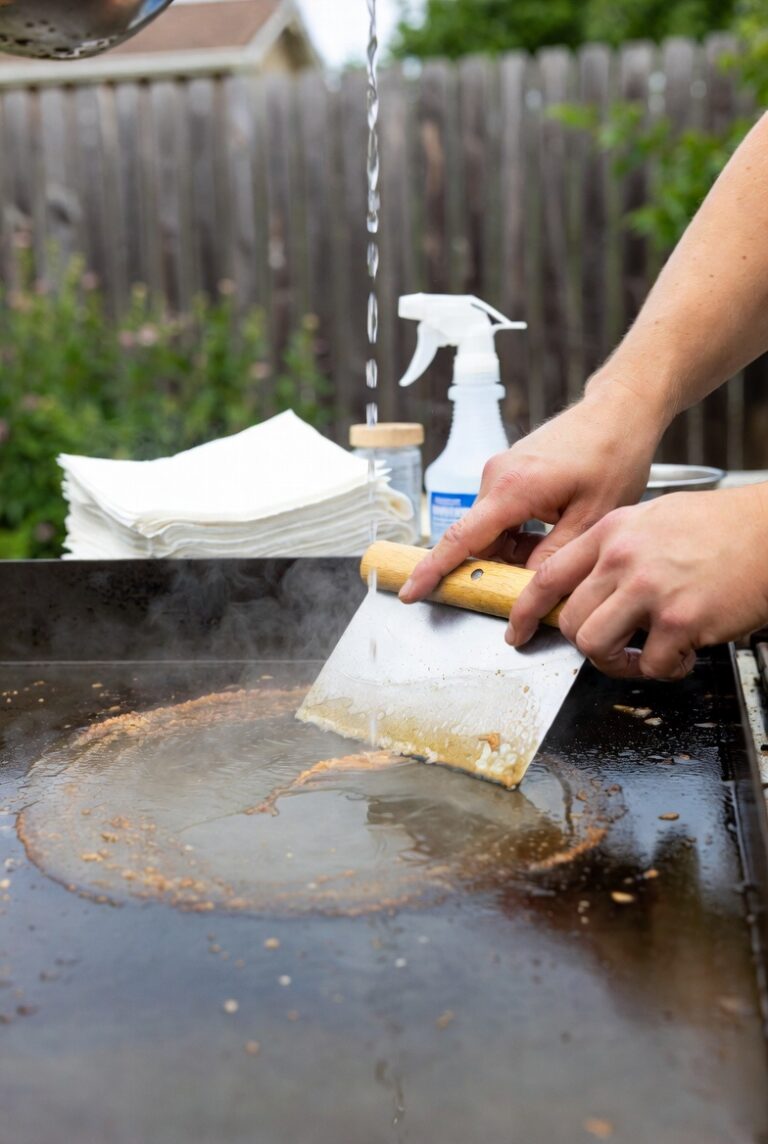
Once it’s cooled a bit, use dish soap, warm water, and a sponge to scrub the entire surface. This is literally the ONLY time you should ever use soap on your Blackstone. Get all that coating off. When I did mine, the water turned grayish from the coating coming off, so you’ll know it’s working.
Rinse it thoroughly with clean water and dry it completely with paper towels. Make sure there’s no soap residue left anywhere.
Step 2: Heat The Griddle To Burn Off Any Remaining Residue
Turn all burners to high and let the griddle heat up for about 15-20 minutes. You might see some smoke as any remaining factory coating burns off. The surface might look slightly discolored or blotchy – that’s normal. You want the entire surface screaming hot before you start applying oil, and having a dual probe infrared thermometer makes it easy to check that you’re hitting that 400-500°F sweet spot across the entire surface.
This is when Bronco and Gunner started losing their minds, by the way. They now associate the sound of the Blackstone igniting with food, so every single time I fire it up, they’re out there staring at me like I’m about to grill them steaks. I wasn’t even cooking anything yet, but try explaining that to two dogs.
Step 3: Apply Your First Layer Of Oil
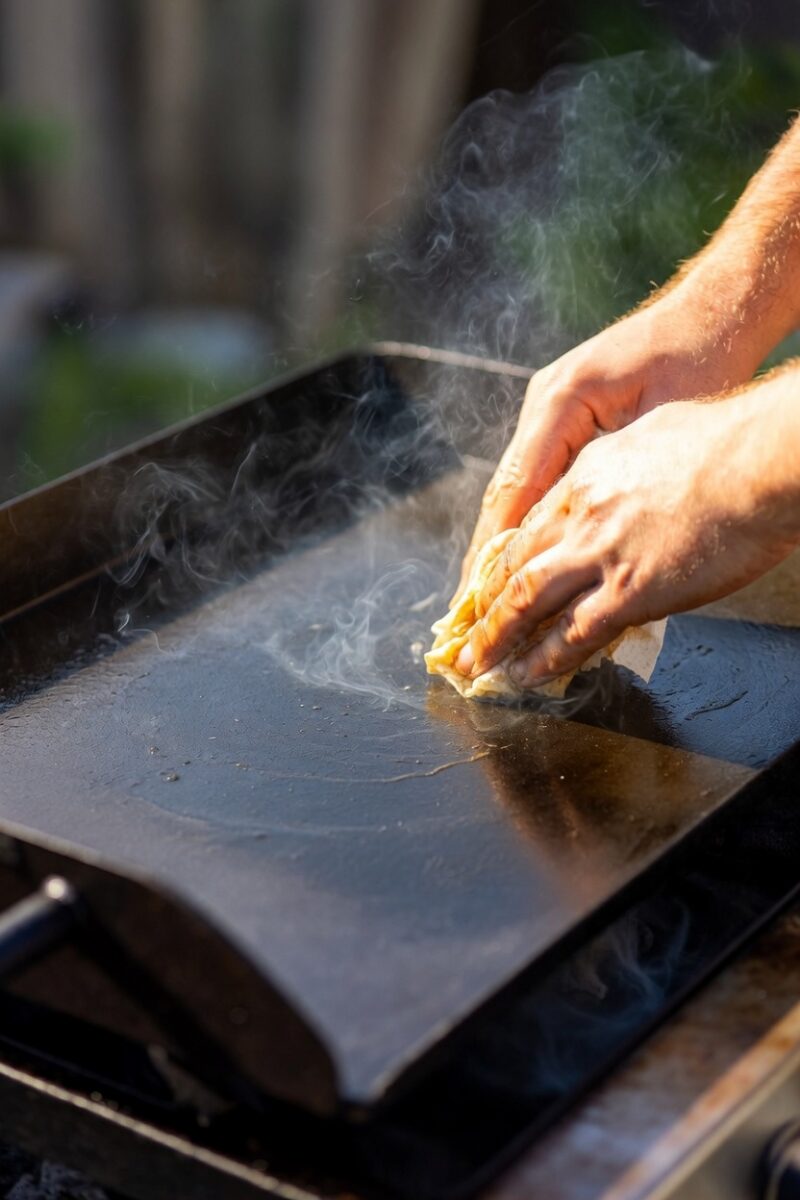
Keep the burners on high. Pour about two to three tablespoons of oil directly onto the hot griddle surface. Use your tongs to hold a bunched-up paper towel and spread that oil everywhere. Cover every single inch of the cooking surface, including the edges and the sides if you can reach them safely.
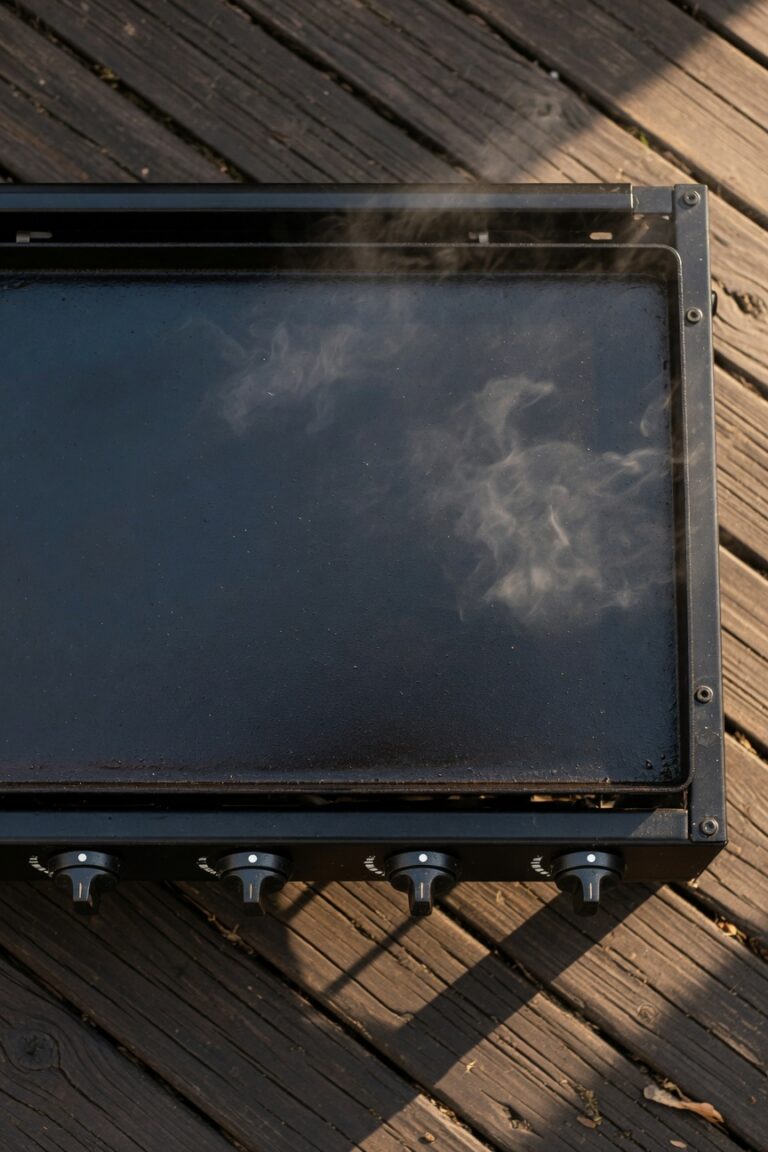
Here’s what’s going to happen: the oil is going to smoke. A lot. That’s exactly what you want. The oil is bonding to the steel through a process called polymerization, which sounds fancy but basically means the oil is baking into the metal and creating a hard, protective coating.
Spread the oil in thin, even layers. The key word here is THIN. When I did my first coat, I used too much oil in some spots and it got a little puddle-y. Those spots took forever to cure and ended up slightly sticky. You want the thinnest possible layer that still covers everything.
Keep spreading the oil around until it stops smoking. This takes about 10-15 minutes. The surface will start to change color, turning slightly darker or even a bit bronze. That’s the seasoning layer forming.
Step 4: Repeat The Oil Application Multiple Times
Once your first layer stops smoking and has darkened up, you’re going to repeat the exact same process. Pour another couple tablespoons of oil, spread it thin with paper towels held by tongs, and let it smoke off completely.
Do this at least 3-4 more times. So you’re looking at 4-5 total coats of seasoning for your first session. I did four coats on mine, and honestly I wish I’d done five or six because the more you do initially, the better your base layer is.
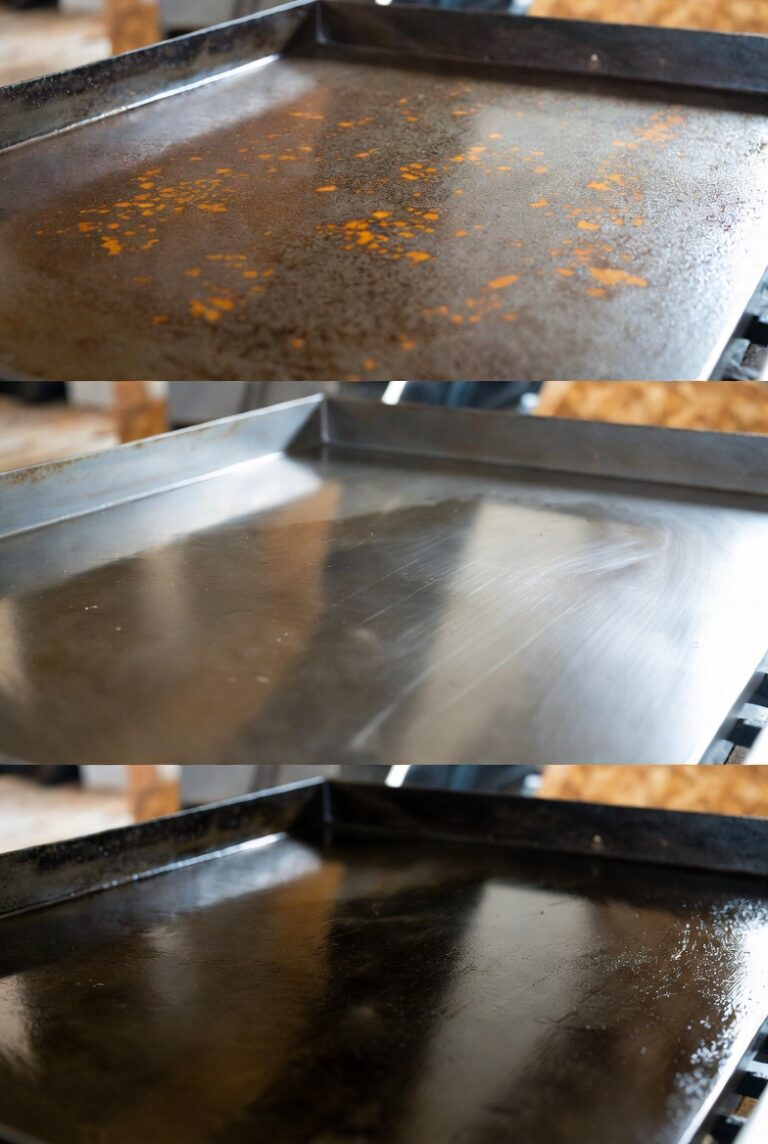
Each coat builds on the last one. The griddle surface will get progressively darker with each application. By the time I finished my fourth coat, my shiny steel griddle had turned this deep brownish-black color. That’s exactly what you want to see.
The whole process took me about an hour and a half from start to finish. Don’t rush it. Each layer needs to fully smoke off before you add the next one.
Step 5: Let It Cool And Admire Your Work
After your final coat has smoked off completely, turn off all the burners and let the griddle cool down naturally. Don’t throw water on it or try to speed up the cooling process.
Once it’s cool, you’ll have a dark, slightly glossy surface that’s ready to cook on. Run your hand across it – it should feel smooth, not sticky or tacky. If it feels sticky, you either used too much oil or didn’t let one of the coats fully cure before adding the next one.
What Temperature Should You Season At?
Keep your burners on high throughout the entire seasoning process. You want the griddle surface somewhere between 400-500°F. If your Blackstone has a temperature gauge, great. If not, don’t worry about it – just keep it on high.
The high heat is what causes the oil to polymerize properly. If you season at too low a temperature, the oil will just sit there and get gummy instead of bonding to the steel. Trust me, crank it up and let it smoke.
Pro Tips From My First Seasoning Session
Here’s what I learned doing this for the first time that would have been helpful to know beforehand:
Do this outside with good ventilation. The smoke is intense, especially on those first couple coats. I did mine in my backyard in East Hampton, and I’m glad I did because Sierra would have killed me if I’d attempted this anywhere near the house. Even outside, there was a solid smoke cloud happening.
Use way less oil than you think. Seriously, a little goes a long way. Two tablespoons is enough to cover a 36-inch griddle if you spread it thin. More oil doesn’t mean better seasoning – it just means sticky spots that take forever to cure. I keep my AVO bulk avocado oil handy since it has a high smoke point and lasts forever, plus having a restaurant squeeze bottle set makes it way easier to control exactly how much oil you’re applying without making a mess.
Don’t skip coats to save time. I know an hour and a half seems like a long time when you just want to cook, but this is your foundation. A well-seasoned griddle from day one will perform better and require less maintenance down the road.
Keep paper towels moving. Don’t let your paper towel sit in one spot too long or it might start to break down from the heat. Keep it moving across the surface in long, smooth strokes.
The griddle will change colors and that’s fine. You might end up with spots that are darker than others, especially after the first seasoning. That’ll even out over time as you cook on it. Don’t stress about getting a perfectly uniform color right away.
Have extra oil on hand. I went through about half a bottle of oil seasoning my 36-inch griddle. Make sure you have enough before you start because you don’t want to run out halfway through.
Common Mistakes People Make (That I Almost Made)
Not cleaning off the factory coating properly. If you leave that coating on and just start seasoning over it, you’re building your foundation on junk. Take the time to get it all off with soap and water first.
Using the wrong oil. I saw someone online say they used butter for their first seasoning. Don’t do that. Butter has a smoke point of like 350°F and it’ll just burn and create a mess. Stick with high smoke point oils.
Applying too much oil. This is the number one mistake. Thick coats of oil don’t cure properly and you end up with sticky, gummy spots that flake off when you cook. Thin layers are the secret.
Not letting each coat fully cure. Wait until the smoking completely stops before adding your next coat. If you rush it, you’re putting new oil on top of uncured oil and it won’t bond right.
Seasoning at too low a temperature. Keep those burners on high. Medium heat might seem safer, but it won’t get the oil hot enough to polymerize correctly.
Only doing one or two coats. You need multiple thin coats to build up a durable seasoning layer. One coat isn’t enough protection for the steel.
Trying to cook immediately after seasoning. I mean, you can technically cook right after your final coat cools down, but I’d recommend doing one more quick oil wipe and heat session before your first cook. It just helps ensure everything is sealed up nice.
How Do You Know If You Did It Right?
A properly seasoned Blackstone should be dark in color – anywhere from bronze to dark brown to almost black. The surface should be smooth and slightly glossy, not sticky or tacky. When you run your hand across it, it should feel slick.
When you cook on it for the first time, food shouldn’t stick much at all. I made scrambled eggs the morning after I seasoned mine, and they slid around like I was cooking on Teflon. That’s when I knew I’d done it right.
If you see any rust spots or if food sticks like crazy on your first cook, your seasoning didn’t take properly and you’ll need to strip it down and start over. But if you follow these steps, that shouldn’t happen.
What About Re-Seasoning Later?
You’ll need to do light seasoning after each cook to maintain that non-stick surface. That’s just a quick oil wipe while the griddle is still warm. But that full multi-coat seasoning process we just went through? You hopefully only have to do that once at the very beginning.
If your seasoning gets damaged or starts flaking off in spots, you can do touch-up seasoning on just those areas. You don’t necessarily have to season the entire griddle again unless you really mess it up or it sits unused for a long time and develops rust.
Frequently Asked Questions
How long does the first seasoning take?
Plan for about 90 minutes to two hours from start to finish, including the initial cleaning, heating, and 4-5 coats of oil. Don’t rush it.
Can I use olive oil to season my Blackstone?
No. Olive oil has too low a smoke point and will burn before it properly polymerizes. Stick with oils that can handle high heat like canola, vegetable, flaxseed, or avocado oil.
Do I need to season the Blackstone if it says it’s pre-seasoned?
Some newer models claim to come pre-seasoned from the factory. I’d still do at least 2-3 coats of seasoning myself before cooking on it. You want a really solid base layer, and factory seasoning is usually pretty minimal.
Why is my griddle sticky after seasoning?
You used too much oil or didn’t let the coats fully cure before adding the next layer. The good news is you can fix this by heating the griddle back up to high heat and letting the sticky oil finish curing, or by wiping it down with a thin layer of fresh oil and heating it until it stops smoking.
What’s the best oil for seasoning a Blackstone?
I used Blackstone’s branded seasoning oil and it worked great, but honestly canola oil, vegetable oil, or flaxseed oil all work fine. The most important thing is that it has a high smoke point above 400°F.
Can I season my Blackstone in the garage?
Only if you have really good ventilation, like an open garage door and maybe a fan. But honestly, the amount of smoke this produces, you’re better off doing it outside. I did mine in the backyard and I’m glad because the smoke was no joke.
How often do I need to re-season my griddle?
After this initial seasoning, you’ll do a light seasoning after every cook – just a thin layer of oil wiped on while the griddle is still warm. You shouldn’t need to do another full multi-coat seasoning session unless the surface gets damaged or rusty.
Do I season the entire griddle or just the cooking surface?
Focus on the flat cooking surface, but I also hit the edges and the front lip where grease runs off. You don’t need to season the bottom or the burners or anything like that, just the steel top.
Can I cook on my Blackstone right after seasoning?
Technically yes, once the final coat has cured and the griddle has cooled down. But I’d recommend waiting until your next cooking session and doing one more quick heat-and-oil wipe before you cook. It just ensures everything is fully set.
Final Thoughts
Seasoning your Blackstone for the first time is honestly one of those things that seems intimidating until you actually do it, and then you realize it’s pretty straightforward. It’s just oil and heat, repeated several times until you build up that protective layer.
The biggest thing is not rushing it. Give each coat time to fully cure before adding the next one. Use thin layers of oil. Keep the heat cranked up. And do it outside unless you want your house to smell like a smokehouse for three days.
I spent about two hours on my first seasoning session, and it was absolutely worth it. That 36-inch griddle has been performing like a champ since day one. Food doesn’t stick, cleanup is easy, and there’s not a spot of rust anywhere on it.
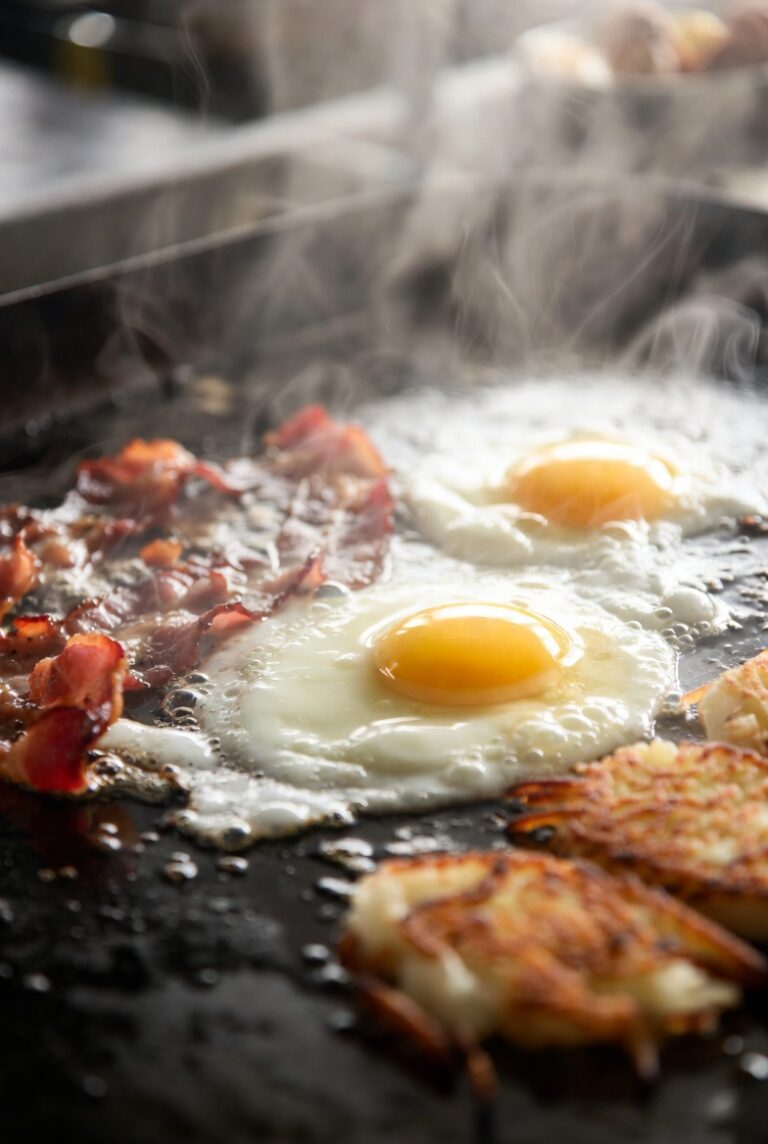
Now that your griddle is properly seasoned, you’re actually ready to cook. And trust me, that first breakfast you make on a freshly seasoned Blackstone is going to blow your mind. The wait is worth it.
Just don’t be surprised when every dog in the neighborhood shows up in your backyard the second you fire it up. Bronco and Gunner have apparently spread the word.