Blackstone Griddle Cover 36 Inch: Complete Guide 2024
Look, I want to be upfront about something before we get into this. My 36-inch Blackstone from Costco came with the official cover included, which I didn’t fully appreciate until I started looking at what that cover costs separately. We’re talking close to a hundred bucks. So when people ask me whether a real cover is worth it versus just throwing a tarp over it or buying some cheap generic off Amazon, I have a pretty strong opinion — and it’s not based on buyer’s remorse. It’s based on watching what happens when people don’t protect their griddle properly.
My neighbor two doors down bought the same griddle around the same time I did. Didn’t get the cover. Used a tarp for the first month. I watched that tarp blow into his yard twice and saw him safety-pin it to the side shelf.
So here’s everything I know about protecting a 36-inch Blackstone the right way.
Why You Actually Need a Real Cover for Your 36-Inch Blackstone
The griddle top is steel. Really good steel that holds heat like crazy and cooks incredibly evenly, but still steel. And steel plus moisture equals rust. It’s not complicated science.
Here in Connecticut, the humidity alone in spring and summer can start causing problems if the griddle isn’t protected. You don’t even need rain. Morning dew sitting on an unprotected griddle overnight is enough to start the process, especially on the corners and edges where the seasoning might be a little thinner.
What Makes a Good 36-Inch Blackstone Cover Different
Not all griddle covers are the same, and the differences actually matter.
Material That Actually Repels Water
The official Blackstone cover is made from heavy-duty polyester that’s actually waterproof, not just water-resistant. There’s a difference. Water-resistant means light rain mostly beads off. Waterproof means you can have a full Connecticut thunderstorm and the griddle stays dry underneath. The UV-resistant coating matters too — my backyard gets direct sun all afternoon and covers that aren’t UV-treated start breaking down faster than you’d think.
The Fit Actually Matters
Generic covers say they fit a 36-inch griddle, but they’re usually designed to fit any flat-top grill in that general size range. The official Blackstone cover is cut specifically for the Blackstone 36-inch shape, including the side shelves and the grease management system in back.
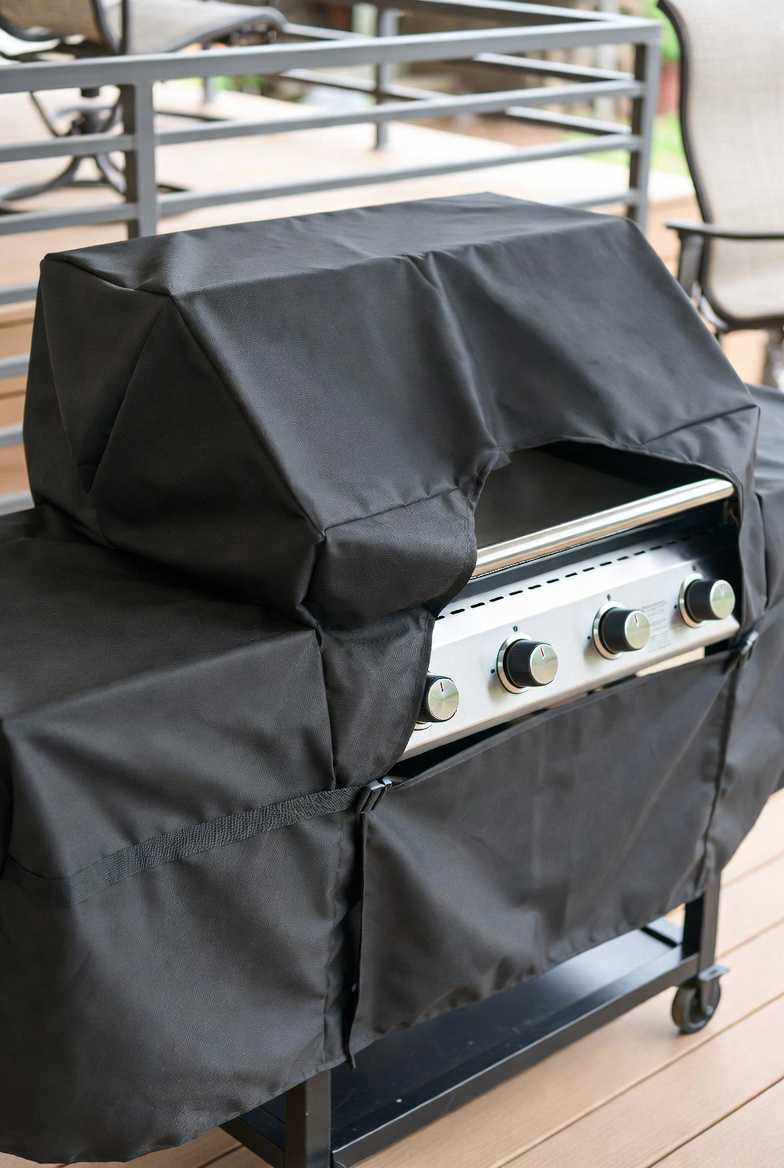
When you put it on, it drops right into place. The elastic hem pulls snug all the way around with no gaps at the corners where rain could sneak in and no excess fabric flapping in the wind and catching air like a sail.
Hard Top vs Soft Cover
Blackstone makes both a hard cover and a soft cover for the 36-inch. The hard cover has a rigid top that sheds rain and snow instead of letting it pool. It’s also got better structure, so it doesn’t flop around when the wind picks up. The soft cover is cheaper and easier to store when you’re not using it, but it doesn’t hold up as long and you have to be more careful about water pooling on top.
Sizing: Making Sure You Get the Right Cover
This seems obvious but I’m going to say it anyway. Blackstone makes griddles in several sizes — 17-inch, 22-inch, 28-inch, and 36-inch. When you’re shopping for covers, especially on Amazon where there are a million generic options, make absolutely sure you’re getting one that specifically fits your Flat Top.
The official cover for the 36-inch measures about 62 inches wide by 24 inches deep by 14 inches tall. That accounts for the main cooking surface plus both side shelves.
If you have the 36-inch with the air fryer attachment or any add-ons, double-check the dimensions. You might need a different size or a cover designed for that configuration.
Step-By-Step: How to Actually Use Your Blackstone Cover
This is going to sound basic because it’s literally just putting a cover on a griddle, but there’s a right way to do it that makes the cover last longer and protects the griddle better.
Step 1: Let the Griddle Cool Completely
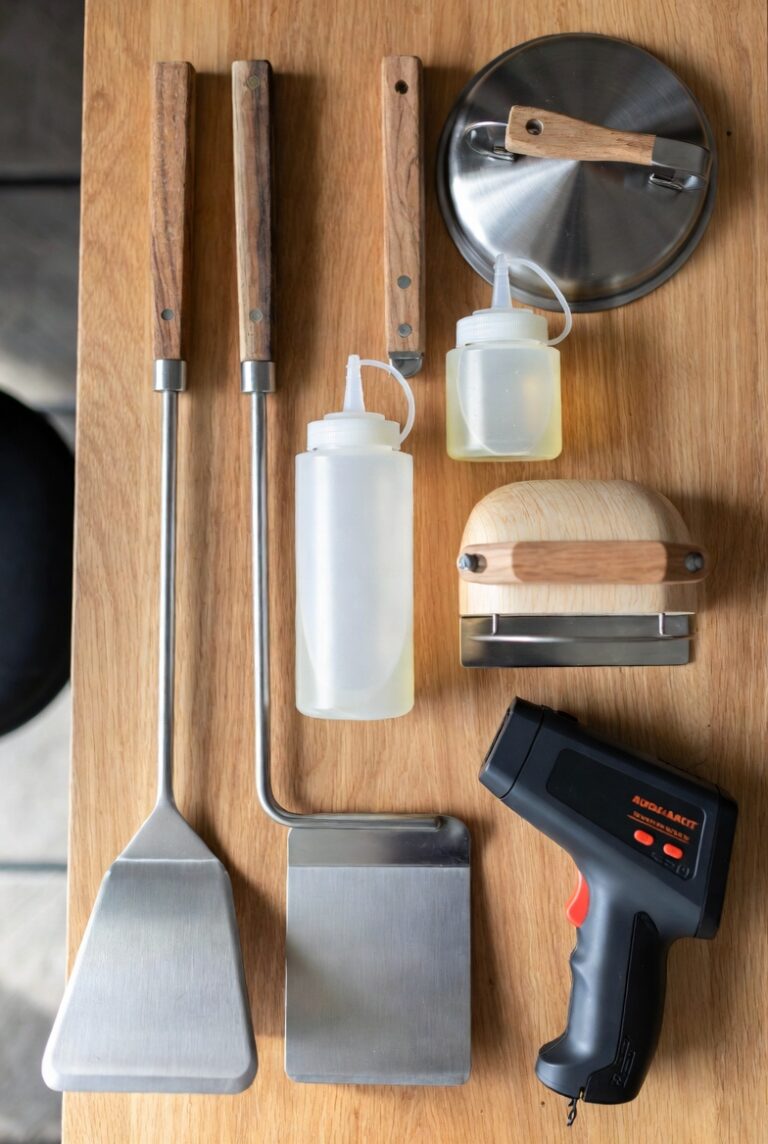
Non-negotiable. I don’t care how impatient you are or how dark it’s getting or how badly the mosquitos are biting. Wait until the griddle is completely cool to the touch. I keep a dual probe infrared thermometer hanging next to my griddle so I can check the surface temperature before covering — it’s also invaluable for knowing when the griddle is properly preheated before cooking.
Putting a cover on a hot or even warm griddle does two bad things. First, it can damage the cover material. Second, it traps heat and moisture, creating condensation inside the cover that sits on your griddle top and causes rust. I usually cook dinner, clean the griddle, then leave it uncovered for at least an hour before covering.
Step 2: Make Sure the Griddle Top Is Dry
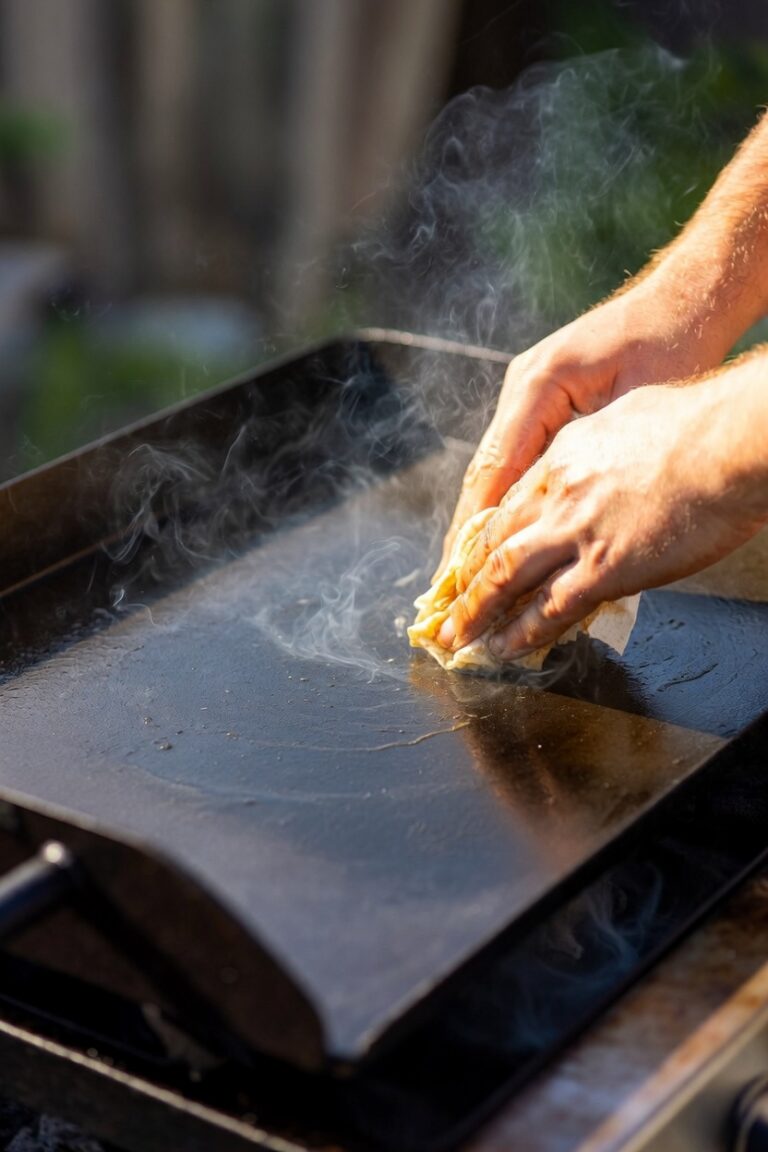
After cleaning, do a final wipe-down with a dry paper towel. You want zero moisture on that surface before the cover goes on. If you live somewhere humid, the griddle can pick up a light layer of condensation just from sitting out while it cools — quick wipe before covering solves it.
Step 3: Put the Cover On from Back to Front
Start at the back where the grease trap is and work toward the front. This makes it easier to get everything lined up, especially around the side shelves. The elastic hem should pull down and under the edge of the griddle on all sides — snug enough that it wouldn’t easily lift off, but not stretched to its limit.
Step 4: Secure Any Straps or Ties
The hard cover doesn’t have straps because it fits tight enough on its own. But if you’re using a soft cover, it probably has straps or buckles. Use them. Every time. The first real wind will educate you quickly if you skip this step.
Step 5: Check It After Bad Weather
After any major storm or heavy wind, take thirty seconds to go out and verify the cover is still properly positioned. It can save you from discovering debris or rust damage the next time you want to cook.
Pro Tips I Learned the Hard Way
These are things I wish someone had told me before I bought my first cover.
Apply a Light Coat of Oil Before Long-Term Storage
Even with a perfect cover, if you’re not going to use the griddle for a while, put a super thin coat of oil on the cooking surface first. Not a full seasoning layer, just a light wipe of vegetable oil or Blackstone’s griddle conditioner. This gives extra rust protection during storage. I keep restaurant squeeze bottles filled with different oils right next to my griddle, which makes it easy to apply a quick protective coating whenever needed—they’re also perfect for everything from pancake batter to sauces while you’re cooking.
I haven’t needed to do extended storage yet since I bought mine in April and I’ve been using it constantly, but this is the advice I keep seeing from people who’ve had their Blackstones through multiple seasons.
Don’t Store Other Stuff on Top of the Covered Griddle
It’s tempting to use that big flat covered surface as extra storage space. Don’t. Even with the hard cover, putting weight on top can eventually cause the cover to sag or warp. Plus, if whatever you’re storing has a sharp edge, you could puncture the cover material.
Clean the Cover Itself Occasionally
Pollen, tree sap, bird droppings, dust, all that stuff builds up on the cover over time. Every few weeks, take the cover off and give it a quick spray with the hose. Let it dry completely before putting it back on.
If you’ve got stubborn stains or tree sap, a little mild dish soap and a soft brush will clean it right up. Don’t use harsh chemicals or abrasive scrubbers that might damage the waterproof coating.
Have a Backup Plan for Your Backup Plan
Even with the best cover, there are going to be times when extra protection helps. If you know a massive storm is coming, or if you’re leaving town for a week, I throw an additional tarp over the whole setup. The cover protects the griddle directly, and the tarp is insurance against anything crazy.
Common Mistakes People Make with Griddle Covers
I’ve made several of these myself or watched other people make them, so learn from our collective stupidity.
Buying Based Only on Price
I get it. You just dropped three or four hundred bucks on the griddle itself. Another hundred for a cover feels like insult to injury. But a cheap cover that doesn’t actually protect your griddle is money wasted twice.
There are decent third-party covers that cost less than the official Blackstone cover. I’m not saying you have to buy the official one. But read reviews, check the specs, and make sure it’s actually going to do the job.
Leaving the Grease Trap Attached
Most covers are designed to go over the griddle with the grease trap removed or pushed back. I left mine attached the first time and the cover didn’t sit right.
Covering a Dirty Griddle
If you cover your griddle with food residue still on it, you’re creating a buffet for bugs and small animals. Also, decomposing food creates moisture, which creates rust.
Clean your griddle properly after every use. Scrape it, wipe it down, do a light oil coating if needed. Then cover it. In that order.
Forgetting About It for Months
A cover isn’t a magic force field. If you cover your griddle in May and don’t look at it again until September, there’s a decent chance you’ll find problems when you uncover it.
Even if you’re not using the griddle, check on it every couple weeks. Pull the cover, make sure everything looks good, wipe down any moisture, then re-cover.
What About Generic Covers vs Blackstone Official
Since I got the official cover with my griddle, I can speak to what it does well without having an axe to grind either way.
The official Blackstone hard cover for the 36-inch runs around ninety to a hundred dollars separately. Generic covers on Amazon range from thirty to sixty dollars.
The official cover fits better — it’s made for the exact dimensions of the Blackstone 36-inch. The material is noticeably thicker. Blackstone’s warranty and customer service will back it up if there’s a problem.
Generic covers are hit or miss. Some people swear by certain brands and say they’ve held up great through multiple seasons. Others report fit issues, water resistance problems, or material that breaks down faster than expected. The problem is you don’t know which kind you’re getting until you’ve already bought it.
My honest take: if the cover isn’t included with your griddle and you can swing the cost, get the official one. You know it’ll fit, you know it’s designed specifically for your griddle, and you won’t be guessing about the quality. If budget is tight, read reviews from people who specifically say they’re using it on a Blackstone 36-inch before buying anything generic.
Frequently Asked Questions
Can I leave my Blackstone 36-inch griddle outside all year with just a cover?
Blackstone says yes, the griddles are designed for outdoor use year-round with a proper cover. I’m in Connecticut, so I’m going to find out this winter how well that works with snow and freezing temps. From what I’ve read, the key is making sure the griddle is completely dry and lightly oiled before covering for extended winter storage. Some people also put a layer of cardboard or foam board on top of the griddle under the cover for extra insulation and moisture absorption.
How long does a Blackstone cover last?
I can’t answer this from personal experience since I’ve only had mine since spring, but based on reviews and forums, the official hard cover seems to last anywhere from three to five years with proper care. Soft covers and cheaper generic covers might need replacing every one to two years. UV damage, weather, and how well you maintain the cover all affect its lifespan.
Will a 36-inch cover fit the Blackstone 36-inch with the hood attachment?
No, the standard cover is designed for the flat griddle without a hood. If you’ve got the hood or air fryer attachment, you need a specific cover designed for that configuration. Blackstone makes separate covers for griddles with hoods. Make sure you’re buying the right one.
Can I use my griddle in the rain if I take the cover off?
Technically yes, but I wouldn’t recommend it. A little drizzle isn’t going to hurt anything while you’re actively cooking, but heavy rain will cool your griddle unevenly and make temperature control difficult. Plus, you’re going to be miserable standing out there in the rain trying to flip burgers. If it starts raining while you’re cooking, you can finish up, but I wouldn’t start a cook in the rain on purpose.
Do I need to bring my griddle inside during winter?
Not necessarily. If you’ve got a good cover and proper shelter, the griddle can stay outside. Some people bring theirs into a garage or shed for winter, which is fine too if you have the space. The main thing is protecting it from moisture. If you’re in an area with brutal winters, indoor storage might be easier than worrying about snow and ice building up on the cover.
What if my cover rips or gets a hole?
Small holes or tears can be patched with outdoor fabric repair tape or patches. Most hardware stores sell repair kits specifically for outdoor furniture covers that work fine on griddle covers. If the damage is extensive or the waterproof coating is compromised over a large area, you’re better off replacing the cover than trying to patch it back together.
Should I cover my griddle after every single use?
Yes. Every time. Even if you’re planning to use it again the next day. Even if the weather forecast is perfect. It takes thirty seconds to put the cover on and it prevents moisture, dust, pollen, and bugs from getting on your cooking surface. The only exception is if the griddle is still hot, then obviously you wait for it to cool first.
Final Thoughts on Protecting Your 36-Inch Blackstone
I lucked out having the cover come with my griddle, and watching what happened to my neighbor’s uncovered Blackstone made me appreciate it a lot more than I might have otherwise. Six weeks to rust spots from a tarp situation. That’s not a lot of time to undo careful seasoning work.
Your Blackstone is an investment. A hundred bucks for a cover — whether it came bundled or you’re buying it separately — is a small fraction of what the griddle itself costs. Every time Sierra and I are having breakfast out on the deck, or I’m doing burgers for friends, or just making a quick dinner after work, that griddle is delivering. The cover is part of why it keeps delivering consistently.
Get the right cover. Use it every single time. Your griddle will thank you by not developing rust spots and by being ready to perform every time you fire it up. And once you get into griddle cooking, that’s going to be way more often than you originally planned.