Blackstone Camping Recipes: 4 Easy Griddle Meals for Outdoors
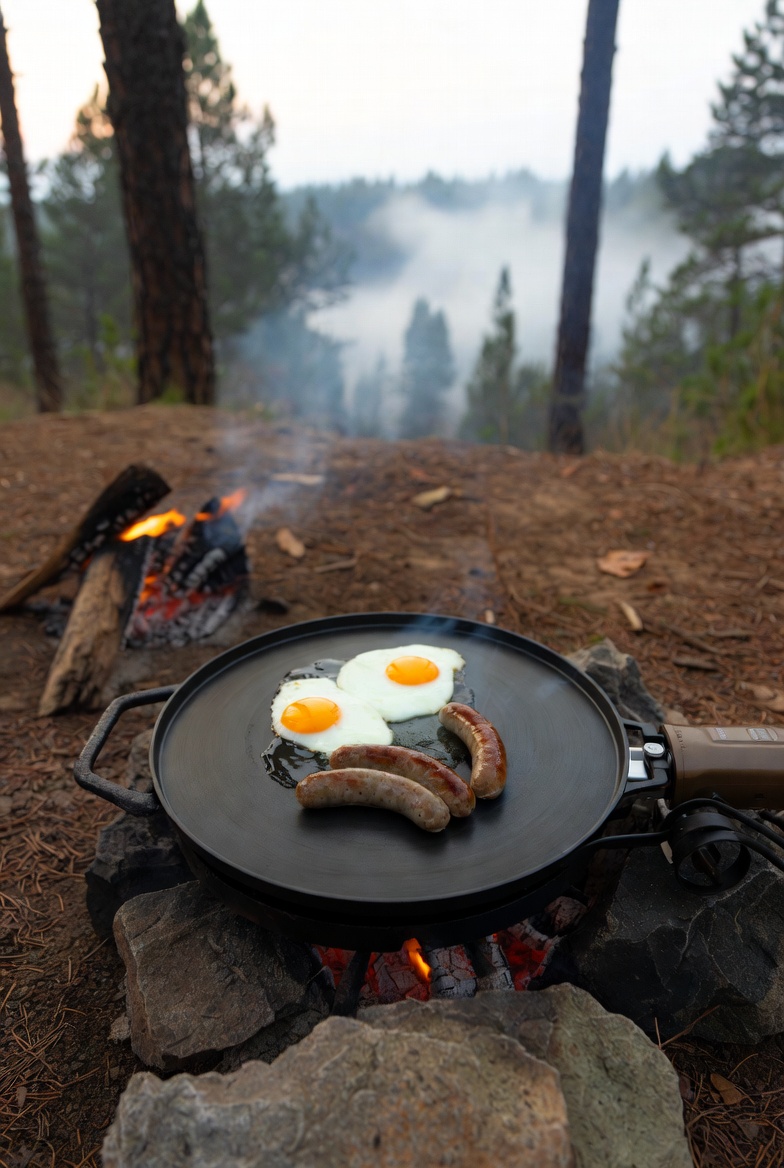
Look, I’ve only had my 36-inch Blackstone since April, and it’s currently sitting in my backyard in East Hampton where it’s basically become the center of our universe. But here’s the thing – every time I’m out there cooking breakfast or smash burgers, I’m thinking about how insane this would be on a camping trip. The 22-inch tabletop model keeps calling my name for exactly that reason. So while I haven’t personally taken a Blackstone camping yet, I’ve been researching the hell out of it and talking to people who do it regularly. If you’re planning a camping trip and wondering what to cook on a portable griddle, I’ve put together some recipes that are going to make you a campground legend.
Why Blackstone Camping Recipes Are a Game Changer
Here’s what I’ve learned from my backyard experience that translates perfectly to camping: a flat top griddle solves basically every annoying camping cooking problem. No more food falling through grill grates into the fire. No more trying to balance a pan on those sketchy camp stove burners. You’ve got a legitimate cooking surface that can handle everything from pancakes to stir fry.
The portable Blackstone models run on those small propane tanks, so you’re not dealing with charcoal or trying to keep a campfire at the right temp. You just turn a knob and you’re cooking. Based on what I’ve seen, the 22-inch tabletop is the sweet spot for camping – big enough to feed a group but small enough to pack in your vehicle.
Recipe 1: Campground Breakfast Scramble
This is the recipe I’m most excited to try when I finally get that portable model. It’s basically everything great about camping breakfast smashed together on one surface.
Ingredients
- 1 pound breakfast sausage
- 6 eggs
- 3 medium potatoes, diced small
- 1 bell pepper, diced
- 1 onion, diced
- 2 cups shredded cheddar cheese
- Salt and pepper
- Cooking oil
- Hot sauce (optional but come on)
Step-by-Step Instructions
- Get your Blackstone up to medium-high heat, around 375-400 degrees. Most portable models have temperature zones, so you can use the whole surface.
- Put a thin layer of oil on the griddle. Toss those diced potatoes on there and spread them out. You want them in a single layer so they actually crisp up instead of steaming. This is going to take about 10-12 minutes. Don’t mess with them constantly – let them sit and develop that crust.
- While the potatoes are going, break up the breakfast sausage onto another section of the griddle. Use your spatula to crumble it as it cooks. This takes about 6-8 minutes.
- When the potatoes are about halfway done, add your peppers and onions to them. They need less time than the potatoes, so they go in later.
- Once the sausage is cooked through, push everything together into zones – potatoes and veggies in one area, sausage in another.
- Crack your eggs right onto the griddle in the remaining space. Scramble them with your spatula as they cook. This happens fast, maybe 2-3 minutes.
- When the eggs are almost done, mix everything together. Hit it with salt and pepper.
- Turn off the heat and cover the whole mixture with shredded cheese. Give it a minute to melt.
- Serve it straight from the griddle. Let people add their own hot sauce.
Pro Tips
The key with this recipe is getting your timing right so everything finishes together. Potatoes take the longest, so they start first. From what I’ve learned on my backyard griddle, people always underestimate how long potatoes need. Don’t rush them.
Dice your potatoes smaller than you think you should. Like half-inch cubes max. They’ll cook faster and get crispier. You can prep these at home and keep them in a container or zip-top bag in your cooler.
If you’re cooking for a crowd at the campground, you can double this recipe easily. The beauty of a griddle is you’ve got the space to spread out.
Recipe 2: Camping Smash Burgers
Okay, smash burgers are what convinced me to buy a Blackstone in the first place. I’ve made probably fifty of them in my backyard since April, and they’re absolutely perfect for camping. Simple ingredients, cook fast, and they’re better than anything you’ll get from a regular grill.
Ingredients
- 2 pounds ground beef (80/20 blend – you want that fat)
- Salt and pepper
- 8 burger buns
- 8 slices American cheese
- Butter for the buns
- Toppings: lettuce, tomato, onion, pickles, whatever you want
- Condiments: ketchup, mustard, mayo
Step-by-Step Instructions
- Heat your griddle to high heat, around 450-500 degrees. Smash burgers need serious heat.
- Divide your ground beef into 4-ounce balls. Don’t season them yet. You want loose balls of meat, not compressed patties.
- Oil the griddle lightly. Place a ball of meat on the griddle.
- Immediately smash it flat with your spatula. I mean really smash it. You want it thin, like a quarter-inch thick. This is where all the crispy edges come from.
- Season the top with salt and pepper right after you smash.
- Let it cook without moving it for about 2 minutes. You’ll see the edges turn brown and crispy.
- Flip it once. Add a slice of cheese immediately after flipping.
- Cook for another minute, maybe 90 seconds.
- While the burgers are finishing, butter your buns and toast them on the griddle cut-side down. Takes about a minute to get them golden.
- Build your burgers and try not to eat them too fast.
Pro Tips
The smash is everything. You need to commit to it. Press down hard with your spatula for about 10 seconds. Some people use a burger press, but honestly a good spatula works fine. I use the one that came with my Blackstone and it’s been perfect.
Don’t flip these multiple times like you might with a regular burger. One flip only. You’re building a crust on the first side, and you don’t want to mess with it.
Bring parchment paper squares if you want to prep the meat balls at home. Put each ball on a square of parchment and stack them in a container. Makes it way easier at the campsite.
Recipe 3: Griddle Fried Rice
This one is brilliant for camping because you can throw in basically whatever you have. Leftover hot dogs from last night? They can go in there. Extra vegetables? Perfect. It’s a cleanup recipe that somehow tastes better than the original meals.
Ingredients
- 4 cups cooked white rice (make this at home before your trip and bring it cold)
- 3 eggs
- 1 cup diced ham, chicken, or any cooked meat
- 1 cup frozen mixed vegetables
- 3 tablespoons soy sauce
- 2 tablespoons butter
- 2 cloves garlic, minced
- 2 green onions, chopped
- Sesame oil if you’ve got it
Step-by-Step Instructions
- Get your griddle to medium-high heat, around 400 degrees.
- Melt butter on the griddle and add your garlic. Cook it for about 30 seconds until it smells amazing.
- Crack your eggs onto the griddle and scramble them up. Cook them through completely, then push them to the side.
- Add your cold rice to the griddle. This is important – cold rice works way better than fresh rice for fried rice. Break it up with your spatula so it’s not in clumps.
- Add your frozen vegetables and meat. Mix everything together.
- Pour the soy sauce over everything and keep mixing. You want every grain of rice to get coated.
- Let it sit without stirring for about 2 minutes so the bottom gets a little crispy.
- Mix in the scrambled eggs you pushed to the side.
- Add the green onions and a drizzle of sesame oil if you have it.
- Cook for another minute while mixing everything together.
Pro Tips
Seriously, make the rice at home before your trip. Cold rice that’s been in the fridge overnight is the secret to good fried rice. Fresh rice gets mushy and weird.
Don’t overload the griddle. If you’re making a huge batch, do it in two rounds. Rice needs contact with the hot surface to get that slightly crispy texture.
The frozen vegetables work better than fresh for camping because you don’t have to worry about them going bad in your cooler. Plus they thaw and cook quickly on the hot griddle.
Recipe 4: Blackstone Camping Fajitas
Fajitas are perfect griddle food. Everything cooks on the same surface, it’s interactive and fun, and people can customize their own. Plus cleanup is minimal, which matters when you’re camping.
Ingredients
- 2 pounds chicken breast or flank steak, sliced thin
- 3 bell peppers (different colors look cool), sliced
- 2 onions, sliced
- Fajita seasoning packet or make your own (chili powder, cumin, garlic powder, paprika)
- Lime juice
- Oil for cooking
- Flour tortillas
- Toppings: sour cream, salsa, shredded cheese, guacamole
Step-by-Step Instructions
- If you can, marinate your meat at home before the trip. Mix the fajita seasoning with some oil and lime juice, toss the meat in it, and pack it in a sealed container or bag in your cooler. If not, no big deal – you can season it at the campsite.
- Heat your griddle to medium-high, around 400 degrees.
- Put a layer of oil on the griddle. Add your sliced peppers and onions. Spread them out so they’re not piled up.
- Cook the vegetables for about 5-7 minutes, stirring occasionally. You want them soft with some charred edges.
- Push the vegetables to one side of the griddle. Add your meat to the empty space.
- Cook the meat for about 6-8 minutes for chicken, maybe 4-5 for steak. Keep it moving so it cooks evenly.
- When the meat is done, mix it together with the vegetables.
- Warm your tortillas on the griddle for about 15 seconds per side.
- Let everyone build their own fajitas with whatever toppings they want.
Pro Tips
Slice your meat thin. Like really thin. It cooks faster and has better texture. You can do this at home before you leave, which makes the camping part way easier.
Don’t be shy with the heat on the vegetables. You want some of that char and caramelization. That’s where the flavor is.
Bring the tortillas in their original packaging and maybe wrap that in foil. They’re surprisingly easy to squish in a cooler.
Common Mistakes People Make with Blackstone Camping Recipes
Based on what I’ve learned from my time with my griddle and from researching the camping setup, here are the things that trip people up.
Not bringing enough propane. This is apparently the number one issue. Those small propane tanks don’t last as long as you think, especially if you’re cooking multiple meals. Bring extras. You can’t run to the store in the middle of the woods.
Forgetting oil or cooking spray. You need this. Bring more than you think you’ll use. A squeeze bottle of oil is way easier than trying to pour from a regular bottle at a campsite, and honestly I keep a set of squeeze bottles for oil, water, and soy sauce because they make everything so much simpler on the griddle.
Not prepping ingredients at home. You can chop vegetables, portion meat, make marinades – all of it at home where you have good knives and counter space and light. Trying to prep everything at a picnic table in the dark is miserable.
Cooking everything on high heat. Different foods need different temperatures. My griddle at home doesn’t have a built-in thermometer, so I got a dual probe infrared thermometer for like twenty bucks. Total game changer for knowing your actual cooking temps. The portable models are the same – the knobs give you an idea but the temperature gun gives you accuracy.
Not letting the griddle preheat. Give it at least 10 minutes to come up to temperature. I learned this one the hard way with some pancakes that stuck like crazy because I was impatient.
Skipping the post-cook cleaning. Even when you’re camping and tired, do a basic clean while the griddle is still warm. Scrape it down, wipe it with oil. Future you will be grateful.
Essential Camping Griddle Gear
If you’re taking a Blackstone camping, here’s what you need beyond the griddle itself. This is my research-based packing list for when I eventually make this happen.
Spatulas: Bring at least two. The Blackstone spatulas are solid. You want the ones with the hard edge that can scrape.
Squeeze bottles: One for oil, one for water. The water is for deglazing and cleaning. This is something I do constantly on my backyard griddle.
Paper towels: Bring way more than you think you need. A whole roll per day isn’t crazy.
Infrared thermometer: So you actually know what temperature you’re cooking at.
Griddle cover: Keeps rain, bugs, and dirt off when you’re not cooking.
A good cooler: Your ingredients need to stay cold. This seems obvious but it matters more than people think.
Storage containers: For prepped ingredients and leftovers.
Aluminum foil: Useful for about a hundred different things.
A headlamp: Because cooking breakfast before sunrise or dinner after dark is going to happen.
Frequently Asked Questions
What size Blackstone is best for camping?
The 22-inch tabletop model seems to be the sweet spot. It’s big enough to cook for a family or small group but small enough to transport easily. The 17-inch is more portable but you’re pretty limited on cooking space. The 28-inch is great but it’s getting bulky for camping.
How long does a small propane tank last on a Blackstone?
From what I’ve researched, you’ll get roughly 2-3 hours of cook time from a standard 1-pound propane cylinder on medium heat. That’s maybe 6-8 meals depending on what you’re making. For a weekend camping trip, bring at least 4 tanks to be safe.
Can you use a Blackstone in a campground?
Most campgrounds allow propane griddles. They’re way safer than open fires or charcoal grills. But check your specific campground rules before you go. Some have restrictions during fire bans or in certain areas.
Do you need to season a Blackstone before using it for camping?
If it’s a new griddle, yes, you need to season it before your trip. Don’t try to do the initial seasoning at the campground. Do it at home where you have time and can do it properly. After that, you just maintain the seasoning with oil after each cook.
What’s the best oil to use on a Blackstone for camping?
I use vegetable oil on my griddle at home because it’s cheap and has a high smoke point. Same thing works for camping. Some people swear by avocado oil or canola oil. Whatever you bring, put it in a squeeze bottle so it’s easy to apply.
How do you clean a Blackstone while camping?
While the griddle is still warm, scrape off any food bits with your spatula. Squirt some water on there to help loosen stuck-on stuff – it’ll steam and sizzle. Scrape again. Wipe it down with paper towels. Then put a thin layer of oil on the whole surface. That’s it. You’re not doing a deep clean at a campsite. Just maintaining it enough for the next meal.
Can you cook breakfast and dinner on the same day without the griddle tasting weird?
Yeah, absolutely. After breakfast, clean the griddle like I described above. The oil layer you put on after cleaning is basically re-seasoning it. Your burgers aren’t going to taste like bacon. Although honestly that doesn’t sound terrible.
What if it rains?
You can cook in light rain if you have some kind of canopy or shelter. People use pop-up tents or cook under their RV awning. Don’t use a Blackstone inside a tent or enclosed space though – carbon monoxide is no joke. If it’s pouring, you might need to wait it out or have backup cold food options.
Final Thoughts
Look, I’m still figuring out my griddle journey. I’ve only had my 36-inch since April and I’m learning something new every time I use it. But the more I cook on it in my backyard, the more convinced I am that this thing would be absolutely perfect for camping. The even heat, the cooking surface size, how fast you can get food done – all of that matters even more when you’re outdoors and dealing with weather and limited resources.
These recipes are designed to be straightforward because camping cooking should be fun, not stressful. You’re there to enjoy being outside, hang out with people, maybe have a beer by the fire. The food should be good but it doesn’t need to be complicated.
The 22-inch tabletop Blackstone is definitely on my list. Probably happening this summer if I’m being honest. Sierra keeps reminding me that we have a perfectly good griddle already, and she’s not wrong, but the idea of making smash burgers at a campsite or cooking breakfast for everyone while we’re out hiking is too good to pass up.
Start with one of these recipes on your next camping trip. The breakfast scramble is probably the easiest one to nail on your first try. Then work your way up to the others. Once you get the hang of temperature control and timing, you can basically cook anything on a griddle. That’s what I’ve learned over the past few weeks, and it applies whether you’re in your backyard or in the middle of the woods.
Just remember to bring extra propane. I cannot stress that enough based on everything I’ve read. Running out of fuel when you’re hungry and far from civilization is apparently a special kind of frustrating. Learn from other people’s mistakes on that one.