Blackstone Griddle Cleaning Tools Review: What Works
Look, I’m just a guy who got his first Blackstone griddle semi-recently, and I’ve already learned that the tools you use to clean this thing matter way more than I thought they would. I went down the rabbit hole researching every scraper, stone, and cloth out there, bought a bunch of them, and figured I’d save you some time by breaking down what actually works.
The first time I cooked on my 36-inch Blackstone, I used a random metal spatula from my kitchen drawer and some paper towels. It worked, sort of, but I quickly realized I was making this harder than it needed to be. The right cleaning tools don’t just make cleanup faster—they actually protect your seasoning and keep that cooking surface in better shape. So let’s talk about what’s worth buying and what’s just taking up space in your garage.
Why Cleaning Tools Actually Matter
Here’s the thing nobody tells you before you get a Blackstone: the cleaning process is part of the cooking process. You’re not just wiping down a grill grate and calling it a day. You’re maintaining a seasoned flat-top surface that needs specific care to stay in good condition.
The griddle top is cold-rolled steel, which means it can rust if you’re not careful, and the seasoning layer you build up is what protects it. Using the wrong tools can scrape off that seasoning you worked to create, or worse, leave residue that gunks up over time. The right tools help you clean effectively without damaging anything.
Plus, and I can’t stress this enough, having the right scraper makes the whole process so much faster. When Bronco and Gunner are losing their minds waiting for scraps, speed matters.
The Essential Blackstone Cleaning Tools
Griddle Scrapers
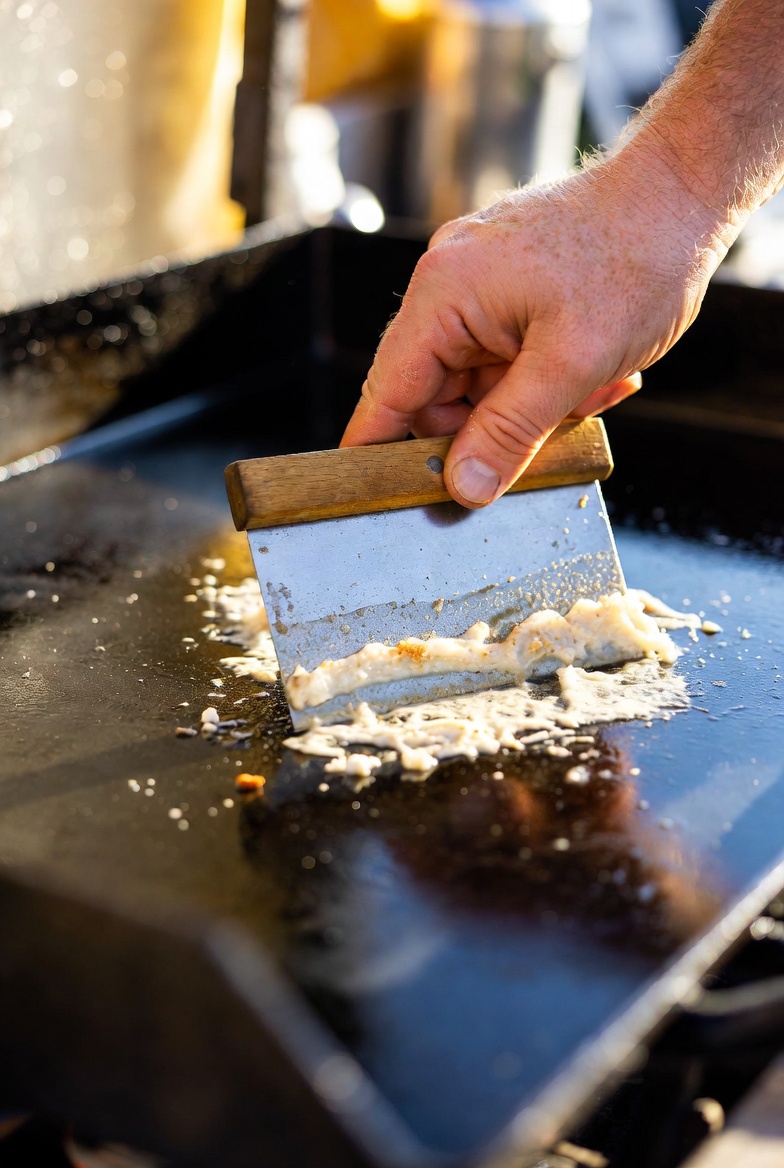
This is the most important tool in your arsenal. You need something that can push grease, food bits, and stuck-on residue across the griddle surface while it’s still hot.
Blackstone 5-Inch Griddle Scraper: This is the one that comes with most Blackstone accessory kits, and honestly, it’s solid. The handle stays cool enough to hold even when you’re scraping a hot surface, and the blade is wide enough to cover good ground but not so wide that you can’t maneuver around tight spots. The front edge is slightly beveled, which helps it get under stuck food without gouging the surface.
What I like about it is the weight—it’s got enough heft that you can apply real pressure without feeling like you’re going to snap it. The handle is long enough to keep your hand away from the heat, which matters more than you’d think when you’re leaning over a 500-degree griddle surface.
Blackstone 4-Inch Scraper: This smaller version is great for detail work. If you’ve got a stubborn spot or you’re working around the grease trap, the narrower blade gives you more control. I wouldn’t want this as my only scraper, but as a secondary tool, it’s useful.
Husky Razor Blade Scraper: Some people swear by these paint scrapers you can get at Home Depot. They’re cheap, the blades are replaceable, and they’re aggressive. My take? They work, but they’re almost too aggressive for regular cleaning. I could see using one if you inherited a griddle that’s been neglected, but for normal post-cook cleanup, I think you risk scraping off seasoning.
Griddle Stones and Cleaning Blocks
Blackstone Pumice Griddle Cleaning Stone: This thing looks like a brick made of volcanic rock, because that’s basically what it is. You use it on a warm (not hot) griddle with a little water to scrub away carbon buildup and stuck-on residue that your scraper can’t handle.
The stone wears down as you use it, which feels wasteful at first, but that’s actually how it works—it’s gently abrasive without being so harsh that it strips your seasoning. I used mine after about a week of daily cooking when I noticed some darker spots building up. Wet the griddle surface, scrub with the stone, and those spots came right off.
One block lasts a while. I’ve used mine maybe four times now and I’ve worn down maybe a quarter inch. They’re not expensive, so having one on hand makes sense.
Generic Pumice Stones: You can find pumice griddle stones from other brands that are basically identical and sometimes cheaper. I haven’t noticed a difference. If you see one that’s specifically made for flat-top griddles, it’ll probably work fine.
Scouring Pads and Scrubbers
Blackstone Non-Scratch Scouring Pads: These look like heavy-duty versions of the scrubby side of a kitchen sponge. They’re tougher than regular sponges but won’t scratch your seasoning like steel wool might.
I use these for the final wipe-down after I’ve scraped and before I re-oil. They pick up the fine residue that the scraper misses. You want to use them on a still-warm griddle with a little water—basically the last step before you dry and oil the surface.
Heavy-Duty Grill Screens: Some people use these commercial-style griddle screens that restaurants use on flat-tops. They’re super abrasive and meant to be used with griddle bricks. Honest opinion? For home use, they’re overkill. Unless you’re cooking for a crowd every single day and building up serious carbon, you don’t need this level of scrubbing power.
Cleaning Towels and Rags
Shop Towels: I go through a roll of blue shop towels every couple weeks. They’re more durable than paper towels, they don’t fall apart when they get wet and greasy, and they’re cheap at any auto parts store. I keep a roll right next to the griddle.
I use these for wiping down after scraping, for oiling the surface, and for the final buff after cleaning. They hold up to the heat and the grease way better than regular paper towels.
Regular Paper Towels: They work in a pinch, but you’ll go through twice as many. They tear, they leave little paper bits on the griddle, and they’re just not designed for this kind of work.
Cotton Bar Towels: Some people use reusable cotton towels. They work great and they’re more environmentally friendly, but you’ve got to be okay with washing extremely greasy towels. I’m not there yet.
Specialty Tools Worth Considering
Blackstone Griddle Cleaning Kit: This is a combo pack that usually includes scrapers, scouring pads, and a stone. If you’re just getting started, this is probably your best bet. You get everything you need in one purchase, and it’s usually cheaper than buying each piece separately.
Squeeze Bottles for Water: Not technically a cleaning tool, but having a squeeze bottle filled with water makes the cleaning process so much easier. You can squirt water onto hot spots to steam-clean stuck food, or wet the surface before using your griddle stone. I use a couple of cheap plastic bottles I got at the dollar store.
Bench Scraper: Some people use a metal bench scraper from a baking supply store. These are flat metal rectangles with a handle on top. They work fine, but I don’t think they’re better than a proper griddle scraper, and the handle gets hot faster.
How I Actually Clean My Griddle
Let me walk you through my current process, which has evolved over the past few weeks as I figured out what works.
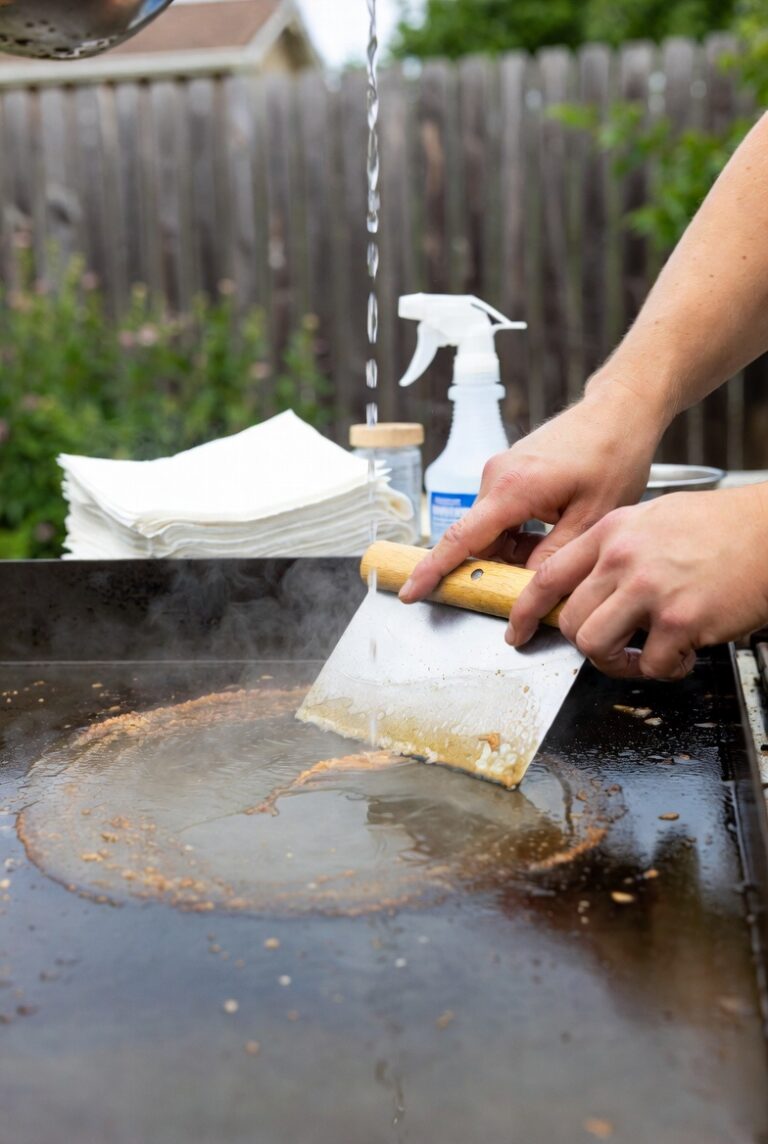
Step 1: While the griddle is still hot (around 400°F): I use my Blackstone scraper to push all the grease and food debris toward the grease trap. I’m scraping in long strokes, pushing everything to the back and sides. This is when the scraper really earns its keep—everything’s still loose and moves easily.
Step 2: Steam cleaning stubborn spots: If there are any stuck-on bits, I use my water squeeze bottle to squirt a little water on those spots. It steams up immediately and loosens whatever’s stuck. Then I scrape it again. Be careful here—the steam is hot and it can splash.
Step 3: Let it cool to warm (around 200°F): I turn off the burners and let the surface cool down to where I can hold my hand a few inches above it without it being uncomfortable. Still warm, but not screaming hot.
Step 4: Griddle stone if needed: Maybe once a week, I’ll use the pumice stone at this stage. I wet the surface with my squeeze bottle, then scrub in circular motions with the stone. It creates a gray slurry that looks gross but is just the stone wearing down mixed with loosened carbon. I scrape all that slurry off with my scraper.
Step 5: Scouring pad wipe: I use the non-scratch scouring pad with a tiny bit of water to do a final scrub. This picks up any remaining fine particles. Then I scrape any water and debris off the surface.
Step 6: Dry completely: I use clean shop towels to dry the entire surface. This is important—any moisture left behind can cause rust.
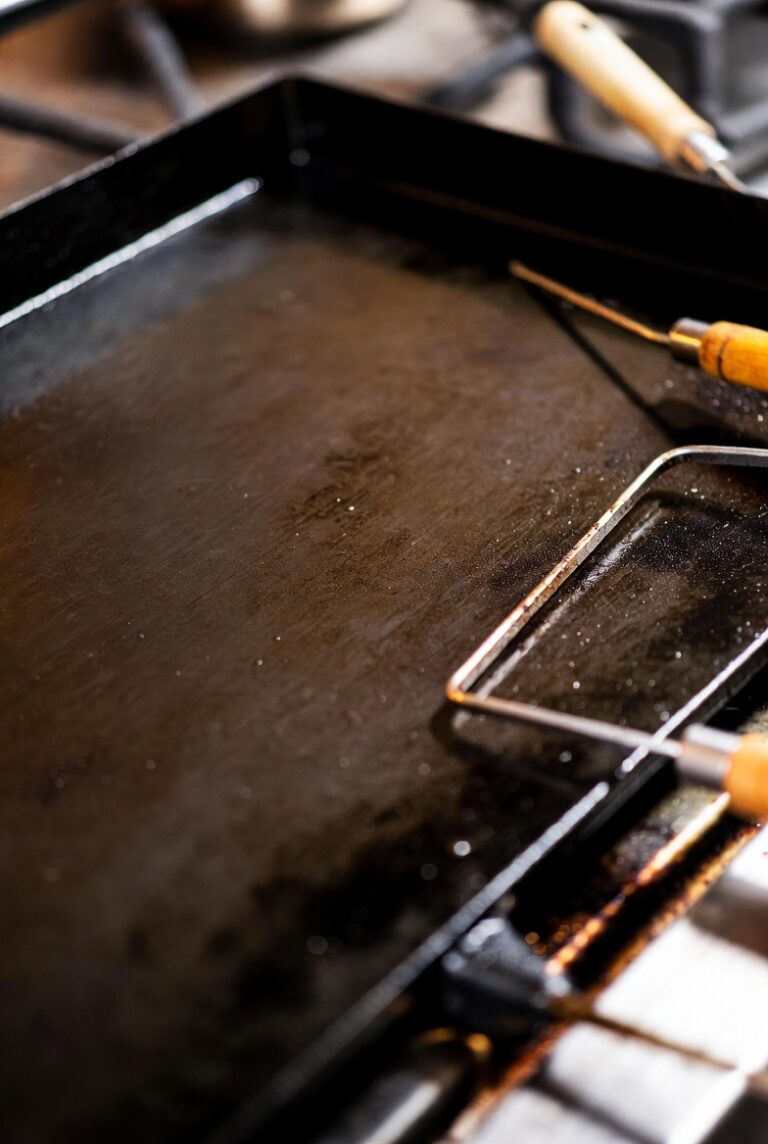
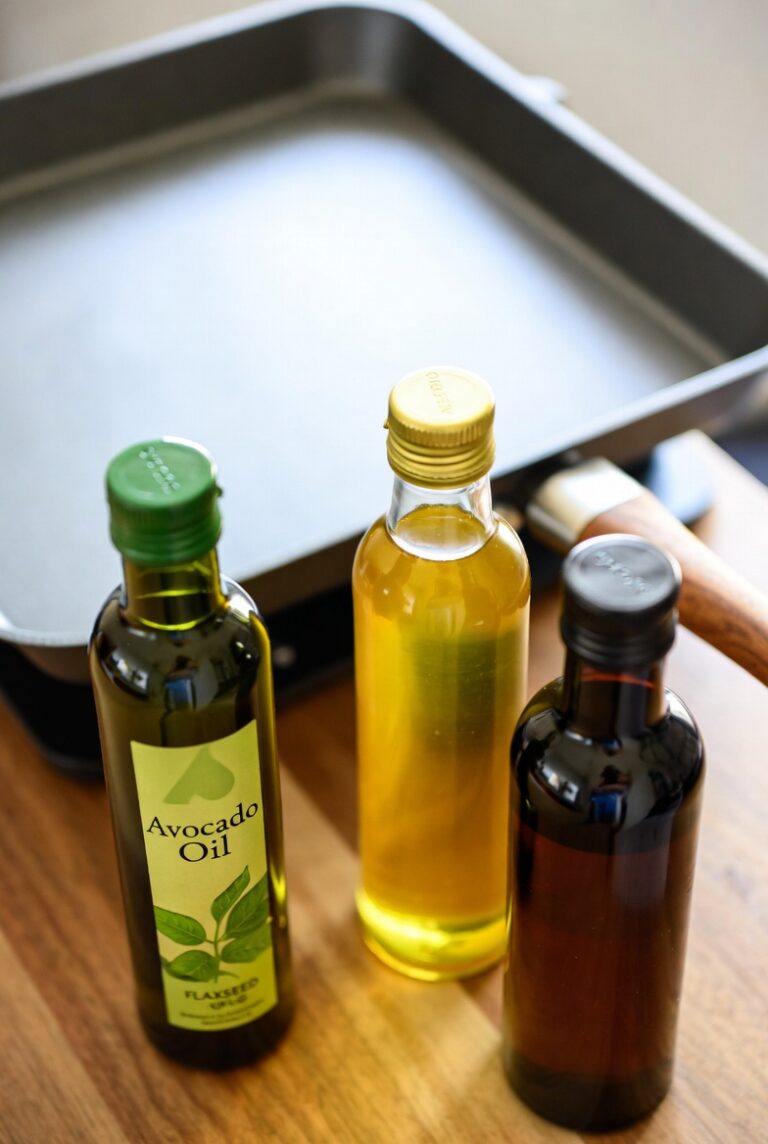
Step 7: Re-oil: While the surface is still warm, I put a small amount of oil on the griddle and spread it around with a clean shop towel. Just a thin layer. This maintains your seasoning and protects against rust.
The whole process takes maybe ten minutes after I’m done cooking. It’s become part of the routine.
Common Mistakes People Make
Using metal brushes with bristles: I’ve seen people use wire grill brushes on their Blackstone, and I think it’s a bad idea. Those metal bristles can break off and get stuck in your food, which is dangerous. They can also scratch up your seasoning more than you want. Stick with scrapers or invest in a bristle-free griddle brush if you want something with more scrubbing action.
Cleaning when the griddle is cold: Everything is ten times harder when the surface is cold. The grease is congealed, the food bits are stuck like cement, and you’ll end up scrubbing way harder than you need to. Clean while it’s still hot, or at least warm.
Using dish soap: This is controversial, but I’m in the camp that says skip the dish soap for regular cleaning. Soap can strip your seasoning, especially if you’re still building up those initial layers. Water, heat, and scraping are usually enough. If you’ve got a real mess, the griddle stone is a better solution than soap.
Not drying completely: I cannot stress this enough—if you leave water on the surface, you risk rust. Even if your seasoning is good, moisture is the enemy. Dry it thoroughly.
Scraping too aggressively with cheap tools: A good scraper glides across the surface and pushes debris without gouging. A cheap one with a rough edge can actually dig into your seasoning. It’s worth spending a few extra bucks on a quality scraper.
Throwing away the griddle stone too early: The stone is supposed to wear down and crumble a bit. Don’t toss it just because it’s getting smaller. Use it until it’s too small to hold comfortably.
Pro Tips From My Research and Testing
Keep your scrapers clean too. After a few uses, your scraper will have a buildup of gunk on the blade. Scrape that off with another scraper, or use a shop towel to wipe it down. A clean scraper works better.
Store your tools where they stay dry. I keep mine in a small plastic bin under the griddle cover. Moisture and humidity can rust metal tools just like it can rust your griddle.
Have a dedicated grease container. I use an old coffee can to collect the grease I scrape into the grease trap. Once it’s full and solidified, I can toss the whole thing. Makes cleanup easier and keeps the grease trap from getting disgusting. Speaking of which, grease trap liners are a total game-changer if you want to avoid dealing with solidified grease altogether.
The squeeze bottle trick is a game-changer. Seriously, having water readily available right there at the griddle makes everything faster. I have one bottle for water and one for oil.
If you’re cooking something really messy, do a quick mid-cook cleaning. After you finish burgers and before you start vegetables, scrape off the debris while the griddle is hot. It takes thirty seconds and makes the final cleanup much easier.
Season your griddle right after cleaning while it’s still warm. The warm surface helps the oil polymerize better, and you’re already standing there anyway.
What You Actually Need vs. What’s Optional
If you’re just starting out, here’s what I’d buy:
Essential:
- One good 5-inch griddle scraper
- A roll of shop towels
- A squeeze bottle for water
- Non-scratch scouring pads
Very useful:
- Pumice griddle cleaning stone
- A second smaller scraper for detail work
- A squeeze bottle for oil
Optional:
- Complete cleaning kits if you find a good deal
- Backup stones
- Specialty commercial cleaning supplies
You really don’t need to spend a fortune. The basics will handle 95% of your cleaning needs.
Frequently Asked Questions
How often should I use the griddle stone?
I use mine about once a week with regular cooking. If you notice dark buildup that your scraper isn’t removing, that’s when you want the stone. It’s not an every-time thing.
Can I use regular kitchen spatulas as scrapers?
You can, but they’re not ideal. Kitchen spatulas usually have a thinner, sharper edge that can gouge your seasoning. Griddle scrapers are designed with a beveled edge that’s aggressive enough to clean but not so sharp that it damages the surface.
Do I need the Blackstone brand tools or will other brands work?
Other brands work fine as long as they’re designed for flat-top griddles. The Blackstone stuff is good quality and not overpriced, so I don’t think you’re wasting money buying their tools. But you also don’t need to be brand-loyal if you find something else that works.
What about those griddle cleaning solutions and sprays?
I haven’t used them yet. Most people say they’re unnecessary for regular maintenance. If your griddle gets really grimy or you’re trying to restore one that’s been neglected, they might help. For normal cleaning after cooking, hot water and elbow grease do the job.
My scraper is leaving marks on the griddle. Is that normal?
Light scratch marks can happen, especially on a newer griddle where the seasoning is still building up. As long as you’re not digging in or using something with a super sharp edge, those marks will fill in with seasoning over time. If you’re leaving deep gouges, your scraper might be too aggressive or damaged.
Can I put my cleaning tools in the dishwasher?
I wouldn’t. The scrapers and metal tools might rust, and the dishwasher can be rough on them. Just wipe them clean with a shop towel after use. They’re meant to be used on a greasy griddle, so they don’t need to be spotless.
How do I know when to replace my cleaning tools?
Scrapers last a long time. Replace them if the blade gets warped, the edge gets damaged, or the handle breaks. Scouring pads should be replaced when they fall apart or get too gunky. Griddle stones wear down naturally—replace them when they’re too small to use comfortably.
Final Thoughts
A few weeks into this Blackstone journey, I’m realizing that the cleaning tools you use make a huge difference in how much you enjoy the whole experience. When cleanup is quick and easy, you’re more likely to fire up the griddle on a random weeknight. When it’s a pain, that griddle starts collecting dust.
The good news is that you don’t need a ton of specialized equipment, and what you do need isn’t expensive. A solid scraper, some shop towels, and a griddle stone will cover almost every situation. Everything else is just making life slightly more convenient.
I’m still figuring out my routine and what works best, but having the right tools from the start made the learning curve way less frustrating. If you’re new to the Blackstone world like I am, do yourself a favor and pick up at least the basics. Your future self will thank you when you’re spending less time scrubbing and more time cooking.
Now if you’ll excuse me, I’ve got a griddle calling my name and two dogs who know exactly what that sound means when the propane clicks on.