Best Blackstone Breakfast Accessories Guide 2026
If you’re cooking breakfast on a Blackstone griddle, you already know it’s a game-changer. But the right accessories take it from good to absolutely incredible. I picked up my 36-inch Blackstone back in April, and I’ve been figuring out what actually makes a difference versus what just clutters up the storage bin. Some accessories solve problems you didn’t even know you had, while others are honestly just nice-to-haves that make the whole experience more enjoyable.
The thing about breakfast is that it’s all happening at once. You’ve got eggs that need constant attention, bacon that can’t burn, pancakes that require quick flips, and hash browns that demand their own real estate. The accessories that earn their keep are the ones that help you manage all that chaos without feeling like you need four hands and a culinary degree.
Here’s what actually works for breakfast on the Blackstone, tested by a guy who’s still learning but cooking breakfast on this thing multiple times a week.
The Essential Breakfast Accessories
Squeeze Bottles for Oil and Water
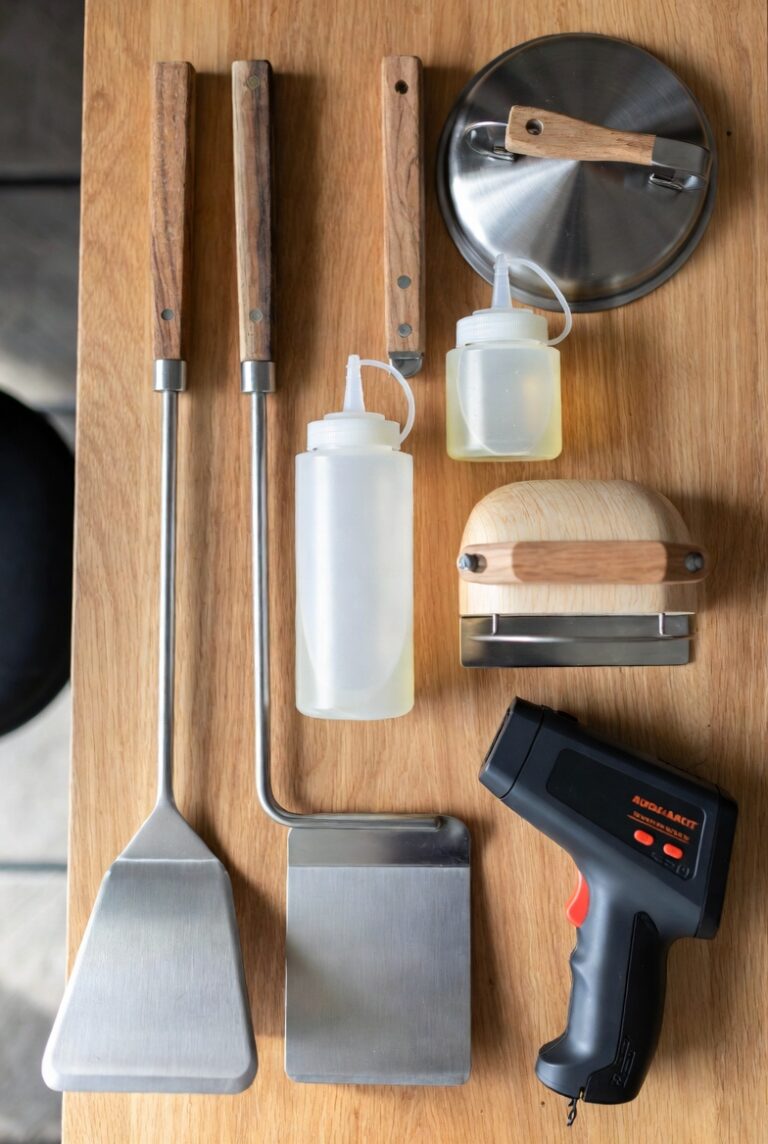
This was one of the first things I grabbed, and honestly, I use these every single time I fire up the griddle. You need oil control for breakfast more than any other meal. Too much and your eggs are swimming in grease. Too little and everything sticks. A good set of restaurant squeeze bottles gives you precision.
I keep one filled with avocado oil and another with water. The water bottle is clutch for steam-cooking eggs when you want those whites fully set without flipping. Just squeeze a little water around the eggs and cover with a dome. The water bottle also helps with cleanup between batches when you need to deglaze a spot quickly.
Get bottles with measurements on the side so you can see how much oil you’re actually using. The ones with the angled tips are easier to control than straight spouts.
Metal Spatulas in Different Sizes
The spatulas that come in those cheap grill tool sets are garbage for griddle cooking. You need actual Blackstone-style spatulas with a decent blade width and a slight bevel to get under food properly.
For breakfast, I’m usually working with a large spatula and a smaller one. The big one handles pancakes, French toast, and moving hash browns around. The small one is perfect for eggs and getting into corners. The large spatula makes flipping multiple pancakes at once possible, which matters when you’re trying to feed people at the same pace.
Look for spatulas with beveled edges that can really get under delicate eggs without tearing them. Solid stainless steel construction holds up better than the cheaper options that start bending after a few uses.
Melting Dome
This might be the single most valuable breakfast accessory. A good melting dome transforms what you can do with eggs and creates actual restaurant-quality results. When you trap steam under the dome, eggs cook evenly on top without needing to flip them. Cheese on breakfast sandwiches melts perfectly. You can even steam vegetables right on the griddle.
The dome I picked up is stainless steel, about 12 inches across, with a heat-resistant handle on top. Some people use disposable aluminum pans turned upside down, and that works, but a proper dome with a handle you can grab makes the whole process smoother.
Size matters here. Too small and you’re constantly moving it around. I’d go with at least a 12-inch dome for breakfast cooking.
Griddle Scraper
Different from your spatulas, a dedicated scraper is specifically designed to push grease and debris into the grease trap. During breakfast cooking, you’re dealing with bacon grease, butter, bits of egg, and whatever else ends up on the surface. A scraper keeps the griddle clean as you cook so you’re not mixing bacon grease into your pancake batter spots.
The ones with a comfortable grip and a good wide blade make this job way easier. Some have a serrated edge on one side for tougher stuck-on bits, though if your seasoning is decent, you shouldn’t need that much for breakfast cooking.
Egg Rings
Egg rings contain your eggs and create those perfectly round shapes you see at diners. They’re especially useful for breakfast sandwiches where you want the egg to match the English muffin size exactly. But even for plated eggs, the uniform shape just looks more professional.
I grabbed a set of four stainless steel egg rings, about 4 inches in diameter. The key is getting ones that are heavy enough to sit flat against the griddle surface without gaps underneath where egg can leak out. The ones with handles that stick up are easier to remove when the egg is done, but make sure those handles don’t conduct heat like crazy. Learned that the fast way.
You can also use these for perfectly shaped pancakes or for searing hash brown rounds that hold together better than free-form piles.
Basting Cover
Similar to a melting dome but usually smaller and more maneuverable, basting covers are great when you’re cooking multiple items that each need individual attention. If you’re cooking four different egg orders with different preferences, you can use smaller covers to steam-finish each one at its own pace.
These are also perfect for reheating items or keeping something warm on a lower-heat zone while you finish other components of the meal.
Griddle Spatula with Cutting Edge
One spatula in your rotation should have a legitimate cutting edge. For breakfast, this means you can chop bacon right on the griddle, dice up breakfast sausage, or cut French toast into sticks without moving to a cutting board. The flat surface of the Blackstone works perfectly as a prep area when you have a sharp spatula.
This shouldn’t be your primary flipping spatula, but having one sharp option in the mix makes certain tasks way more efficient.
Heavy-Duty Tongs
For handling bacon strips individually, moving sausage links, or placing Canadian bacon on the griddle, tongs give you control that spatulas can’t match. Get ones with scalloped edges rather than smooth to grip better.
The 12-inch length is about right for griddle work. Shorter and your hands get too close to the heat. Longer and they’re awkward to maneuver in tight spaces when the whole cooking surface is packed.
Griddle Thermometer
An infrared thermometer takes the guesswork out of griddle cooking. Pancakes need different temps than bacon. Eggs are super temperature-sensitive. Being able to shoot different zones and know exactly what you’re working with makes consistency way easier.
These are especially helpful when you’re preheating and trying to figure out when the griddle is actually ready. Instead of guessing or doing the water droplet test, you just point and know.
Grease Cup Liners
Not glamorous, but aluminum liners for your grease cup make cleanup dramatically easier. After cooking bacon for breakfast, you’ve got a cup full of grease that you’d otherwise need to deal with. Pop out the liner, toss it when it cools, and you’re done.
Some people save their bacon grease for cooking, which I get, but these liners still make collection and transfer cleaner.
Nice-to-Have Breakfast Accessories
Seasoning and Condiment Bottles
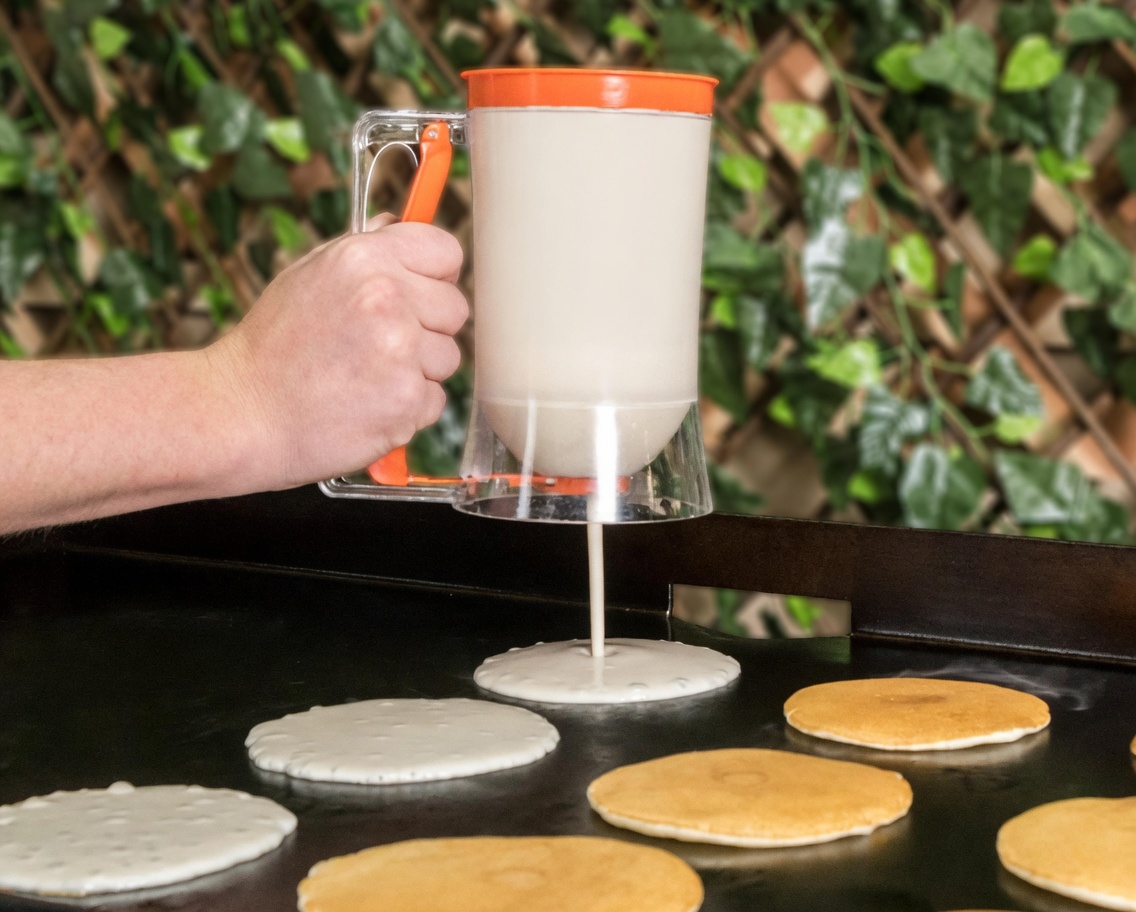
Beyond just oil, having squeeze bottles for pancake batter makes creating uniform pancakes so much easier. The control you get from squeezing batter onto the griddle versus pouring from a bowl or measuring cup is significant. You can make perfectly sized pancakes, create fun shapes, or write initials for the kids.
Small bottles for melted butter are also great for brushing toast or finishing pancakes without over-saturating.
Magnetic Tool Hooks
These stick right to the side of your Blackstone and keep your spatulas and other tools within easy reach instead of laying them on a side table or the ground. When you’re in the middle of cooking and need to grab a different spatula quickly, having everything hanging right there makes a difference.
Make sure you get magnetic hooks actually designed for outdoor use that won’t rust or lose their magnetism in varying weather.
Griddle Screen Holder
If you’re using griddle screens for deep cleaning, a holder keeps your hands further from the hot surface and gives you better leverage. For breakfast cooking specifically, you probably won’t need this during the cook, but it’s useful for maintenance between sessions.
Bacon Press
A heavy cast iron bacon press keeps bacon strips flat against the griddle surface for more even cooking and prevents curling. This creates more consistent results and better surface contact for rendering fat.
Some people swear by these, others think they’re unnecessary. I’d say if you’re cooking a lot of thick-cut bacon, it’s worth having. For standard bacon, managing heat properly mostly solves the curling issue.
Silicone Basting Brush
For buttering toast, brushing oil on specific spots, or applying melted butter to pancakes on the griddle, a silicone brush gives you more control than pouring. The silicone handles high heat better than traditional bristle brushes and cleans up easier.
Setting Up Your Breakfast Workflow
Having the right accessories only helps if you’re organized about how you use them. Here’s what’s working for me:
Before I even light the griddle, I set up a station with all my tools within reach. Spatulas in a container, squeeze bottles lined up, dome nearby, tongs accessible. Griddle cooking moves fast, and you don’t want to be searching for tools mid-cook.
I use magnetic hooks on the side of the Blackstone for my most-used spatulas during the cook. They’re right there when I need to switch from flipping pancakes to managing eggs.
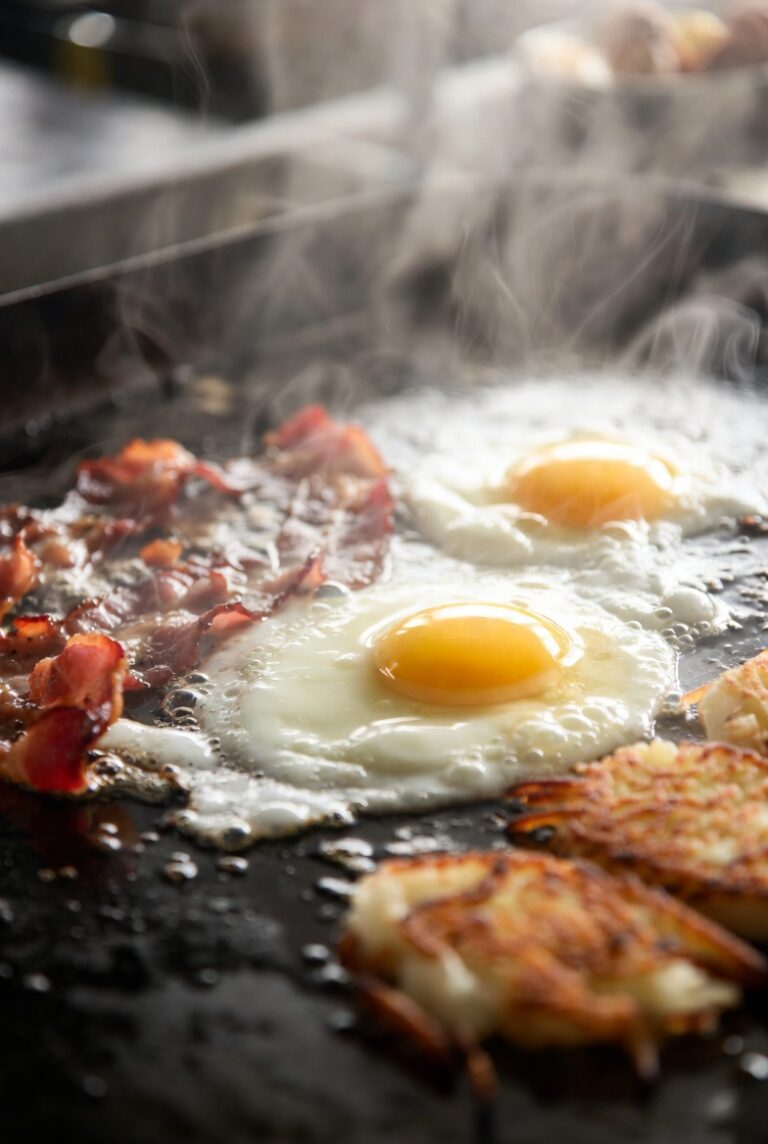
My workflow usually involves multiple temperature zones. The back of the griddle runs hotter, so that’s where bacon and sausage go. The front and sides are cooler, perfect for eggs and keeping finished items warm. Having zone-specific tools stationed near where you’ll use them most helps. The egg rings and small spatula stay near the cooler zone. The tongs for bacon stay near the hot zone.
Exact Temperature Guidelines for Breakfast Items
Each breakfast item has an optimal temperature range, and your infrared thermometer makes hitting these targets consistent:
Pancakes: 350-375°F. Lower than this and they won’t develop good color. Higher and the outside burns before the inside cooks through.
Eggs: 250-275°F for gentle, diner-style eggs that stay tender. You can go up to 300°F if you’re using a dome and working quickly, but lower temps are more forgiving.
Bacon: 325-350°F. Start lower around 300°F to render fat slowly, then increase to 350°F to crisp up at the end.
Sausage Links or Patties: 325-350°F. Consistent medium heat cooks them through without burning the outside.
Hash Browns: 375-400°F. They need higher heat to develop that crispy crust. Lower temps just steam them.
French Toast: 325-350°F. Similar to pancakes but slightly lower since the egg coating can burn easier than plain batter.
Pro Tips for Better Breakfast Results
Use the squeeze bottle for even oil distribution. A common mistake is creating oil puddles instead of a thin, even layer. Squeeze in a line, then spread with your spatula. This gives you control over exactly how much oil each area gets.
Preheat specific zones to different temps. Turn the burners to different settings and let the griddle stabilize for at least 10 minutes. Check multiple spots with your thermometer to verify your zones are where you want them.
Keep your dome moving. Don’t just set it over eggs and walk away. Use it for 30-45 seconds, check progress, remove or continue as needed. Over-steaming makes eggs rubbery.
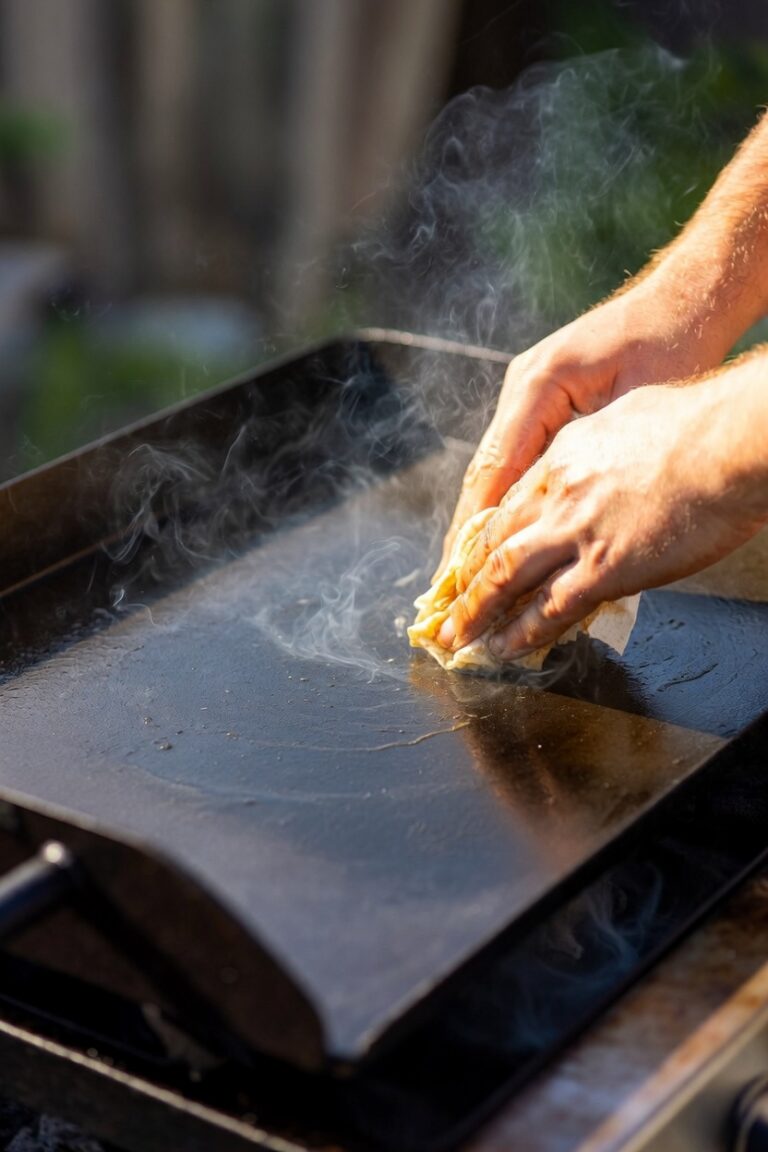
Clean between batches. After pancakes, scrape the surface and wipe with a paper towel before starting eggs. You don’t want maple syrup mixing into your egg zone. Your scraper and some water from the squeeze bottle make this quick.
Let bacon drain on a cooling rack. Cook it on the griddle, but have a wire rack set up nearby to transfer finished bacon. Letting it sit in its own grease makes it soggy.
Crack eggs into a small bowl first. This isn’t about accessories, but it’s a technique that saves you when you get a bad egg or break a yolk. Way better than cracking directly onto the griddle and dealing with shell pieces on the hot surface.
Common Mistakes with Breakfast Accessories
Buying cheap spatulas that bend. This is frustrating when you’re trying to get under a delicate egg and your spatula just flexes instead of sliding under. Spend a bit more for solid stainless steel construction.
Not having enough squeeze bottles. One isn’t enough. You want separate bottles for oil, water, and potentially pancake batter. Trying to wash and refill mid-cook is annoying.
Using domes that are too small. A 6-inch dome sounds sufficient for eggs until you realize you’re cooking 4-6 eggs at once and need to cover them all. Go bigger than you think you need.
Forgetting to oil egg rings. Even on a well-seasoned griddle, egg rings need a light coating of oil on the inside and bottom edge, or eggs will stick to the ring itself when you try to remove it.
Overloading the surface without enough tools. If you’re cooking a big breakfast with multiple items, you need enough spatulas and other tools to manage everything. Trying to do it all with one spatula means something’s getting overcooked while you deal with something else.
Not checking temperature before starting. The griddle looks ready, but it might not be. Use that infrared thermometer to verify before you drop expensive ingredients on the surface.
Building Your Accessory Collection
You don’t need everything at once. Start with the essentials: squeeze bottles, two good spatulas, and a melting dome. These three accessories will immediately improve your breakfast game and are useful for other meals too.
From there, add based on what you’re cooking most. If you’re doing bacon every weekend, grab tongs and grease cup liners next. If breakfast sandwiches are your thing, egg rings move up the priority list. The infrared thermometer is worth getting fairly early because it helps you learn how your specific griddle behaves and takes out the guesswork.
The nice-to-have items can wait until you’ve been cooking for a while and you know what would actually improve your process versus what just seems cool. I’ve definitely been tempted by accessories that would probably just sit in the storage bin most of the time.
Frequently Asked Questions
Do I really need Blackstone-branded accessories or will any griddle accessories work?
Blackstone-branded stuff is generally good quality, but you don’t need to be brand-loyal. What matters is the specs: stainless steel spatulas with beveled edges, squeeze bottles with good tip control, sturdy domes with heat-resistant handles. Generic versions that meet these criteria work just fine. I’d avoid the super-cheap sets from random brands that feel flimsy, but mid-range options from established grill accessory companies are solid.
What size dome should I get for a 36-inch Blackstone?
A 12-inch dome handles most breakfast tasks. You can cover several eggs at once, fit it over a couple of breakfast sandwiches, or steam a good portion of hash browns. Some people like having multiple domes in different sizes, which gives you flexibility, but if you’re starting with one, go 12-inch.
Are egg rings really necessary or just for looks?
They’re not strictly necessary, but they’re really useful for breakfast sandwiches and create more consistent portions. If you’re just making eggs for plates, you can skip them. But for sandwiches, the perfectly round shape that matches the English muffin makes assembly way easier and looks more professional. They’re inexpensive enough that I’d say grab a set and use them when it makes sense.
How many spatulas do I actually need?
Two is the minimum for breakfast cooking. One large for pancakes and hash browns, one smaller for eggs and detail work. Three is better if you’re cooking big meals with lots of different items happening simultaneously. Beyond that, you’re probably fine unless you’re feeding a crowd regularly.
Can I use plastic squeeze bottles or do they need to be heat-resistant?
The bottles themselves aren’t sitting on the griddle, so regular plastic squeeze bottles work. That said, they do sit near a hot griddle and can take some ambient heat. I’d get bottles marked as heat-resistant just to be safe. They cost about the same as regular bottles anyway.
What’s the best way to clean these accessories?
Spatulas and metal tools can go in the dishwasher, though hand washing preserves them better. Domes should be hand washed to prevent spotting. Squeeze bottles need regular deep cleaning—take the caps off and run hot soapy water through them every few uses to prevent oil from going rancid. Egg rings can be tricky with cooked-on egg, so soaking them in hot soapy water right after use makes cleanup easier.
Do I need different accessories for outdoor versus indoor griddle use?
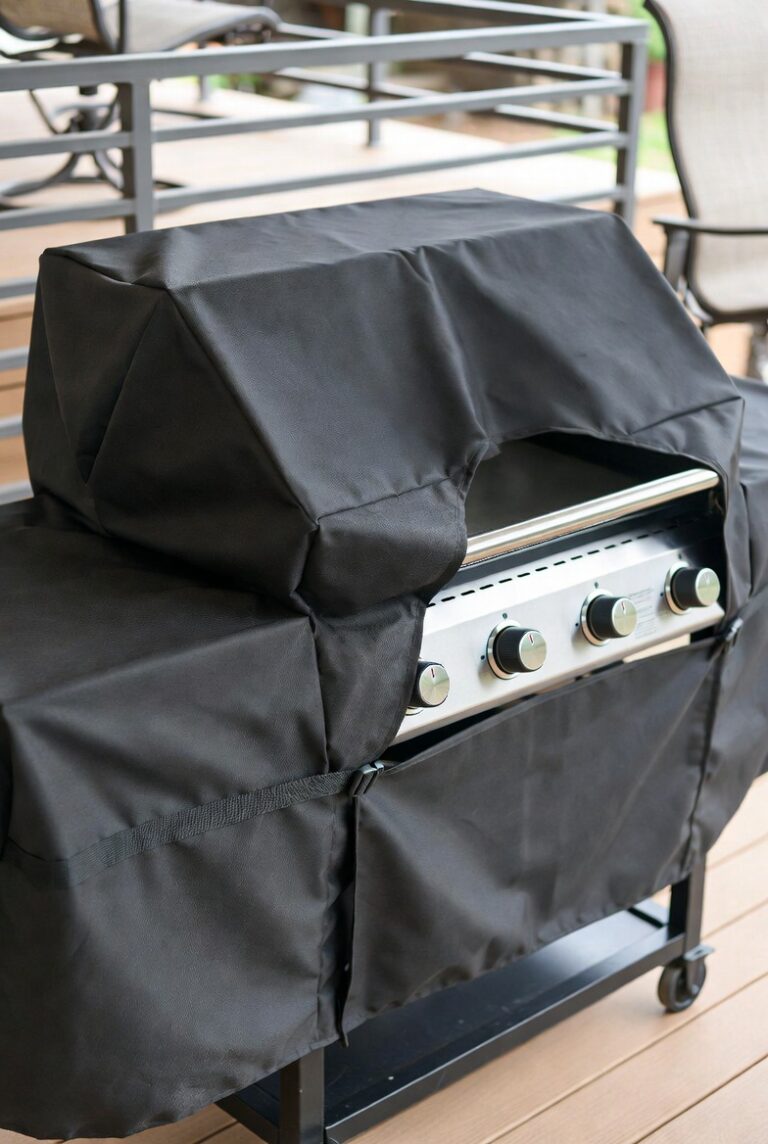
The accessories themselves are the same, but your storage approach might differ. Outdoor griddle accessories need weather-resistant storage if they’re staying outside. I keep mine in a plastic bin that stays dry. The tools themselves are stainless steel and handle weather fine, but you don’t want wooden handles or packaging exposed to the elements constantly.
Final Thoughts
The right breakfast accessories make Blackstone cooking more efficient, more consistent, and honestly just more fun. Starting with squeeze bottles, quality spatulas, and a melting dome covers your bases. From there, you can add specific tools based on what you’re cooking most often.
What I’ve figured out over the past few months is that accessories earn their spot by either solving a specific problem or making something significantly easier. The melting dome solves the problem of unevenly cooked eggs. Squeeze bottles make oil control dramatically easier. Multiple spatulas let you manage different items without cross-contamination. Those are keepers.
The accessories that just seemed cool but don’t get used regularly can wait or be skipped entirely. Your setup will look different than mine based on what you cook, how many people you’re feeding, and what aspects of griddle cooking you want to optimize.
Start with the basics, cook a bunch of breakfasts, and pay attention to what would actually help versus what sounds good in theory. The Blackstone already makes incredible breakfast food. The right accessories just help you do it more consistently with less frustration and better results.