Blackstone Chicken Fajitas Recipe – Easy Griddle Guide
I’m going to tell you something that changed my Tuesday nights forever: Blackstone chicken fajitas are so good that my wife Sierra has now requested them three weeks in a row. Not suggested. Requested. The griddle gets so hot and stays so even that you get this incredible char on the peppers and onions while the chicken picks up these crispy edges that you just cannot get in a regular pan. Plus, and this is huge, everything cooks at once. No juggling three different pans on the stovetop while one batch gets cold. Just spread everything out on that big flat surface and let it rip.
Blackstone Chicken Fajitas
Ingredients
Method
- Slice chicken breasts into strips about 0.25 inch thick and 3-4 inches long. Place in a large bowl.
- Cut bell peppers into strips about 0.25 inch wide, removing all seeds and white membrane.
- Slice onions into strips about the same width, cutting pole to pole rather than into rings.
- Mix all seasoning ingredients together in a small bowl.
- Toss chicken strips with about two-thirds of the seasoning blend until evenly coated, using your hands. Reserve remaining seasoning for vegetables.
- Turn on Blackstone and set all burners to medium-high, aiming for 400-425°F surface temperature. Preheat for 10 minutes.
- Add 2 tablespoons oil to the griddle and spread with spatula. Let heat for 30 seconds until shimmering.
- Add chicken strips in a single layer. Do not touch for 3-4 minutes to develop a crust.
- Flip chicken pieces and cook another 3-4 minutes until internal temperature reaches 165°F.
- Move cooked chicken to a cooler zone or side of griddle to keep warm.
- Add remaining 1 tablespoon oil to griddle. Add peppers and onions and sprinkle with remaining seasoning. Spread into an even layer.
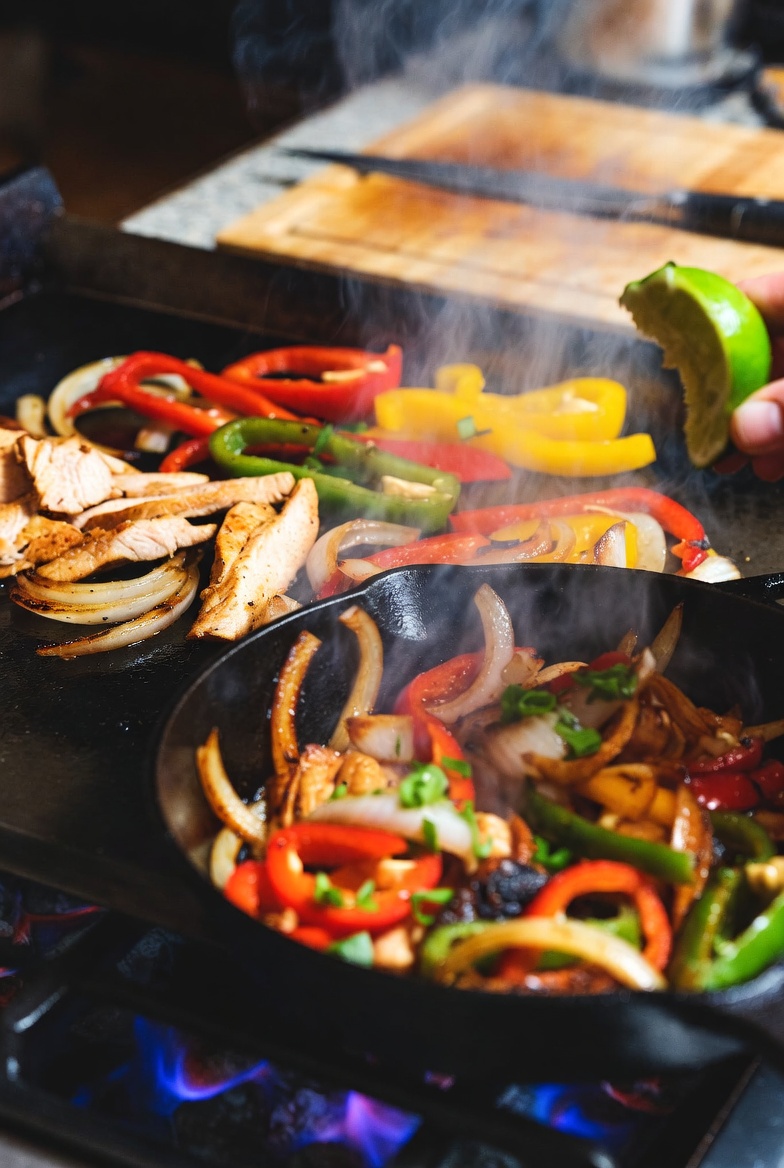
- Let vegetables sit for 3-4 minutes without stirring to develop char, then toss. Continue cooking, tossing every 2-3 minutes, for 10-12 minutes total until onions are softened and everything has charred edges.
- Mix chicken back in with vegetables. Toss together and let sit for 1-2 minutes to reheat chicken and blend flavors.
- Turn one burner down to low or medium-low. Move fajita mixture to cooler zone to keep warm.
- Warm tortillas on the medium-low zone for about 30 seconds per side until they have a few brown spots and start to puff slightly.
- Serve fajitas with warmed tortillas and desired toppings.
Notes
- Chicken thighs can be substituted for breasts for more flavor and juiciness
- Let chicken come to room temperature for 15-20 minutes before cooking for more even cooking
- Partially freeze chicken for 30 minutes before slicing to make thin, even cuts easier
- Squeeze fresh lime juice over everything right before serving for authentic flavor
- Don't crowd the griddle or food will steam instead of sear
- Optional: add 2 tablespoons butter in the last minute of cooking for extra flavor
- Leftovers can be reheated on the griddle with a little oil or used for breakfast burritos
- Recipe serves 4-5 people; can easily be doubled for larger groups
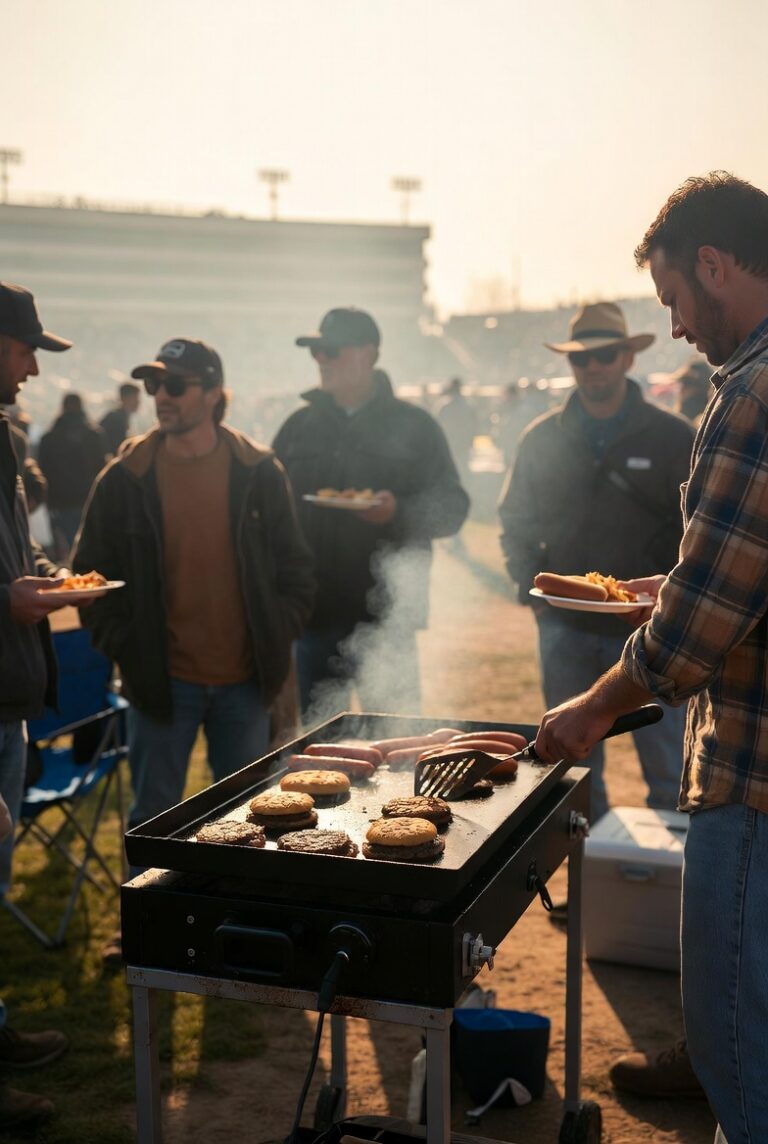
I picked up my 36-inch Blackstone back in April, and after working through the usual burgers and breakfast stuff, fajitas were one of the first real meals I tried. Complete game changer. The high heat and all that surface area means you can feed a crowd without doing that annoying thing where half the people are eating while you’re still cooking. Everything hits the table hot, charred, and ready to go.
Why the Blackstone Crushes It for Fajitas
Here’s what makes the griddle perfect for this. First, you’ve got space to keep the chicken separate from the vegetables if you want, which matters because they cook at slightly different rates. Or you can mix everything together if you’re going for that unified flavor situation. Your call, and you have the room to make either choice.
Second, that flat top gets screaming hot and stays there. We’re talking restaurant-level heat, which is what creates that char on the peppers and onions that makes fajitas taste like fajitas instead of just sautéed chicken and vegetables.
Third, and I did not appreciate this until I actually did it, you can toast your tortillas right on the griddle while the fajita mixture is resting. Just thirty seconds per side on a medium zone and they get these little char marks and become way more pliable. Sierra pointed out that our tortillas used to crack when we folded them, and that literally hasn’t happened since I started warming them properly.
What You’ll Need
For the Chicken and Vegetables
- 2 pounds boneless, skinless chicken breasts, sliced into thin strips (about ¼ to ½ inch thick)
- 3 bell peppers (I do one red, one green, one yellow for the color situation, but use whatever you’ve got)
- 2 large yellow onions
- 3 tablespoons vegetable oil (divided)
- Flour tortillas (figure 2-3 per person)
For the Fajita Seasoning
You can absolutely use a store-bought fajita seasoning packet and nobody will judge you. I did that the first time. But mixing your own takes maybe ninety seconds and you can tweak it to your preference. Here’s what I use now:
- 2 tablespoons chili powder
- 1 tablespoon cumin
- 1 tablespoon paprika
- 2 teaspoons garlic powder
- 2 teaspoons onion powder
- 1 teaspoon salt
- 1 teaspoon black pepper
- ½ teaspoon cayenne pepper (or more if you’re into that)
- ½ teaspoon oregano
For Serving
- Sour cream
- Shredded cheese
- Salsa or pico de gallo
- Guacamole or sliced avocado
- Lime wedges
- Cilantro if you’re not one of those people for whom it tastes like soap
Step-by-Step Instructions
Prep Work (Do This First, Seriously)
This is one of those situations where having everything ready before you fire up the griddle makes the whole process so much smoother. Once that flat top is hot, things move fast.
Slice your chicken breasts into strips. I aim for about a quarter inch thick and maybe three to four inches long. Thinner is actually better here because you want them to cook fast and pick up char without drying out. Put them in a big bowl.
Cut your bell peppers into strips roughly the same size as your chicken. I cut mine about ¼ inch wide. Remove all the seeds and white membrane stuff unless you enjoy that bitter taste, which I do not.
Slice your onions into strips about the same width. I cut mine pole to pole, not into rings, so you get those nice long strips that char up beautifully.
Mix up your seasoning blend in a small bowl if you’re going homemade. If you’re using a packet, just have it ready.
Take about two-thirds of your seasoning and toss it with the chicken strips until they’re evenly coated. Use your hands for this, it’s way more effective than trying to stir with a spoon. Save the remaining third of the seasoning for the vegetables.
Cooking the Fajitas
Alright, here’s where it happens. Turn on your Blackstone and set all the burners to medium-high. You’re aiming for a surface temperature around 400-425°F. If you don’t have a dual probe infrared thermometer yet, I highly recommend grabbing one because guessing temps was not working out great for me. They’re like fifteen bucks and you’ll use it constantly.
Let the griddle preheat for a solid ten minutes. This matters more than I initially thought. A properly preheated griddle means your food starts cooking immediately when it hits the surface instead of just sitting there steaming.
Once you’re up to temp, add about two tablespoons of oil to the griddle and spread it around with your spatula. Let it heat up for about thirty seconds until it’s shimmering.
Add your chicken strips. Spread them out in a single layer, and here’s the key part that took me a couple tries to figure out: don’t touch them for at least three to four minutes. Just leave them alone. You want them to develop that crust on the bottom before you flip them. The first time I made these, I kept moving everything around constantly and nothing got that proper char. Once I learned to let things sit and cook, everything improved.
After three to four minutes, flip the chicken pieces. They should release easily from the griddle if they’re ready. If they’re sticking, give them another minute. Cook for another three to four minutes on the other side. The chicken should hit an internal temp of 165°F. Check a few pieces with an instant-read thermometer if you’ve got one.
Once the chicken is cooked through, move it to a cooler zone on your griddle or scrape it to one side. If you’ve got a 36-inch like I do, you’ve got plenty of room to keep it warm without it continuing to cook hard.
Now add another tablespoon of oil to the griddle where you just cooked the chicken. Add your peppers and onions and sprinkle them with the remaining seasoning. Spread everything out into an even layer.
Same deal as the chicken: let them sit for three to four minutes before stirring. You want char, not steamed vegetables. After that first sit, toss everything with your spatulas, then let it sit again for another two to three minutes. Then toss again. Keep doing this for about ten to twelve minutes total. The onions should be softened and everything should have some nice charred edges.
Once your vegetables are where you want them, mix the chicken back in with everything. Toss it all together and let it sit for another minute or two so the chicken picks up the flavor from the vegetables and everything gets reheated. I keep a set of squeeze bottles filled with oil and water right next to my griddle, which makes it super easy to add a little moisture or fat exactly where you need it without having to run back inside.
While that’s happening, turn down one of your burners to low or medium-low. Move your fajita mixture to a cooler zone to keep warm, and start warming your tortillas on the medium-low zone. About thirty seconds per side. You’ll see them start to puff up slightly and get a few brown spots. Don’t walk away during this because they go from perfectly warmed to burnt surprisingly fast. Ask me how I know.
Pro Tips I Wish I’d Known Earlier
Use chicken thighs instead of breasts if you want more flavor and a bit more forgiveness on the cooking time. Thighs don’t dry out as easily. I still use breasts most of the time because that’s what Sierra prefers, but I’ve done it with thighs twice now and they were noticeably juicier.
If you want that authentic fajita experience, squeeze fresh lime juice over everything right before you serve it. Not lime juice from the little plastic lime in the refrigerator. Actual fresh lime. It’s one of those small things that makes a bigger difference than it should.
Don’t crowd the griddle. I know you’ve got all that space and you want to use it, but if you pile everything too thick, you’ll steam instead of sear. Better to do two batches if you’re feeding a crowd than to pack it all on there at once.
Season in layers. I season the chicken first, then season the vegetables separately. Some people toss everything together with seasoning before it hits the griddle, but I’ve found that seasoning in stages gives you more control and better distribution.
Let your chicken come to room temperature for about fifteen to twenty minutes before cooking. This helps it cook more evenly. Straight-from-the-fridge chicken tends to cook unevenly, where the outside overcooks before the inside is done.
If you want to add some extra flavor, throw a couple tablespoons of butter on the griddle in the last minute of cooking and toss everything in it. This is completely optional and not traditional at all, but it’s really good.
Common Mistakes to Avoid
The biggest mistake I see people make, and I absolutely did this my first attempt, is constantly moving the food around. It feels productive and it looks cool to be tossing everything with your spatulas, but you’re preventing anything from actually developing that char. Put it down, leave it alone, then flip or toss it. Repeat.
Second mistake is not getting the griddle hot enough. If you’re nervous about high heat and you cook these at medium or medium-low, you’ll end up with soggy vegetables and chicken that’s cooked through but doesn’t have any texture or char. You need that heat.
Third mistake is cutting the chicken too thick. If your strips are an inch thick, the outside will char before the inside cooks, or you’ll have to cook them so long that they dry out. Thin strips are the move.
Not preheating the griddle long enough. Ten minutes feels like forever when you’re standing there hungry, but it matters. An insufficiently preheated griddle means inconsistent cooking and food that sticks.
Using too little oil. The griddle surface is big, and oil helps with heat transfer and prevents sticking. Don’t drench everything, but don’t be scared of a couple tablespoons either.
What to Do with Leftovers
If you somehow have leftovers, which hasn’t happened the last couple times at our house, they reheat surprisingly well. Just warm up a zone of your griddle to medium, add a little oil, and toss the fajita mixture until it’s heated through. Takes maybe five minutes and they’re nearly as good as fresh.
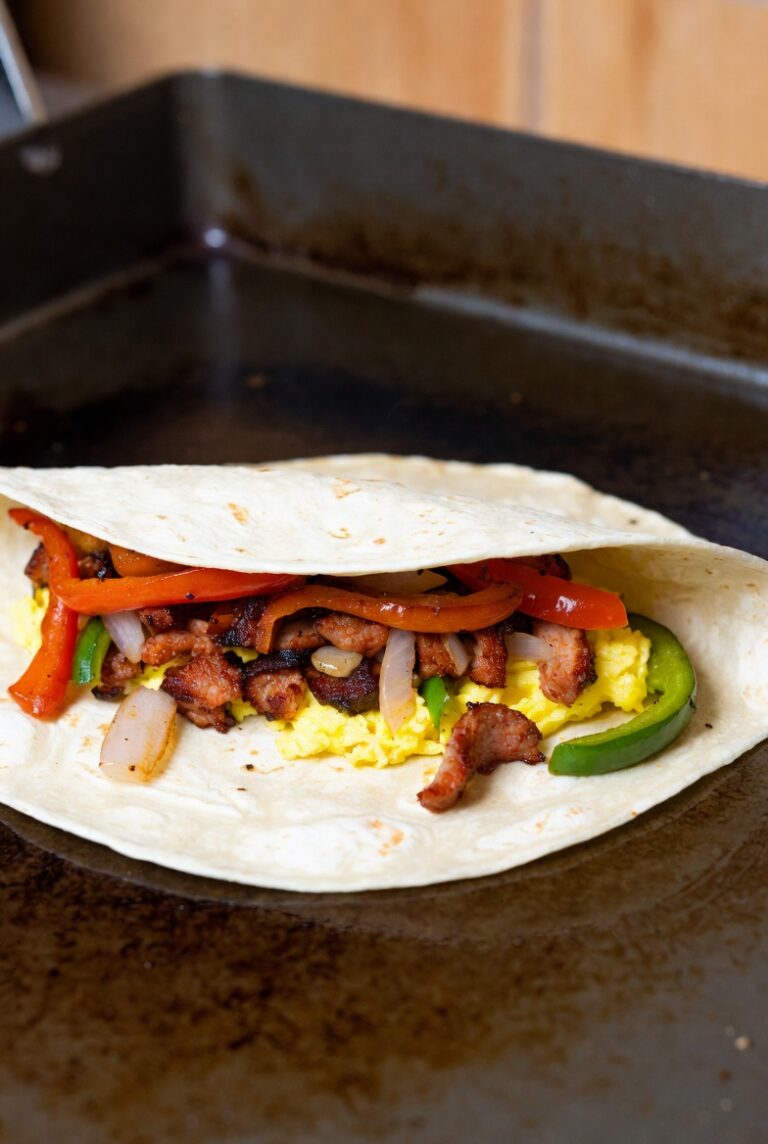
You can also use leftover fajitas for breakfast burritos, which I discovered by accident when we had some remaining on a Sunday morning. Scramble some eggs on the griddle, add the fajita mixture to warm it up, put everything in a tortilla with some cheese and salsa, and you’ve got a completely legitimate breakfast situation. If you’re doing breakfast regularly on your Blackstone, a basting cover is great for melting cheese on those breakfast burritos or getting eggs to cook evenly on top.
Frequently Asked Questions
What temperature should the Blackstone be for chicken fajitas?
You want your griddle surface at 400-425°F. This is hot enough to get good char and sear but not so hot that everything burns before it cooks through. Medium-high on the burner controls usually gets you there, but check with an infrared thermometer to be sure since every griddle is a little different.
Can I use frozen chicken?
Thaw it completely first. Frozen or partially frozen chicken on a hot griddle is going to cook really unevenly, and it’ll release a ton of water that prevents searing. Just thaw it in the fridge overnight or use the defrost setting on your microwave if you’re in a time crunch.
Do I need to marinate the chicken first?
Nope. The dry seasoning works great and you don’t have to plan ahead. If you want to marinate for a few hours with some lime juice, oil, and seasoning, it won’t hurt anything and might add a little extra flavor, but it’s definitely not necessary for great results.
What other proteins work for fajitas on the Blackstone?
Steak is obviously a classic choice. Slice it thin against the grain and cook it the same way as the chicken, just aim for medium-rare or medium instead of cooking it all the way through to 165°F. Shrimp also work really well and they cook even faster than chicken, so watch them carefully. I haven’t tried pork yet but I don’t see why it wouldn’t work.
How do I prevent the vegetables from getting mushy?
High heat and don’t move them too much. The mushiness comes from steaming instead of searing. If you let them sit and develop that char before tossing, they’ll stay firmer and have better texture.
Can I cook the chicken and vegetables together from the start?
You can, but I don’t recommend it. The chicken releases liquid as it cooks, which can make the vegetables steam instead of sear. Plus, they cook at slightly different rates. Chicken first, then vegetables, then combine everything at the end gives you better control and better results.
What’s the best way to slice the chicken?
Partially freeze it for about thirty minutes before slicing. This firms it up and makes it way easier to get thin, even slices. Also slice against the grain, which makes the chicken more tender. The grain is those long lines of muscle fiber you can see running through the meat. Cut perpendicular to those lines.
How many people does this recipe serve?
Two pounds of chicken with the vegetables and tortillas will comfortably feed four to five people, assuming you’ve got the usual toppings and sides. If you’re feeding teenage boys or people with serious appetites, maybe plan on three people. You can easily double everything if you’re doing a bigger group. The 36-inch griddle can handle it.
Final Thoughts
These Blackstone chicken fajitas have become one of my go-to moves when we have people over or when I just want something that feels like more than regular weeknight dinner without actually being complicated. The whole process from firing up the griddle to sitting down with loaded tortillas takes maybe forty minutes, and most of that is just cooking time where you’re standing there with a beer flipping things occasionally.
The dogs have figured out that the sound of the Blackstone igniting means food is happening, so now Bronco and Gunner post up about six feet from the griddle and just stare at me the entire time. I don’t give them any because seasoned chicken and onions seem like a bad idea for dog stomachs, but they remain optimistic.
Start with this recipe as written, then adjust it based on what you like. Want more heat? Add more cayenne or throw some sliced jalapeños in with the peppers. Want it less spicy? Cut back on the cayenne or leave it out entirely. Some people add a little brown sugar to the seasoning mix for a slightly sweet element, which I haven’t tried yet but sounds interesting.
The key thing is just getting comfortable with that high heat and resisting the urge to constantly fiddle with everything. Let it sit, let it char, and trust the process. Once you nail that technique, you can use it for pretty much any protein and vegetable combination you want. These same principles work for steak fajitas, shrimp fajitas, or even something like teriyaki chicken and vegetables.
If you’ve been thinking about trying fajitas on your Blackstone but weren’t sure how to approach it, just go for it. Worst case scenario, you end up with chicken and vegetables that could’ve been better but are still completely edible in a tortilla with enough toppings. Best case, which is pretty likely if you follow these temps and techniques, you end up with restaurant-quality fajitas and a new regular in your dinner rotation.