Blackstone Griddle Pancakes Recipe – Easy Breakfast Guide
Okay, so I need to tell you about making pancakes on my Blackstone griddle. I bought this thing back in April and honestly, pancakes were the third thing I ever cooked on it, right after smash burgers and bacon. The bacon made me realize this griddle could handle breakfast, and then Sierra suggested pancakes one Saturday morning and I thought, sure, why not? Turns out pancakes on a Blackstone might actually be better than pancakes anywhere else. The temperature control is insane, you can cook like twelve pancakes at once, and cleanup is weirdly satisfying. If you haven’t tried this yet, you’re about to have a weekend breakfast situation that’ll make you actually look forward to waking up early.
Blackstone Griddle Pancakes
Ingredients
Method
- In a large bowl, whisk together flour, sugar, baking powder, baking soda, and salt.
- In a separate bowl, mix buttermilk, eggs, melted butter, and vanilla extract.
- Pour wet ingredients into dry and stir until just combined — some lumps are fine. Do not overmix.
- Let batter rest for 5 minutes while you preheat the griddle.
- Preheat Blackstone to medium-low heat, targeting 350°F. Let it heat evenly for 5-7 minutes.
- Add butter to the griddle and spread over your cooking area. It should melt and sizzle gently without browning immediately.
- Pour approximately 1/3 cup of batter per pancake onto the griddle, spacing a few inches apart.
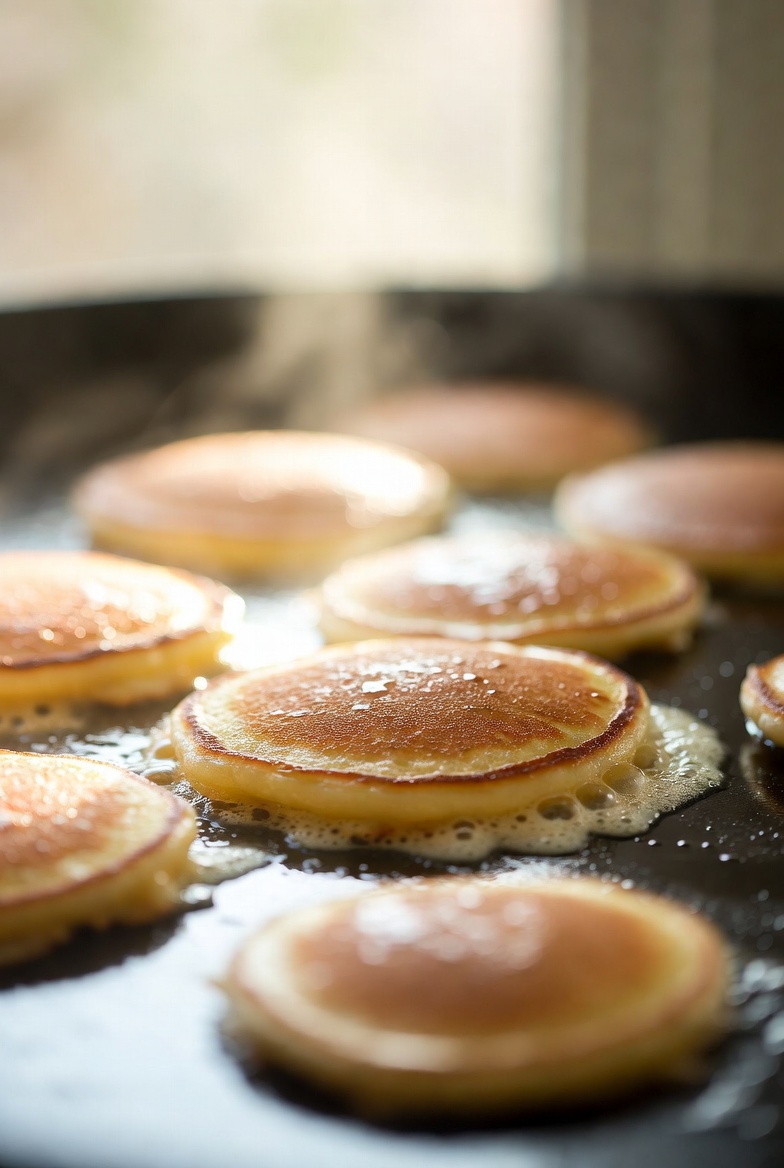
- Cook 2-3 minutes until bubbles form on the surface, pop, and edges look set and slightly dry.
- Flip once in a smooth confident motion. Cook the second side 1.5-2 minutes until golden brown.
- Remove and keep warm. Add more butter between batches and repeat.
Notes
- Don't skip the buttermilk — it reacts with the baking soda to create lift and makes a noticeable difference in fluffiness.
- Let the batter rest 5 minutes before cooking — this activates the leavening and relaxes the gluten for fluffier pancakes.
- Do not press down on pancakes with your spatula — you'll squeeze out the air and end up with dense flat pancakes
- 350°F is the sweet spot — too hot burns the outside before the inside cooks, too cool and you lose that golden crust.
- Add blueberries, chocolate chips, or banana right after pouring batter onto the griddle, pressing them in slightly before flipping.
- No buttermilk? Add 1 tablespoon of lemon juice or vinegar to regular milk and let it sit 5 minutes as a substitute.
Why Pancakes on a Blackstone Just Hit Different
Here’s what I’ve figured out in the last couple months. Traditional stovetop pancake making is kind of a pain. You’ve got one, maybe two pans going if you’re fancy. You’re flipping in batches while half your family sits there staring at you, waiting. Meanwhile the first pancakes are getting cold and you’re sweating over a hot stove.
The Blackstone fixes all of that. You’ve got 720 square inches of cooking surface that holds temperature like nothing I’ve ever used. I can put down eight to ten pancakes at once depending on size, and they all cook at exactly the same rate. Everyone eats hot pancakes at the same time. Revolutionary? Maybe I’m overselling it, but it genuinely changed our Saturday mornings.
Plus, and this is going to sound weird, but cooking breakfast outside just feels right. The dogs go absolutely nuts when they hear that ignition click. Bronco and Gunner have learned that griddle sounds mean something good is happening, and they’re not wrong.
The Basic Blackstone Pancakes Recipe
I’m going to give you the recipe I use most weekends now. It’s pretty straightforward, nothing fancy, but it works perfectly on the flat top.
Ingredients
- 2 cups all-purpose flour
- 2 tablespoons sugar
- 2 teaspoons baking powder
- 1 teaspoon baking soda
- 1/2 teaspoon salt
- 2 cups buttermilk (do not skip the buttermilk, learned that the hard way)
- 2 large eggs
- 1/4 cup melted butter, plus more for the griddle
- 1 teaspoon vanilla extract
This makes about 12-15 medium pancakes, depending on how heavy your pour hand is. I tend to make them on the larger side because, why not?
Equipment You’ll Need
- Your Blackstone griddle (obviously)
- Large mixing bowl
- Whisk
- Measuring cups and spoons
- Ladle or large spoon for pouring batter
- Wide spatula (I use the Blackstone spatula that came with mine)
- Squeeze bottle for the butter works great, or just use a stick
Step-by-Step Instructions
Step 1: Prep Your Batter First
Do not make the mistake I made the first time where I heated up the griddle and then scrambled to mix batter. Get everything ready before you even think about turning on the propane.
In your large bowl, whisk together the flour, sugar, baking powder, baking soda, and salt. In a separate bowl or large measuring cup, mix the buttermilk, eggs, melted butter, and vanilla. Pour the wet ingredients into the dry and stir until just combined. This is important and every recipe says it but it’s actually true here: don’t overmix. Some lumps are fine and actually good. Overmixed batter makes tough pancakes.
Let the batter rest for about five minutes while you preheat the griddle. Something happens during this rest time with the baking powder and baking soda, and the pancakes come out fluffier. I don’t know the exact science but I’ve done it both ways and resting is better.
Step 2: Preheat to 350°F
Here’s where the Blackstone really shines. Turn your burners to medium-low. I usually set mine somewhere between low and medium, closer to the low side. You’re aiming for a griddle surface temperature of about 350°F.
If you have a dual probe infrared thermometer, use it. I bought one off Amazon for like fifteen bucks right after I got the Blackstone and it’s been super helpful for learning what temperature my griddle is actually at versus what I think it is. At 350°F, water droplets will dance around before evaporating. Too hot and they’ll just instantly vaporize. Too cool and they’ll just sit there and slowly evaporate.
Give it a good five to seven minutes to preheat evenly across the surface.
Step 3: Oil Your Surface
Once you’re at temp, add butter to the griddle. I use real butter for pancakes because it adds flavor, though you can use oil if you want. Put down maybe a tablespoon or two and spread it around with your spatula over the area where you’ll be cooking. You don’t need to butter the entire 36-inch surface unless you’re doing a massive batch.
The butter should melt and sizzle gently but not brown immediately. If it’s browning fast, your temp is too high. Turn it down and wait a minute.
Step 4: Pour Your Pancakes
Use a ladle or measuring cup to pour batter onto the griddle. I use about 1/3 cup per pancake for medium-sized ones. You can fit a lot on there, but leave yourself room to work. The first couple times I got greedy and packed them in too tight, which made flipping awkward.
Space them out with a few inches between each one. I usually do six to eight at a time comfortably, though you could definitely do more once you get the hang of it.
Step 5: Watch for Bubbles
This is the fun part. You’ll see bubbles start forming on the surface of the pancakes after about two to three minutes. When the bubbles pop and leave little holes, and the edges start looking set and slightly dry, it’s time to flip.
With a traditional stove pan, checking on pancakes means hovering and guessing. With the Blackstone’s even heat, they all progress at the same rate. You can literally see across all of them at once which ones are ready. It’s so much easier.
Step 6: The Flip
Slide your spatula under the pancake confidently. They should release pretty easily if your temp is right and you got enough butter down. Flip them over in one smooth motion. The cooked side should be golden brown.
Cook the second side for about one and a half to two minutes. It needs less time than the first side. I usually peek at one by lifting a corner with the spatula to check color.
Step 7: Keep Them Warm and Keep Going
Once they’re done, move them to a plate or warming tray. I bought one of those warming racks that sits on the side shelf of the Blackstone specifically for this. Works great for keeping the first batches warm while you finish up the rest.
Repeat the process. Add more butter to the griddle between batches. You’ll get into a rhythm pretty quick.
Pro Tips I’ve Learned
These are things I figured out through trial and error over the past few weeks of weekend pancake sessions.
Temperature Consistency Is Everything
The biggest advantage of the Blackstone for pancakes is even heat. But you have to dial it in right. Too hot and the outside burns before the inside cooks. Too cool and they don’t get that nice golden crust. 350°F is the sweet spot I keep coming back to.
My griddle has four burners. For pancakes, I usually just use the two middle burners on medium-low. Heats the center section perfectly without wasting propane heating areas I’m not using.
Real Butter vs Oil
I’ve tried both now. Oil works fine and might actually be more practical if you’re doing a huge batch because butter can start to brown and smoke after a while. But butter tastes better. I split the difference sometimes: use a thin layer of oil as a base, then add just a little butter for flavor before each batch of pancakes goes down.
The Squeeze Bottle Game Changer
Sierra picked up a set of restaurant squeeze bottles from Amazon. We filled one with melted butter. Being able to squeeze out butter exactly where you need it instead of trying to spread it with a stick is way easier. Small thing but makes a difference.
Don’t Press Down on the Pancakes
I’ve seen people do this and I did it once or twice before I knew better. Do not press down on your pancakes with the spatula while they cook. You’re just squeezing out all the air and making them dense instead of fluffy. Just let them cook.
Add-Ins Work Great
Blueberries, chocolate chips, chopped bananas, whatever you want. Add them right after you pour the batter onto the griddle, pressing them in slightly. Wait until you see bubbles forming before you flip, same as regular pancakes.
I did a batch with chocolate chips two weeks ago that Bronco and Gunner were very disappointed to learn was not for them.
Common Mistakes to Avoid
Starting Too Hot
This was my first mistake. I figured high heat equals faster cooking. Wrong. I burned the outside of the first batch while the centers were still gooey. Medium-low heat feels counterintuitively low when you’re used to cranking burners, but trust the process.
Not Letting Batter Rest
The couple times I’ve been impatient and skipped the five-minute rest, the pancakes came out noticeably less fluffy. Those extra few minutes let the baking powder activate and the gluten relax. Just wait.
Walking Away
Even though the Blackstone is incredibly even with heat, you still can’t just abandon pancakes. They cook fast, and the window between perfect and overdone is maybe thirty seconds. Stay close and pay attention.
Skipping the Buttermilk
First batch I made I used regular milk because we were out of buttermilk. They were fine, I guess, but not nearly as fluffy and tangy. Buttermilk reacts with the baking soda to create lift. It matters. If you absolutely don’t have buttermilk, you can make a substitute by adding a tablespoon of lemon juice or vinegar to regular milk and letting it sit for five minutes.
Making the Pancakes Too Large
Bigger is not always better. Those monster-sized pancakes look impressive but they’re harder to flip without making a mess, and the centers can end up undercooked while the edges are done. Stick to a reasonable size, around four to five inches across. If you want perfectly round pancakes every time, those Blackstone egg rings actually work great for pancakes too, just pour the batter inside them.
Flavor Variations That Work
Once you’ve got the basic recipe down, you can mess with it pretty easily.
Cinnamon Vanilla: Add an extra teaspoon of vanilla and a teaspoon of cinnamon to the batter. Simple but makes them taste almost like cinnamon rolls.
Lemon Poppy Seed: Add two tablespoons of poppy seeds and the zest of one lemon to the batter. Really good if you’re into that coffeehouse bakery vibe.
Banana Nut: Mash one ripe banana into the wet ingredients and add half a cup of chopped walnuts or pecans. The banana adds natural sweetness so you can cut the sugar down to one tablespoon if you want.
Protein Pancakes: Replace half a cup of the flour with vanilla protein powder. They won’t be quite as fluffy but if you’re trying to hit macros they work fine and still taste good.
Frequently Asked Questions
Can I use pancake mix instead of making batter from scratch?
Absolutely. I’ve done it both ways depending on how much time I have. Boxed mix works great on the Blackstone. Just follow the temperature and technique guidelines. The griddle doesn’t care if your batter is homemade or from a box.
What temperature should I actually aim for?
350°F is the target. Anywhere from 325°F to 375°F can work, but 350°F is the sweet spot I keep landing on. Get an infrared thermometer if you don’t have one. Takes the guesswork out completely.
How do I keep pancakes warm while cooking multiple batches?
I use a warming rack on the side shelf, but you could also preheat your oven to 200°F and keep finished pancakes on a baking sheet in there. Or just turn one burner to low and keep them on a cooler section of the griddle itself.
Can I make these ahead of time?
You can, though they’re obviously best fresh off the griddle. If you want to meal prep, cook them all, let them cool completely, then freeze them in a single layer before transferring to a freezer bag. Reheat in the toaster or microwave. I did this once when I made too many and they reheated pretty well.
Do I need to season my griddle differently for pancakes than for burgers?
No, your regular seasoning is fine. I was worried about this at first but pancakes don’t stick any more than other foods if your seasoning is decent and you use enough butter. Just make sure to clean the griddle properly after use.
How many pancakes can I realistically cook at once?
On a 36-inch griddle, I comfortably do six to eight medium pancakes at a time with enough room to flip them without crowding. You could squeeze in ten or twelve if you’re confident with your spatula skills. I wouldn’t try to max it out until you’ve done a few batches and have the timing down.
What if my pancakes are cooking unevenly?
Check your griddle temperature across the surface. Some spots might be hotter than others depending on which burners you have going. Move pancakes around if needed, or adjust your burner settings. This honestly hasn’t been much of an issue for me, the Blackstone’s heat distribution is pretty impressive.
Cleanup Tips
After you’re done cooking, let the griddle cool down for a few minutes but not completely. While it’s still warm, scrape off any stuck-on batter bits with your spatula. Pour a little water on the surface and scrape again. The steam helps lift everything.
Wipe it down with paper towels, then apply a thin layer of oil. That’s it. The whole process takes maybe five minutes. Way easier than scrubbing multiple pans and a stovetop.
Final Thoughts
Making pancakes on the Blackstone has become our Saturday morning default now. It’s easier than traditional stovetop cooking, everyone eats together with hot food, and honestly it’s just more fun. There’s something about cooking breakfast outside that makes it feel like an event instead of a chore.
The learning curve isn’t steep. Get your temperature right, don’t overmix your batter, and use enough butter. That’s really it. The first batch might not be perfect while you’re dialing things in, but by the second or third round you’ll have it figured out.
Start with the basic recipe I gave you and then experiment once you’re comfortable. Add blueberries, try different extracts, whatever sounds good. The Blackstone’s even heat is forgiving enough that most variations will turn out fine.
If you’ve been using your griddle just for burgers and dinner stuff, give breakfast a shot. Pancakes are a great place to start because they’re simple and the results are immediately obvious. You’ll know within one batch if you’ve got the temp right, and adjusting is easy.
Now if you’ll excuse me, it’s Saturday morning and I’ve got two dogs staring at me expectantly because they heard me typing about pancakes and apparently think that means the griddle is about to fire up. They’re not wrong.