Blackstone Griddle Starter Kit: Essential Accessories
So you just bought a Blackstone griddle, or maybe it’s sitting in your cart right now and you’re trying to figure out what else you actually need to make this thing work. I get it—I was in the exact same spot a few weeks ago staring at my brand new 36-inch Blackstone wondering what the hell I was supposed to do with it besides throw some burgers on there.
Here’s the thing nobody tells you: the griddle itself is just the beginning. You need a few key accessories to actually use it properly, keep it in good shape, and not feel like you’re fumbling around like an idiot every time you fire it up. But here’s the other thing—you don’t need to drop another three hundred bucks on every gadget they try to sell you. Some stuff is essential, some stuff makes your life way easier, and some stuff is just nice to have when you’re ready.
This is the guide I wish I had before I started. I’ll walk you through exactly what you need right away, what you should grab pretty soon after, and what can wait. No fluff, just what actually matters when you’re getting started with your Blackstone.
The Absolute Essentials You Need Before You Even Turn It On
Let’s start with the stuff you literally cannot skip. I’m talking day-one, before-you-cook-anything essential.
Cooking Oil for Seasoning
Your griddle needs to be seasoned before you cook on it. This isn’t optional. You need a high smoke-point oil—I went with avocado oil because it has a smoke point around 500°F and doesn’t leave any weird taste. Canola works too, or flaxseed if you want to get fancy. You’ll need a decent amount for the initial seasoning—plan on using several tablespoons per coat, and you’ll be doing multiple coats.
Paper Towels (Lots of Them)
You’re going to go through paper towels like crazy. Spreading oil for seasoning, wiping down the surface, cleaning between cooks—It’s easy to underestimate how many you’ll go through. Grab the heavy-duty ones if you can. The cheap ones just fall apart when they get hot and oily.
Decent Spatulas
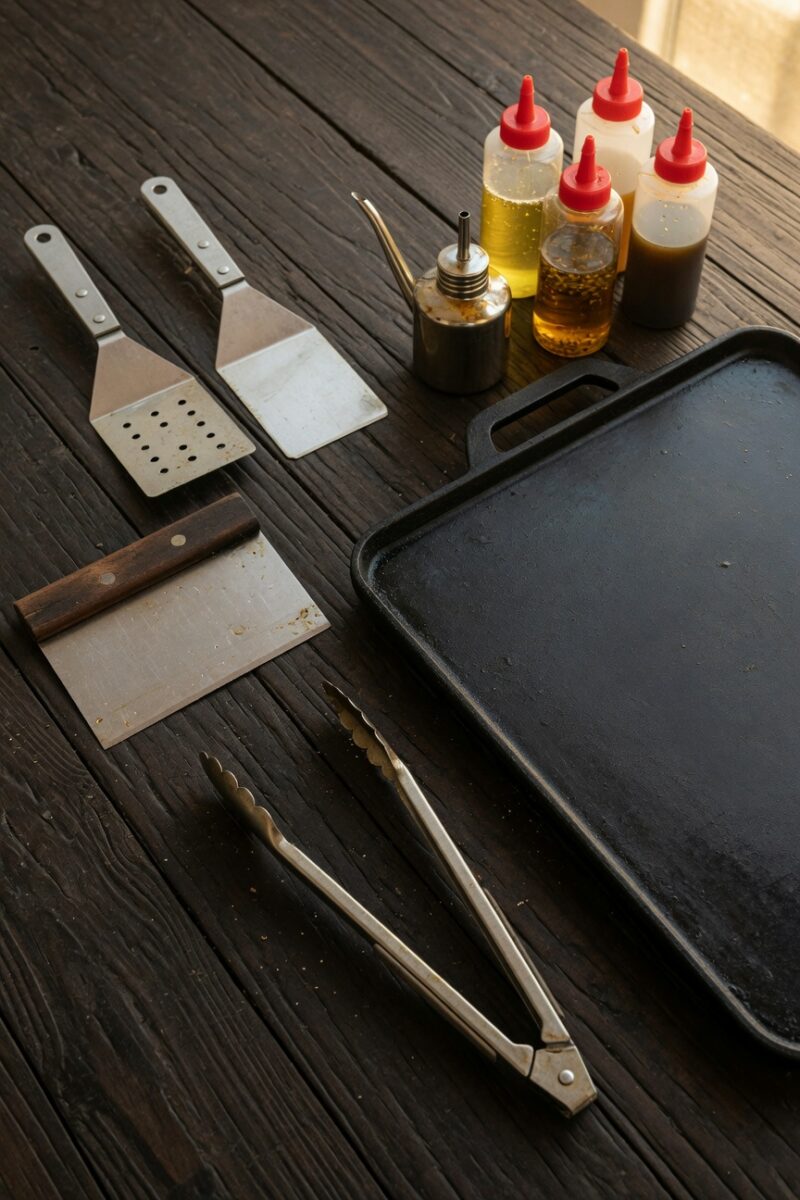
This is where most people screw up right away. Your regular kitchen spatula is not going to cut it. You need actual griddle spatulas—the big, long ones with a good edge. I started with a two-pack of stainless steel spatulas, and honestly, they’re still what I use for everything. Look for ones that are about 6 inches wide with a nice beveled edge. You want them long enough that your hands aren’t right over the heat.
Get at least two. When you’re smashing burgers or chopping up chicken, you need one in each hand. That’s when you actually feel like you know what you’re doing.
Squeeze Bottles for Oil and Water
Two standard plastic squeeze bottles changed everything for me. One for oil (I keep avocado oil in mine), one for water. The water bottle is crucial for steaming vegetables, deglazing, and doing the water-drop test to check your temp. The oil bottle gives you way more control than trying to pour from a regular bottle. You can get these anywhere—restaurant supply places have them cheap.
The Next Tier: Stuff You’ll Want Really Soon
You can technically cook without this stuff, but you’ll be ordering it within a week anyway. Trust me on this.
A Good Scraper
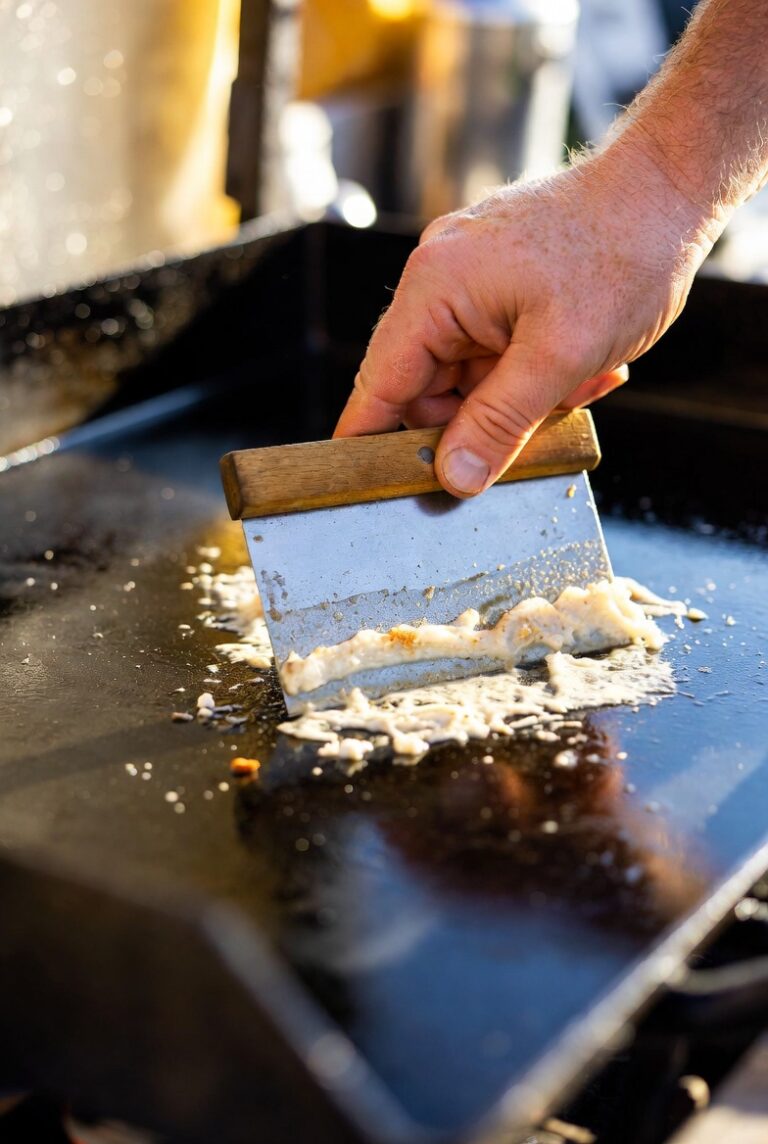
Different from your spatula. A proper griddle scraper has a straight edge and is built for cleaning, not cooking. The Blackstone-branded one works great, but any sturdy metal scraper designed for flat-tops will do the job. You use this while the griddle is still hot to push all the food debris and crud into the grease trap. It makes cleanup about ten times faster.
Griddle Cover
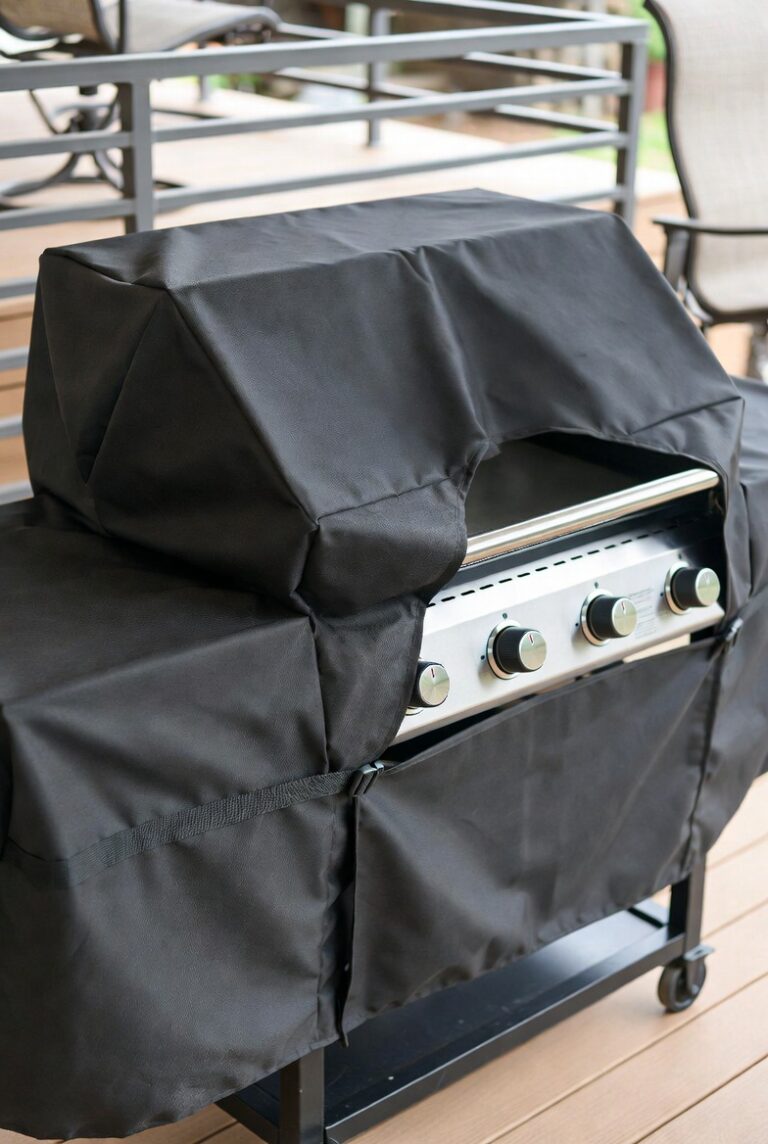
Unless your Blackstone lives in a garage, get a cover. Mine sits in the backyard, and even though I’ve only had it since April, I already know this thing needs protection from the elements. A proper fitted cover keeps rain, pollen, and random yard debris off your cooking surface. The Blackstone covers are fine, but make sure whatever you get actually fits your model. I have the 36-inch, so I needed the corresponding cover size.
Heat Resistant Gloves
Your regular oven mitts are going to be annoying on a griddle. Get a pair of heat-resistant gloves—the kind that actually fit your hands and let you grab stuff. A pair of heat-resistant gloves is worth having — welding-style ones handle up to around 900°F — for moving hot trays and grates safely. You’ll use these for moving hot pans around on the griddle, adjusting the grease trap, and basically any time you need to touch something near the cooking surface.
Griddle Tool Kit (Scraper, Spatula, Tongs, Bottle Holder)
Blackstone sells a tool kit that bundles a bunch of this stuff together, and honestly, it’s not a bad deal if you’re starting from zero. You get spatulas, a scraper, tongs, and usually a holder for your squeeze bottles. The quality is decent for the price. If you’ve already got good spatulas and a scraper, skip it. But if you need multiple things anyway, the kit saves you some cash.
The Stuff That Makes You Look Like You Know What You’re Doing
This is the category of accessories that aren’t necessary, but they make certain jobs way easier and make you feel like a legitimate griddle person.
Burger Press and Smasher
If you’re making smash burgers—and you should be, because they’re incredible on a griddle—a proper smasher makes it so much easier. You can use a spatula, but a heavy cast iron burger press or smasher gets you that perfect thin patty with crispy edges. I grabbed a simple cast iron one with a wood handle. Works perfectly.
Basting Cover (Dome)
These metal domes are awesome for steaming buns, melting cheese on burgers, and basically any time you need to trap heat and moisture. You just put it over whatever you’re cooking, and it creates a little oven environment. I use mine almost every time I make burgers now. You can get cheap ones at restaurant supply stores—don’t overthink this purchase.
Griddle Thermometer
An infrared thermometer gun is a game-changer if you want to actually know what temperature your cooking surface is. Different foods need different temps, and the knob settings on your Blackstone are not exactly precise. An infrared gun lets you point and shoot to get the surface temp anywhere on the griddle. Super useful when you’re learning what heat level works for different foods.
For reference, I cook pancakes and eggs around 300-325°F, burgers at 375-400°F, and I’ll crank it up to 450-500°F for a hard sear on steak or when I’m doing stir fry.
Griddle Caddy or Tool Holder
Just a magnetic strip or hanging rack to keep your tools organized near the griddle. It’s one of those things that seems unnecessary until you have it, and then you wonder how you functioned without it. Keeps your spatulas, scraper, tongs, and thermometer right where you need them instead of scattered across your patio table.
Cleaning and Maintenance Accessories
Here’s where people really drop the ball. You can’t just cook on this thing and walk away. Well, you can, but your griddle will look like hell pretty quick.
Griddle Cleaning Kit
The Blackstone cleaning kit comes with scouring pads, a handle to attach them to, and griddle cleaner solution. The scouring pads are safe for the seasoning—they’re not like steel wool that’s going to strip everything off. You use these when the griddle is warm (not screaming hot) to scrub off stuck-on food and build-up.
The cleaning solution is basically a heavy-duty degreaser. You spray it on, let it sit for a minute, then scrub with the pad. For routine cleaning after most cooks, I just use my scraper and some water. But every few sessions, I do a deeper clean with the scouring pad.
Extra Scouring Pads
Those pads wear out. Buy extras. They’re cheap, and you don’t want to be caught without them when you need to do a real cleaning.
Griddle Seasoning and Cast Iron Conditioner
After you clean your griddle, you need to put a thin layer of oil back on it. Some people just use regular cooking oil, and that works fine. But Blackstone also makes a specific seasoning and conditioning product that’s designed to build up that non-stick layer. A thin coat of cooking oil after each cook keeps the surface seasoned — avocado oil works well for this. A dedicated seasoning conditioner is an option some people like, but it isn’t essential.
The Nice-to-Have Stuff When You’re Ready
This is the category of things I’m either eyeing or planning to grab eventually, but they’re definitely not essential when you’re just starting out.
Griddle Cutting Board
These are big cutting boards with a handle and sometimes a juice groove, designed to sit right on your griddle frame. Super handy for chopping vegetables before they go on the griddle, or for slicing up cooked meat right there. Not necessary, but convenient.
Stainless Steel Mixing Bowls
Having a few bowls near your griddle station makes prep easier. You can put prepped ingredients in them, use them for mixing marinades, whatever. Regular kitchen bowls work fine—this is just about having them out there so you’re not running back and forth to the kitchen.
Egg Rings
Round metal rings that keep your eggs in a perfect circle and all together. Also great for making perfectly round pancakes or English muffin-sized portions. Totally optional, but kind of fun if you care about presentation.
Griddle Tool Apron or Belt
Exactly what it sounds like—an apron with pockets or loops to hold your tools. I haven’t grabbed one yet, but I can see how it would be useful when you’re cooking for a crowd and moving around a lot. Keeps your spatulas and thermometer on you instead of on the griddle shelf.
Grill Light
If you’re cooking after dark, a magnetic LED light that clips onto your griddle or hood is super helpful. I’ve been using my phone flashlight like a caveman, which is not ideal when you’re trying to check if your chicken is done.
What You Definitely Don’t Need
Let’s talk about the accessories that are just unnecessary, especially when you’re starting out.
You don’t need specialized griddle scrapers in twelve different shapes. One good scraper handles everything. You don’t need a fancy seasoning wax or expensive conditioner—basic high smoke-point oil works great. You don’t need griddle-specific salt and pepper shakers or custom spice racks. That’s just marketing.
You also don’t need a wind guard unless you’re in an extremely windy location. Most backyards don’t need it. And you definitely don’t need any electric gadgets that claim to make griddle cooking easier. This is simple, direct-heat cooking. Don’t overcomplicate it.
My Actual Starter Kit Recommendation
If I were buying everything again from scratch, here’s exactly what I’d get in my first order:
- Two restaurant-style griddle spatulas (6-inch width)
- One good metal scraper
- Two squeeze bottles (one for oil, one for water)
- Avocado oil or canola oil (at least 32 oz)
- Heavy-duty paper towels
- Heat-resistant gloves
- A fitted griddle cover
- Griddle cleaning kit with scouring pads
- Infrared thermometer
That setup will get you through your first several weeks without feeling like you’re missing anything critical. Everything else can wait until you figure out what kind of cooking you’re doing most often.
Common Mistakes People Make with Accessories
The biggest mistake is buying too much stuff before you even know how you’ll use the griddle. I’ve seen people drop serious money on every accessory in the catalog, and then half of it sits unused. Start with the basics, cook for a few weeks, and then you’ll know exactly what you actually need.
Another mistake is cheaping out on spatulas and scrapers. These are your primary tools. You use them every single time you cook. Spending an extra ten bucks on quality versions is worth it. The flimsy ones bend, the edges aren’t sharp enough, and they make everything harder.
People also screw up by not getting a cover, and then they’re surprised when their griddle develops surface rust from sitting in the rain. Even if you think your griddle is protected under a deck or overhang, get a cover. It takes two seconds to put on and saves you a lot of headache.
And here’s one I almost messed up: using the wrong oil for seasoning. If you use olive oil or butter, which have low smoke points, you’re going to end up with a sticky, gummy surface instead of a smooth non-stick layer. Stick with high smoke-point oils—avocado, canola, grapeseed, flaxseed.
How to Actually Use Your Starter Kit
Once you’ve got your essential accessories, here’s the basic flow for using them:
Before Your First Cook: Seasoning
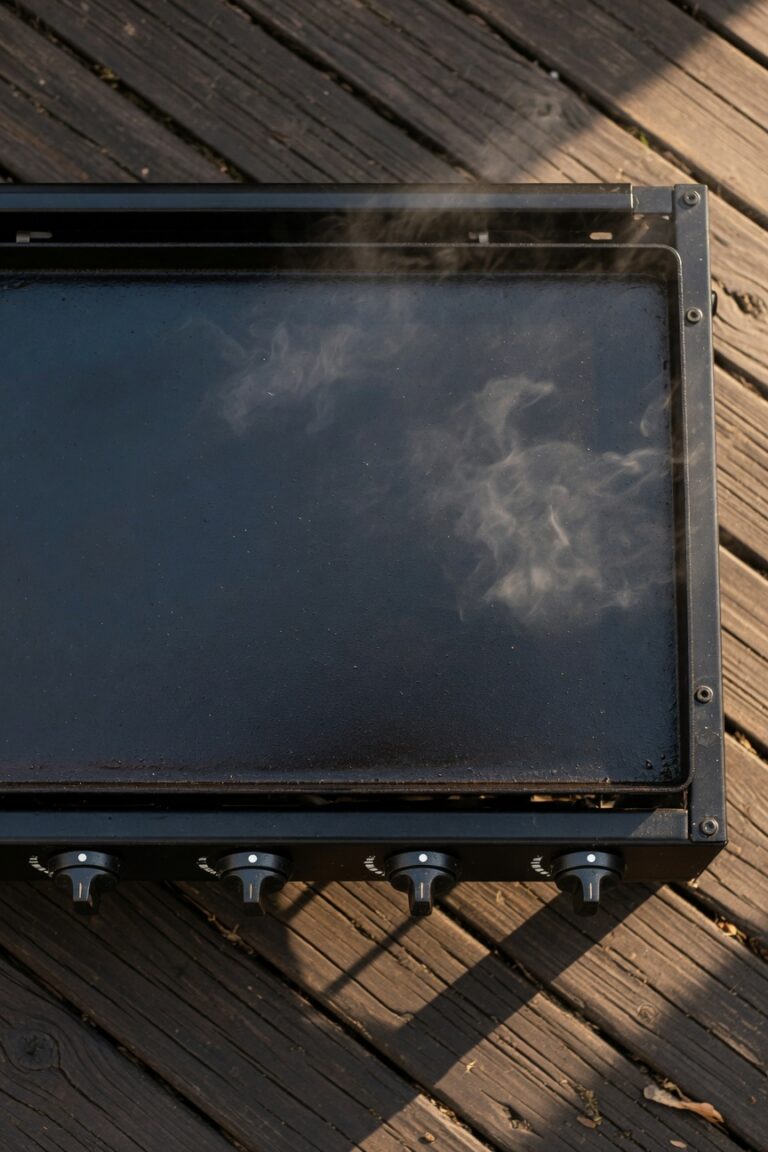
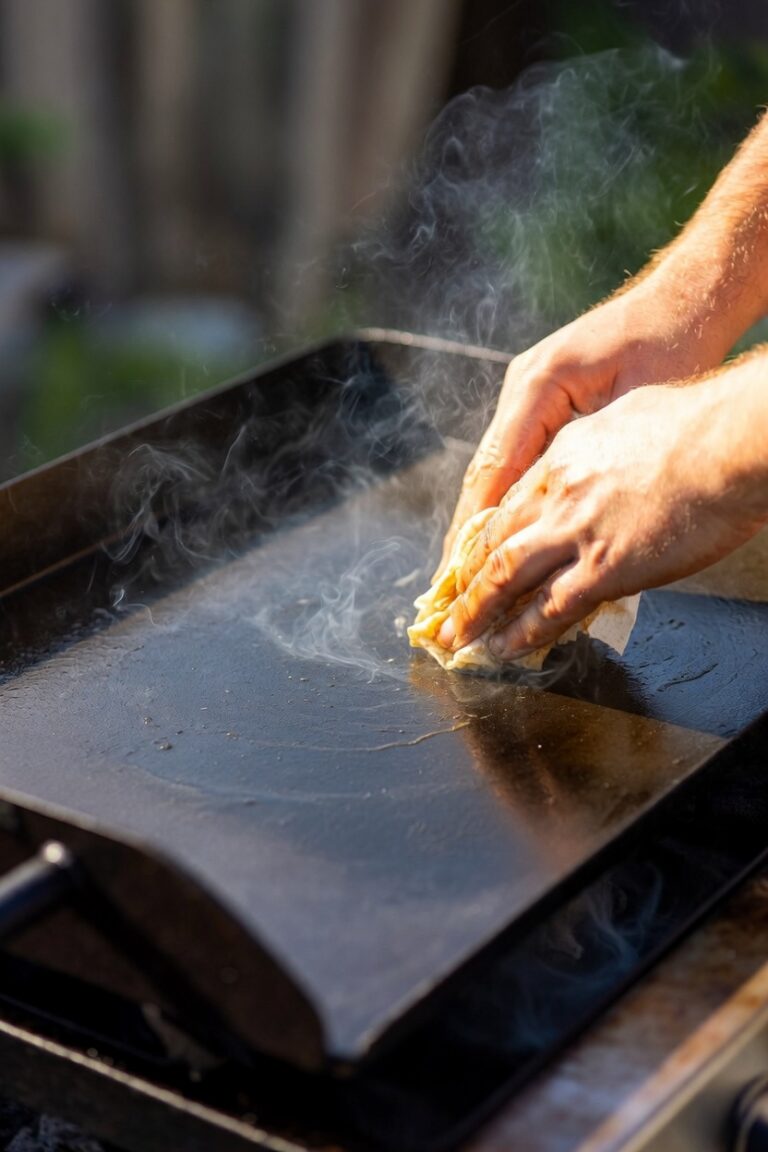
Turn all burners to high and let the griddle heat up until it stops smoking (around 10-15 minutes). The surface will go from shiny to a darker color. Turn the heat down to medium. Pour about 2-3 tablespoons of oil onto the surface and spread it thin with wadded paper towels (use your heat-resistant gloves for this). Let it smoke and cook onto the surface for about 15 minutes. Wipe off any excess oil. Repeat this process 3-4 times. You’re building up layers of polymerized oil that create the non-stick surface.
For Regular Cooking
Fire up your burners to the heat level you need (use that infrared thermometer to check). Use your squeeze bottle to add oil where you’re cooking. Cook your food using your spatulas to flip, move, and chop. Use the water bottle to steam vegetables or create moisture when needed. Use your basting dome to melt cheese or steam buns.
After Every Cook: Cleaning
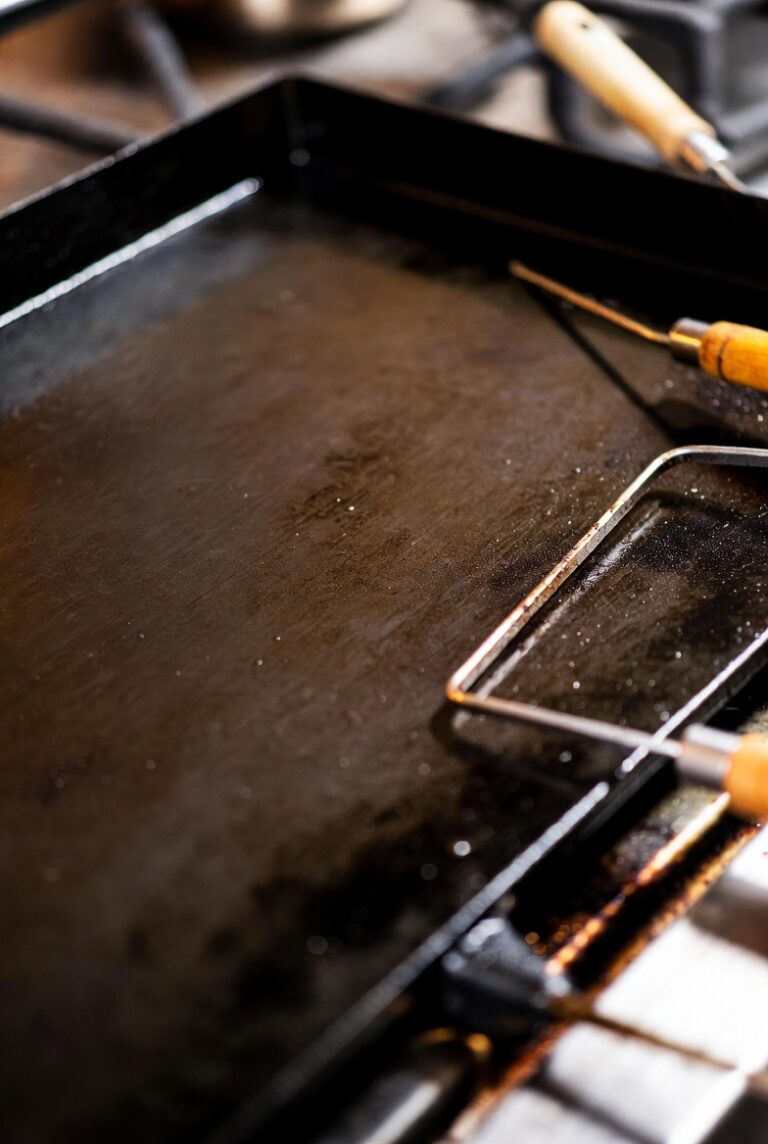
While the griddle is still warm (not screaming hot), use your scraper to push all the food bits and grease toward the grease trap. Squirt some water on the surface and use your scraper to scrub any stuck-on spots—the steam helps loosen everything. Scrape all that debris into the grease trap. Wipe the whole surface down with dry paper towels. Once it’s clean and dry, add a thin layer of oil and spread it around with a paper towel. This re-seasons the surface and protects it until the next cook.
Deep Cleaning (Every Few Weeks)
Heat the griddle to medium. Apply griddle cleaning solution to the surface. Use your scouring pad with the handle to scrub the whole surface. Scrape all the loosened gunk into the grease trap. Wipe clean with paper towels. Re-season with a fresh layer of oil.
Frequently Asked Questions
Do I really need Blackstone-brand accessories or will generic ones work?
Generic accessories work fine for most things. Restaurant supply spatulas and scrapers are often better quality and cheaper than branded ones. The main thing where the official Blackstone product matters is the cover—make sure it actually fits your griddle model properly. For everything else, focus on quality and function, not the brand name.
How much should I expect to spend on starter accessories?
For the essential kit I recommended above, you’re looking at around $100-150 total if you shop smart. That includes spatulas, scraper, bottles, oil, gloves, cover, cleaning kit, and thermometer. You can go cheaper if you skip the thermometer at first or find deals on bundles.
Can I use my regular kitchen tools on the griddle?
Your regular spatula is too small and probably not sturdy enough. Kitchen tongs work fine. Regular bowls and cutting boards work fine. But you really do need proper griddle spatulas and a scraper—those are non-negotiable.
What’s the difference between a scraper and a spatula?
A spatula is for cooking—flipping, moving, chopping food while you cook. It usually has a beveled edge and some flexibility. A scraper is for cleaning—it has a straight, rigid edge designed to push debris and scrape stuck-on food off the surface. You need both.
Do I need different accessories for different griddle sizes?
The tools themselves are the same regardless of griddle size. The only thing that changes is your cover—that needs to fit your specific model. A 36-inch griddle uses the same spatulas as a 22-inch, you’ll just have more cooking space to work with.
How often do I need to replace accessories?
Scouring pads wear out every few months depending on how often you deep clean. Paper towels are obviously consumable. Everything else should last years if you take care of it. Spatulas and scrapers are basically forever unless you really abuse them.
Final Thoughts
Look, the accessory game can get overwhelming if you let it. There are literally hundreds of products marketed to Blackstone owners, and most of them are trying to solve problems you don’t actually have.
Start with the essentials I listed above. Get your griddle properly seasoned, cook on it a few times, figure out what you like making. Then add accessories based on what you’re actually doing, not what you think you might do someday.
The best part about the Blackstone is how simple it is—flat heat surface, cook food, scrape it clean. Don’t let accessories complicate that. Get the basics that let you season it properly, cook safely, and clean it correctly. Everything else is just extra.
I’m still figuring this stuff out myself, but these accessories have made the learning curve way less frustrating. Nothing worse than being excited to cook and realizing you don’t have the right tool for the job. Get set up properly from the start, and you’ll actually enjoy the process instead of fighting with your equipment.