Blackstone Griddle Not Heating Evenly? Quick Fixes
Nothing kills your griddle vibe faster than throwing down some burgers or smash tacos and watching one side cook perfectly while the other side just sits there looking sad and pale. I’m about two months into my Blackstone journey, and this was one of the first things I noticed – my 36-inch griddle wasn’t heating the same across the whole surface. Before you panic like I almost did, this is actually pretty normal, and there are solid ways to fix it or work around it.
The thing is, uneven heating on a Blackstone isn’t usually a defect. It’s either part of how these griddles naturally work, or it’s something you can adjust. Let me walk you through what’s actually happening and how to get that cooking surface dialed in.
Why Your Blackstone Griddle Isn’t Heating Evenly
First, let’s talk about what causes uneven heating. Understanding the actual reasons makes it way easier to fix.
The Burner Design Reality
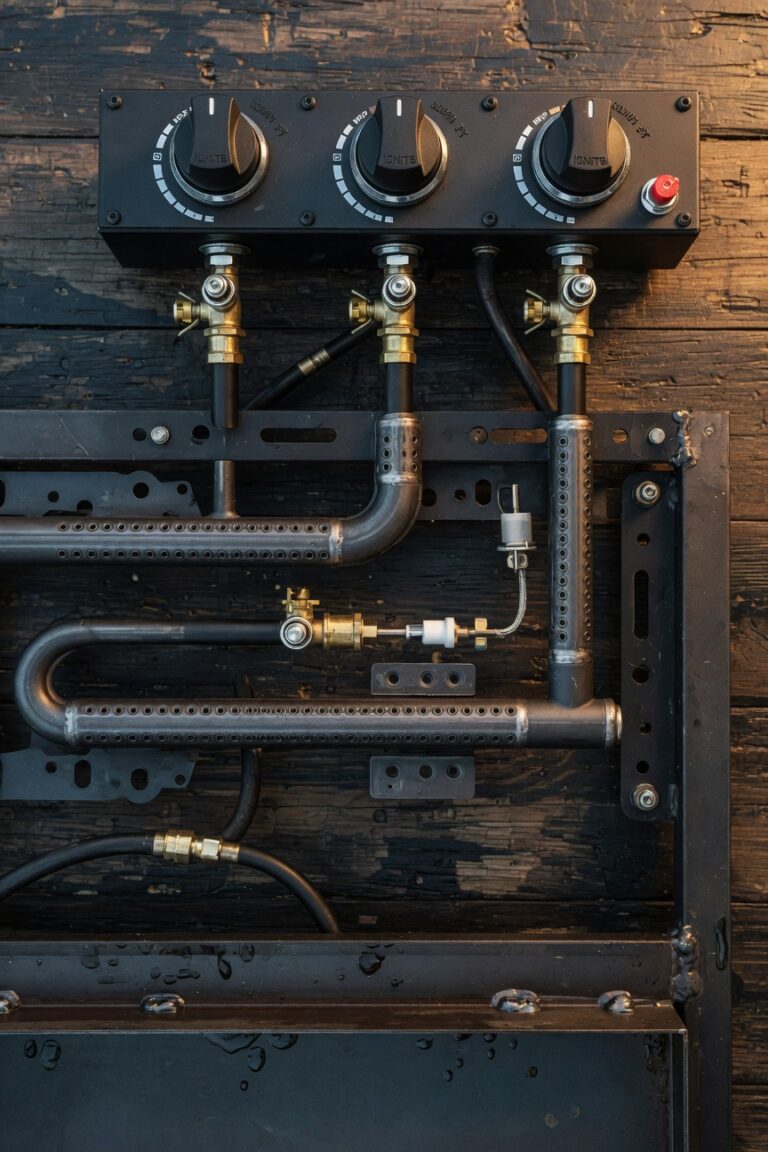
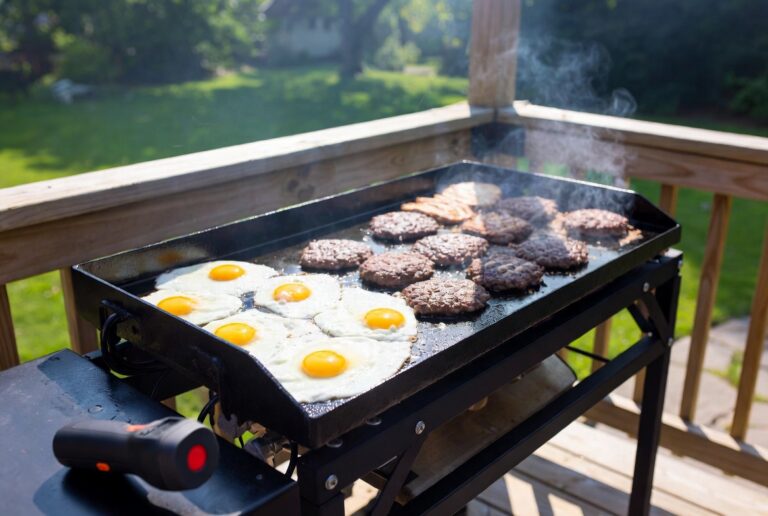
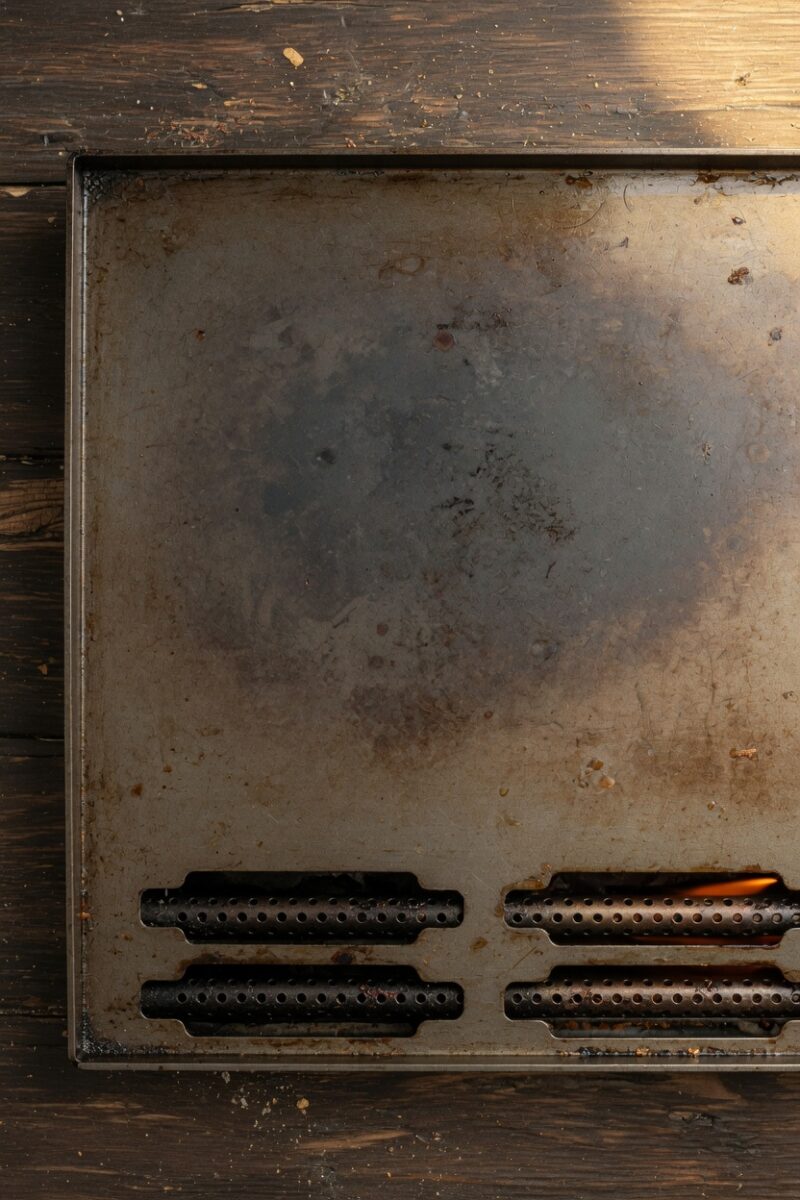
My 36-inch Blackstone has four independent burners running left to right under the griddle top. Each burner is essentially a long H-shaped or U-shaped flame tube that heats a specific zone. Here’s what most people don’t realize right away – those burners don’t overlap much. The heat from the left burner doesn’t really spread over to help the right burner’s zone. You’ve got distinct heating zones, not one uniform heat source.
This means if you crank all four burners to high, you’ll generally get four hot zones with slightly cooler spots between them. That’s just physics. The flat top conducts heat across its surface, but steel has its limits.
Burner Output Differences
Sometimes one burner is actually putting out less flame than the others. This could be a few things – a partially clogged burner tube, a burner that needs adjustment, or even just how propane flows through your regulator and manifold. If you notice one burner seems less aggressive than the others, it’s worth checking the connections and the burner tube before assuming anything’s wrong.
Griddle Top Thickness and Warping
The griddle top itself matters. Most Blackstone tops are cold-rolled steel, and they’re pretty thick, but they can develop very slight warping over time with repeated heating and cooling. Brand new griddles can also have minor manufacturing variations. If there’s a tiny gap between the steel top and the burner in one spot, that area won’t heat as efficiently.
Seasoning Thickness Variations
This one surprised me. If you’ve built up more seasoning layers in some areas than others, those thicker spots can actually heat slightly differently. It’s not a huge factor, but it can contribute to what you’re noticing, especially if you tend to cook in the same zones repeatedly.
Wind and Weather
Here in East Hampton, we get some decent wind coming through the yard. Wind hitting one side of your griddle will absolutely cool that side down faster than the protected side. If your Blackstone is out in the open, this is a real factor you need to account for.
How to Fix Uneven Heating on Your Blackstone
Alright, here’s what actually works to get better heat distribution.
Check Your Propane Connection and Regulator
Start here because it’s the easiest thing to rule out. Make sure your propane tank is more than a quarter full – low pressure from an almost-empty tank can cause weak flames. Check that the regulator is properly connected and not stuck in bypass mode.
Here’s how to reset your regulator if you think it might be in bypass mode:
- Turn off all the burner knobs on your Blackstone
- Turn off the valve on your propane tank
- Disconnect the regulator from the tank
- Wait about 30 seconds
- Reconnect the regulator to the tank, hand-tighten only
- Turn on the propane tank valve very slowly – like take five seconds to open it fully
- Wait another 10 seconds
- Now turn on your Blackstone burners and ignite them
This reset process has helped a bunch of people who thought their griddle was broken. The regulator can go into safety mode if it detects what it thinks is a leak – usually from turning burners on before the propane valve is open.
Inspect and Clean Your Burner Tubes
Pull out your burner tubes and look down them. You’re checking for spider webs, dirt, rust, or any debris that might block gas flow. Even a partial blockage will reduce flame on that burner.
To clean them:
- Make sure everything is off and cool
- Remove the griddle top if possible (check your model – some lift off easily, others require tools)
- Disconnect the burner tubes from the gas manifold
- Use a bottle brush or pipe cleaner to clean inside each tube
- Blow compressed air through them if you have it
- Check the venturi openings (where air mixes with gas) for obstructions
- Reinstall everything and test
Verify Each Burner Flame
Light your griddle and actually look at the flames from each burner. You want a nice blue flame with maybe a little yellow at the tips. All burners should look roughly the same.
If one burner has a weak, small flame or mostly yellow flame, that burner has an issue. It could be the burner itself, or it could be how it’s positioned relative to the gas manifold. Sometimes burners get knocked slightly out of alignment, and repositioning them makes a huge difference.
Use a Heat Deflector or Wind Guard
If wind is your problem, you need to block it. Some people build simple three-sided wind breaks using concrete blocks or wood. Blackstone sells magnetic wind guards for some models. Even just repositioning your griddle so a fence or your house blocks the prevailing wind helps a lot.
Preheat Longer and More Strategically
This is the game-changer that doesn’t require fixing anything. Instead of cranking all burners to high and cooking five minutes later, try this:
- Turn all burners to medium or medium-high (not full blast)
- Close the lid if you have one, or put a couple of large basting covers over sections
- Let it preheat for 15 minutes
- Use an infrared thermometer to check surface temps across different zones
- Adjust individual burners up or down to balance the temps
The longer preheat gives the steel time to conduct and distribute heat more evenly. Going straight to high heat immediately creates hot spots before the steel can equalize.
Adjust Burners Individually During Cooking
Here’s what I started doing that made a massive difference – I don’t run all burners at the same setting. If I know my left side runs hotter, I keep that burner at medium while the others are at medium-high. You can fine-tune each zone to compensate for the natural differences in your specific griddle.
Use that infrared thermometer and actually measure. You want your cooking surface between 350°F and 400°F for most foods. Check multiple spots and adjust the burners underneath those spots accordingly.
Rotate Your Food
Sometimes the simplest solution is the best one. If you know you have a hotter zone and a cooler zone, use them strategically. Start food in the hot zone to get a good sear, then move it to the cooler zone to finish cooking through. Rotate items halfway through cooking.
I’ve started thinking of my griddle as having different neighborhoods with different purposes rather than expecting it to be perfectly uniform everywhere.
Working With Your Griddle’s Heat Zones
Once you map out where your hot and cool spots are, you can actually use them to your advantage.
Create a Temperature Map
Do this once with your infrared thermometer and remember it:
- Preheat your griddle for 15 minutes with all burners on medium
- Measure the surface temperature in a grid pattern – I did nine spots, three across and three deep
- Write down what you find
- Now you know your griddle’s personality
My 36-inch runs hottest in the center-left zone and coolest on the far right. Knowing that, I put smash burgers center-left for maximum sear, and I toast buns on the far right where they won’t burn.
Multi-Zone Cooking
Use different burner settings to create deliberate temperature zones:
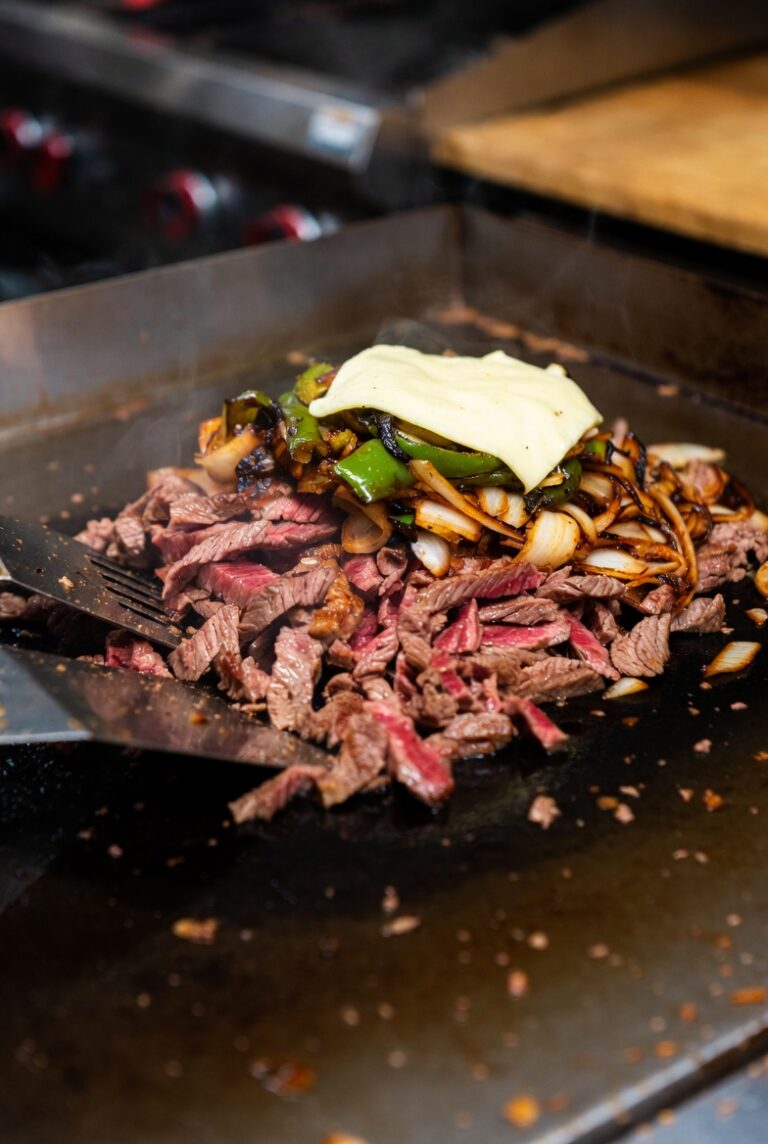
- High heat zone (400°F-450°F) for searing steaks, smashing burgers, getting char on vegetables
- Medium heat zone (325°F-375°F) for cooking through chicken, fish, regular burgers, pancakes
- Low heat zone (250°F-300°F) for keeping food warm, toasting buns, cooking eggs
Turn individual burners to different settings to create these zones. This is actually better than having perfectly even heat because you get more versatility.
Common Mistakes That Make Uneven Heating Worse
Let me save you some frustration by pointing out what doesn’t help.
Cranking Everything to High Immediately
Maximum heat on all burners right away is the worst way to preheat. It creates intense hot spots right over the burner tubes and doesn’t give the steel time to equalize. Start at medium and be patient.
Ignoring the Wind
If it’s windy out, your griddle will never heat evenly without protection. Stop fighting it and add a wind break. The difference is immediate and dramatic.
Not Cleaning the Grease Trap and Drip Tray
This doesn’t directly affect heating, but a full grease trap can cause airflow issues and even small grease fires that mess with your temperature control. Keep it clean.
Cooking on a Cold Griddle
I know you’re hungry, but throwing food onto a griddle that’s only been heating for three minutes means you’re cooking on uneven temps no matter what. Give it time.
Never Using a Thermometer
You can’t manage what you don’t measure. An infrared thermometer costs like 20 bucks and tells you exactly what’s happening. Stop guessing.
Assuming the Problem is Permanent
A lot of heating issues are situational – temperature outside, how much propane is in your tank, wind conditions, how long you preheated. Don’t assume your griddle is defective without troubleshooting the variables.
When to Contact Blackstone Support
If you’ve tried everything and you have one burner that clearly isn’t working right despite cleaning and checking connections, reach out to Blackstone. They have solid customer support, and if there’s actually a defective burner or regulator, they’ll help you out.
Signs of a real problem versus normal variation:
- One burner won’t light at all
- One burner flame is dramatically different (tiny flame or huge flame) compared to others after cleaning
- You see flames coming from somewhere other than the burner ports
- You smell gas when burners are off
- The griddle top has obvious warping you can see with your eye
Normal variation that you should work with, not worry about:
- Temperature differences of 25-40 degrees between different zones
- Slightly hotter areas directly over burner tubes
- Cooler spots between burners
- One side heating faster in windy conditions
Pro Tips for Better Heat Control
Here’s the stuff that’s made my cooking better since I figured out my griddle’s quirks.
Invest in an Infrared Thermometer
I’m saying it again because it matters that much. Get one. Use it. You’ll learn more about your griddle in one session than in a month of guessing.
Keep a Spray Bottle of Water Handy
If a spot is getting too hot and burning food, a quick spritz of water cools it down fast. This gives you real-time temperature control beyond just the burner knobs.
Season Your Griddle Evenly
When you’re building or maintaining your seasoning, try to coat and heat the entire surface evenly. Consistent seasoning helps with consistent heating and cooking performance.
Consider Your Food Placement
Put foods that need higher heat in your hot zones. Put foods that need gentler cooking in cooler zones. Match the food to the griddle geography instead of fighting it.
Preheat With the Lid Down
If your model has a lid or hood, use it during preheat. It traps heat and helps everything come up to temperature more evenly. If you don’t have a lid, consider getting a basting dome or two – they trap heat when you place them over sections during preheat.
Frequently Asked Questions
Why is one side of my Blackstone hotter than the other?
Usually it’s wind hitting one side, or one burner is putting out more heat than the other. Check for wind first since that’s the easiest fix. Then verify all burners are producing similar flames. Also make sure you’re preheating long enough for the steel to conduct heat across its surface.
How long should I preheat my Blackstone for even heating?
At least 10-15 minutes on medium heat. Longer is better. The thick steel top needs time to heat all the way through and equalize temperature across its surface. Rushing this is the number one cause of uneven cooking temps.
Should all burners be set to the same temperature?
Not necessarily. If your griddle has natural hot and cool spots, adjust individual burners to compensate. Use an infrared thermometer to measure surface temps, then turn hotter burners down slightly or cooler burners up slightly until you get the balance you want.
Can a warped griddle top cause uneven heating?
Yes, but it’s usually minor. If the steel has warped and lifted away from the burner in spots, those areas won’t heat as efficiently. Severe warping is rare on newer griddles. Most heating issues come from other causes.
Why does my griddle heat unevenly on cold days?
Cold ambient temperatures and wind pull heat away from your cooking surface faster. You’ll need to preheat longer, possibly use higher burner settings, and definitely add wind protection. Some people don’t griddle outside when it’s below 40°F for this reason.
Is it normal for Blackstone griddles to have hot spots?
Yes, completely normal. You have multiple burners creating multiple heat zones. Some variation in temperature across a 36-inch surface is expected and not a defect. Most experienced griddle users learn their griddle’s heat pattern and work with it.
How do I know if my regulator is in bypass mode?
Your flames will be weak and small, often with more yellow than blue. The griddle won’t get hot even on high settings. This happens when the regulator thinks there’s a leak and restricts gas flow. Reset it by following the steps I outlined earlier.
Will a new griddle top fix my uneven heating?
Probably not, unless your current top is severely damaged or warped. Most uneven heating is about burner performance, preheating technique, wind conditions, or expecting too much uniformity from a flat top with multiple independent burners. Fix those things first.
Final Thoughts
Look, after dealing with this myself and figuring out what actually works, I can tell you that some temperature variation is just part of owning a flat top griddle. These aren’t precision cooking instruments like your indoor range. They’re outdoor cooking tools with multiple burners heating a large steel surface, and some variance comes with the territory.
The good news is that once you understand where your hot and cool zones are, you can use them strategically instead of fighting them. My griddle cooks better now that I’ve stopped expecting perfect uniformity and started working with its natural temperature zones.
Start with the basics – check your propane connection, reset your regulator, clean your burners, add wind protection, and preheat properly. That solves the problem for most people. If you still have dramatic differences after that, reach out to Blackstone support.
And get that infrared thermometer. Seriously. It changes everything when you can see exactly what’s happening on your cooking surface instead of guessing. You’ll dial in your griddle game so much faster.
Now get out there and cook something. Bronco and Gunner are probably already waiting by the back door.