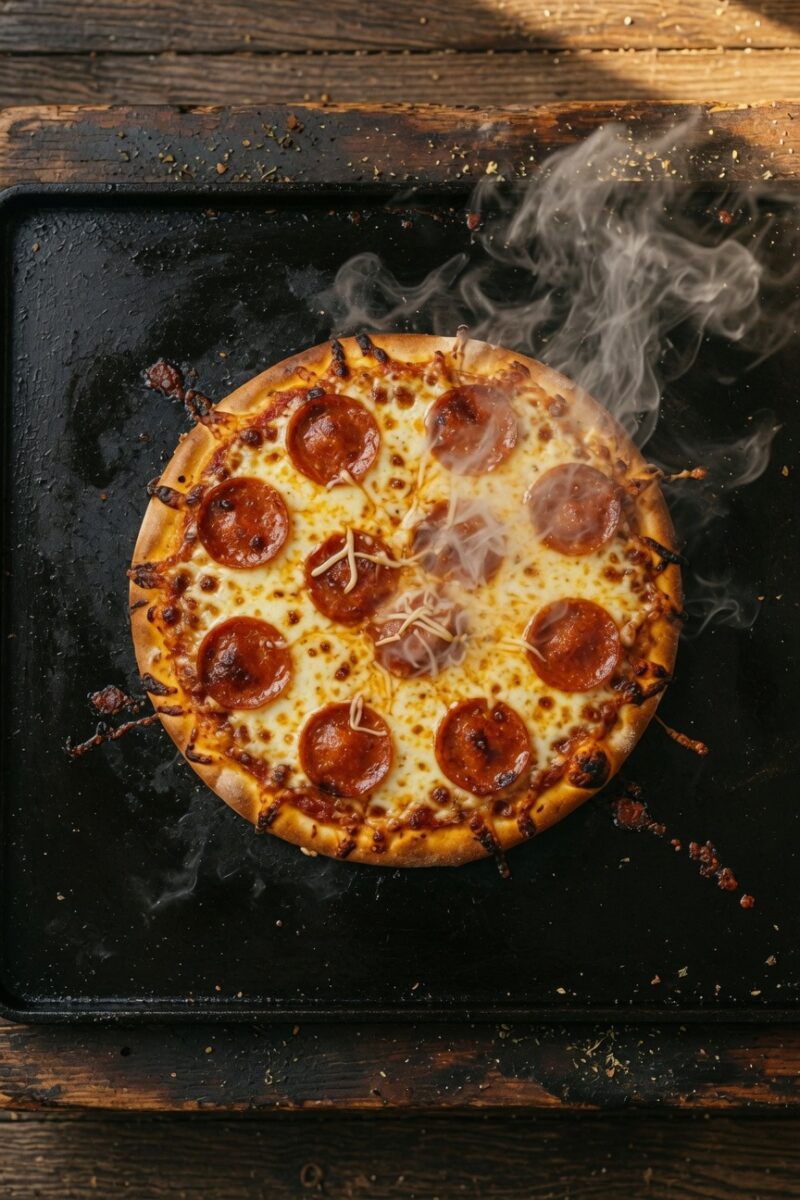
Blackstone Griddle Pizza Recipe (Ready in 10 Minutes)
Look, I know what you’re thinking. Pizza on a griddle? That’s not how pizza works. I thought the same thing until about a week after I got my Blackstone in April, and my buddy sent me a video of someone making legit-looking pizza on one. The crust gets crispy in a way that my home oven just can’t touch, and the whole thing comes together in maybe 10 minutes once you’ve got your station set up. This is the kind of thing that makes you stand at your griddle grinning like an idiot while your dogs circle around hoping something falls.
Blackstone Griddle Pizza
Ingredients
Method
- Get everything ready before turning on the griddle. Stretch dough out on a floured surface to about 10-12 inches diameter and about a quarter-inch thickness. Have sauce, cheese, and toppings in separate bowls within arm's reach.
- Fire up griddle to medium-high heat for about 10 minutes, shooting for 450-500 degrees surface temperature.
- Spread about 2 tablespoons of olive oil over the area where the dough will sit on the griddle.
- Carefully lay stretched dough onto the oiled griddle surface. It should sizzle immediately. Drizzle about 1 tablespoon olive oil on top of the dough and spread it around.
- Let the bottom cook for 2-3 minutes until golden brown with some crispy spots. Check by lifting an edge with spatula.
- Flip the entire crust over so the cooked side is now facing up.
- Work quickly to spread sauce on the cooked side, leaving about half an inch around edges. Add cheese, then toppings. Keep it light. This should take 30-45 seconds.
- Cover the pizza with a metal dome to trap heat.
- Let cook under dome for 3-5 minutes, checking after 3 minutes. Cheese should be fully melted and bubbly, and bottom should be dark golden brown with some char spots.
- Use spatula to slide pizza off griddle onto a cutting board. Let rest for about 2 minutes before cutting.
Notes
- Different zones on the griddle will have different temperatures - set up a hotter zone for starting and a cooler zone in case you need to move the pizza
- The flip technique is key - it gives you a sturdy pre-cooked surface to build toppings on
- Use less toppings than you think - overloading causes problems with cooking
- If using vegetables that release water like mushrooms, peppers, or onions, cook them on the griddle first
- A metal dome is critical for this recipe to melt cheese and cook toppings properly
- Every griddle runs a little different, so expect to dial in temperature over a couple attempts
- Store-bought dough works great - let it come to room temperature for at least 30 minutes before stretching
- For homemade dough: 3 cups bread flour, 1 cup warm water, 2 tsp instant yeast, 2 tsp salt, 1 tbsp olive oil, 1 tsp sugar - mix, knead 5 minutes, let rise 1 hour
Why Pizza on a Blackstone Actually Makes Sense
Here’s the deal with griddle pizza. Your Blackstone can hit temperatures way higher than most home ovens, and it delivers that heat directly to the bottom of your crust. You’re basically creating a hybrid between a traditional pizza oven and a pan pizza, except the “pan” is a giant slab of seasoned steel that’s been cranked up to somewhere around 500 degrees. The bottom gets crispy and slightly charred, the toppings cook fast from the heat rising up and the steam trapped under the dome, and you can crank out pizza after pizza without heating up your kitchen.
The other thing nobody tells you is how much easier it is to manage multiple pizzas on a 36-inch griddle. You can cook two medium pizzas at once if you want, or keep one warm on the cooler zone while you’re finishing the next one. It’s become my go-to when we have people over.
What You Need for Blackstone Griddle Pizza
The Dough
You can absolutely make your own dough, but I’m going to level with you—I’ve been using store-bought dough from the grocery store and it works great. The refrigerated stuff in the tube, fresh dough from the bakery section, or even the frozen dough balls all work. Let it come to room temperature for at least 30 minutes before you try to stretch it, or you’ll be fighting it the whole time.
If you want to make your own, here’s a simple ratio: 3 cups bread flour, 1 cup warm water, 2 teaspoons instant yeast, 2 teaspoons salt, 1 tablespoon olive oil, 1 teaspoon sugar. Mix it, knead it for about 5 minutes, let it rise for an hour. But again, no judgment on store-bought.
For Each Pizza
- 1 ball of pizza dough (about 10-12 oz for a medium pizza)
- 2-3 tablespoons olive oil (this is important—don’t skip it)
- 1/2 cup pizza sauce or crushed tomatoes
- 6-8 oz shredded mozzarella cheese
- Whatever toppings you want (keep it reasonable—overloading causes problems)
- Flour for dusting
- Cornmeal (optional, but it helps with sticking)
Equipment You’ll Need
- Your Blackstone griddle
- A good metal dome (this is critical—you need to trap heat)
- A large sturdy spatula or two
- Squeeze bottle for oil (makes life easier)
- Infrared thermometer if you have one (not required but helpful)
Step-by-Step Blackstone Pizza Instructions
Step 1: Prep Your Dough and Toppings
Get everything ready before you turn on the griddle. Stretch your dough out on a floured surface to roughly the size you want—I usually go for about 10-12 inches. Don’t worry about it being a perfect circle. Actually, don’t worry about it being a circle at all. Rustic is a word people use when their pizza looks weird but tastes good.
The key here is not to stretch it too thin. You want about a quarter-inch thickness. Any thinner and it becomes a cracker, any thicker and the bottom burns before the top cooks through.
Have your sauce, cheese, and toppings in separate bowls within arm’s reach of your griddle. Once you start, things move fast.
Step 2: Preheat Your Blackstone
Fire up your griddle and get it hot. I run mine on medium-high heat for about 10 minutes. You’re shooting for a surface temperature around 450-500 degrees. If you don’t have a dual probe thermometer, the water bead test works—flick some water on the griddle, and it should dance around and evaporate within a couple seconds.
Here’s something I learned pretty quick: different zones on your griddle will be different temps. I usually set up a hotter zone for starting the pizza and a slightly cooler zone in case I need to move it if things are cooking too fast.
Step 3: Oil the Griddle Surface
This is where a lot of people mess up. You need more oil than you think. I use about 2 tablespoons of olive oil for each pizza, spread out over the area where the dough will sit. Don’t be shy with it. The oil does three things: prevents sticking, helps conduct heat to the dough, and adds flavor to the crust.
Step 4: Launch Your Dough
Carefully lay your stretched dough onto the oiled griddle surface. It should sizzle immediately. Don’t try to move it around or adjust it too much—just get it down and let it be. The dough will firm up within about 30 seconds.
Drizzle a little olive oil on top of the dough too—maybe a tablespoon. Use your spatula or the back of a spoon to spread it around. This sounds like a lot of oil total, and it is, but trust me on this.
Step 5: Par-Cook the Crust
Let the bottom cook for about 2-3 minutes. You’ll see bubbles forming on top of the dough—that’s good. You want the bottom to be golden brown and have some crispy spots. Lift an edge with your spatula to check.
This is the move that makes griddle pizza work: once the bottom is set and golden, flip the entire crust over. Yeah, flip it. The cooked side is now facing up, and that’s the side you’re going to put your toppings on.
Step 6: Add Toppings Quickly
Work fast here. Spread your sauce on the cooked side, leaving about half an inch around the edges. Add your cheese, then your toppings. Don’t overload it—I learned this applies to everything on a Blackstone, and pizza is no exception. A light hand with toppings means everything actually cooks.
The whole topping process should take maybe 30-45 seconds. While you’re doing this, the bottom crust is getting crispy.
Step 7: Dome and Finish
Cover the pizza with your dome. This traps the heat and creates an oven-like environment that melts the cheese and cooks the toppings. The dome is critical—without it, your cheese won’t melt before your crust burns.
Let it cook under the dome for 3-5 minutes. Check it after 3 minutes by lifting the dome and peeking. You want the cheese fully melted and bubbly, and if you lift an edge of the pizza, the bottom should be dark golden brown with some char spots.
Step 8: Remove and Rest
Use your spatula (or two spatulas if you’re nervous) to slide the pizza off the griddle onto a cutting board. Let it rest for about 2 minutes before you cut it. I know that’s hard, but it helps the cheese set up just enough that it doesn’t all slide off in a molten mess.
Pro Tips for Better Griddle Pizza
Temperature management is everything. If your crust is burning before your cheese melts, your griddle is too hot. Turn it down to medium. If your cheese is melting but your crust is pale and soft, you need more heat. Every griddle runs a little different, so expect to dial this in over a couple attempts.
The flip is your friend. I know flipping the dough seems weird, but it’s the key to the whole operation. It gives you a sturdy, pre-cooked surface to build on, and it means your toppings don’t have to endure the full cooking time.
Less is more with toppings. A loaded pizza sounds great until the center is still cold and floppy while the edges are burning. Stick to 2-3 toppings max, and if you’re using vegetables that release water (mushrooms, peppers, onions), consider cooking them on the griddle first to drive off some moisture.
Cornmeal under the dough helps. If you’re worried about sticking, dust the oiled griddle surface with a little cornmeal before you lay down your dough. It adds a nice texture to the bottom crust and provides some insurance against sticking.
Make your own pizza station. Set up a little table or cart next to your griddle with all your toppings, oil, and tools. Once you start cooking, you don’t want to be running back to the kitchen.
Keep the dome moving. If you’re making multiple pizzas, you can use the dome to keep finished pizzas warm while you cook the next one. Just move it to a cooler part of the griddle and stick the finished pizza under there.
Common Mistakes and How to Fix Them
Dough sticking to the griddle: Not enough oil. Seriously, use more oil than seems reasonable. Also make sure your griddle is properly seasoned. And don’t try to move the dough around in the first 30 seconds—let it set up first.
Burnt bottom, raw top: Griddle is too hot and you probably need to use the dome longer. Turn down the heat to medium and give it more time under the dome. You can also move the pizza to a cooler zone after you flip it and add toppings.
Soggy crust: Either your griddle wasn’t hot enough to start, you used too much sauce, or you overloaded the toppings. Make sure you’re hitting that 450-500 degree range before you start, go light on the sauce, and don’t pile on wet toppings.
Dough won’t stretch: It’s too cold. Let it sit at room temperature for at least 30 minutes, maybe an hour. Cold dough is tight and elastic and will just shrink back every time you try to stretch it.
Cheese not melting: You need the dome, and you might need to give it more time. Also, make sure your cheese is shredded, not sliced. Shredded melts faster and more evenly.
Can’t flip the dough without it tearing: Either it wasn’t cooked long enough on the first side (give it another minute), or you stretched it too thin. The dough should be sturdy enough to flip once the bottom is set and golden.
Topping Combinations That Work Great
Since you’re already out at the griddle, you might as well take advantage and cook some of your toppings right there. Here are combinations I’ve been rotating through:
Classic Margherita: Just sauce, fresh mozzarella, and fresh basil added after it comes off the griddle. Sometimes simple is the move.
Pepperoni and Hot Honey: Regular mozzarella, pepperoni, then drizzle hot honey over it when it comes off. This one is dangerous.
Sausage and Pepper: Cook some Italian sausage and sliced bell peppers on the griddle first, then use them as toppings. The pre-cooking means they won’t release a bunch of water onto your pizza.
BBQ Chicken: Use BBQ sauce instead of pizza sauce, add cooked chicken (again, cook it on the griddle first), red onion, and cilantro after cooking.
Breakfast Pizza: This is a weekend favorite. Cook some bacon on the griddle, crumble it, use it as a topping with mozzarella and cheddar. After the pizza is done, crack an egg on the griddle and put it on top of the pizza. Bronco and Gunner lose their minds over bacon smell, so this one always draws a crowd.
Frequently Asked Questions
Do I really need a dome for griddle pizza?
Yes. Without a dome, you’re just making flatbread with toppings. The dome traps heat and creates convection that melts the cheese and cooks everything evenly. You can use a basting cover, a large metal mixing bowl, or a purpose-built Blackstone dome. Just needs to be metal and needs to fit over your pizza.
Can I use a different type of dough?
Absolutely. Regular pizza dough, thin crust dough, Neapolitan-style dough, even naan bread works. I haven’t tried sourdough yet but that’s on the list. Different doughs will cook at slightly different rates, so just keep an eye on it the first time you try something new.
What’s the best cheese for griddle pizza?
Shredded low-moisture mozzarella is your workhorse. It melts evenly and doesn’t release too much water. You can mix in other cheeses for flavor—some provolone, a little parmesan, whatever you want—but mozzarella should be the base.
Can I make pizza on a smaller Blackstone?
Yeah, you just need to make smaller pizzas. A 22-inch griddle can easily handle a 10-inch pizza. The technique stays the same, you just scale down the size. Actually, smaller pizzas are a little easier to flip.
How do I clean the griddle after making pizza?
Let it cool down a little but not completely—warm is easier to clean than cold. Scrape off any stuck cheese or toppings with your spatula, then clean it like you normally would. Little oil, scrape, wipe, done. The olive oil you used actually helps with the seasoning.
Can I make pizza on a brand new Blackstone?
You can, but make sure you’ve seasoned it properly first. A well-seasoned griddle is basically nonstick, which you definitely want for pizza. If your griddle is brand new and not seasoned well, you might have sticking issues even with plenty of oil.
How many pizzas can I make at once?
On a 36-inch griddle, you can comfortably do two medium pizzas at the same time if you’ve got your system down. When I’m still figuring out timing and temps, I stick to one at a time. No point in ruining two pizzas while you’re learning.
What if I don’t have an infrared thermometer?
You don’t need one. The water bead test works fine—flick some water on the griddle and watch how fast it evaporates. You can also just pay attention to how fast the dough starts cooking when you put it down. If it’s getting dark within a minute, you’re probably too hot. If it’s just sitting there barely sizzling after two minutes, you need more heat.
Why This Has Become My Go-To Dinner
Here’s what I didn’t expect about griddle pizza: it’s actually easier than oven pizza. There’s no preheating an oven for 30 minutes, no wrestling with a pizza stone, no wondering if your oven is actually at the temperature it says it is. You fire up the griddle, it’s ready in 10 minutes, and you can see exactly what’s happening because it’s right in front of you.
The other thing is how customizable it is per person. When Sierra wants a veggie pizza and I want something with meat, I can make both in about 15 minutes total. Everyone gets what they want, and I’m not stuck eating half of a compromise pizza that neither of us really wanted.
The crust is legitimately better than what I get from my oven. That direct contact with a 500-degree steel surface does something that a baking sheet or even a pizza stone can’t quite match. You get crispy, almost fried edges, a sturdy base that holds toppings without flopping, and these little charred spots that taste amazing.
Look, I’m not saying you should never make oven pizza again. But if you’ve got a Blackstone and you haven’t tried pizza on it yet, you’re missing out on one of the best things this griddle can do. It’s fast, it’s versatile, the results are consistently good, and honestly, it’s just fun. There’s something satisfying about flipping that dough and watching it transform into actual pizza in just a few minutes.
Start with a simple cheese pizza to get your timing and temps figured out. Once you’ve done it a couple times, you’ll have a feel for how your particular griddle runs and you can start experimenting with different toppings and styles. Within a few attempts, you’ll be cranking out pizza that’ll make you wonder why you ever bothered with delivery. Having squeeze bottles for your oil and sauce makes the whole process even smoother and keeps things organized at your pizza station.