Blackstone Salmon Recipe with Lemon Butter (Easy Guide)
I was genuinely nervous the first time I tried it. Fish seemed like it would just stick to the griddle and fall apart into this expensive mess. But after nailing this lemon butter salmon recipe a few times now, I’m convinced it’s actually one of the easiest and most impressive things you can make on the flat top. The buttery crust you get is unreal, and that lemon flavor soaks right in. Sierra asked me to make it again the next night, which basically never happens with fish in our house. If you’ve been scared to try salmon on your Blackstone, this is the recipe that’ll change your mind.
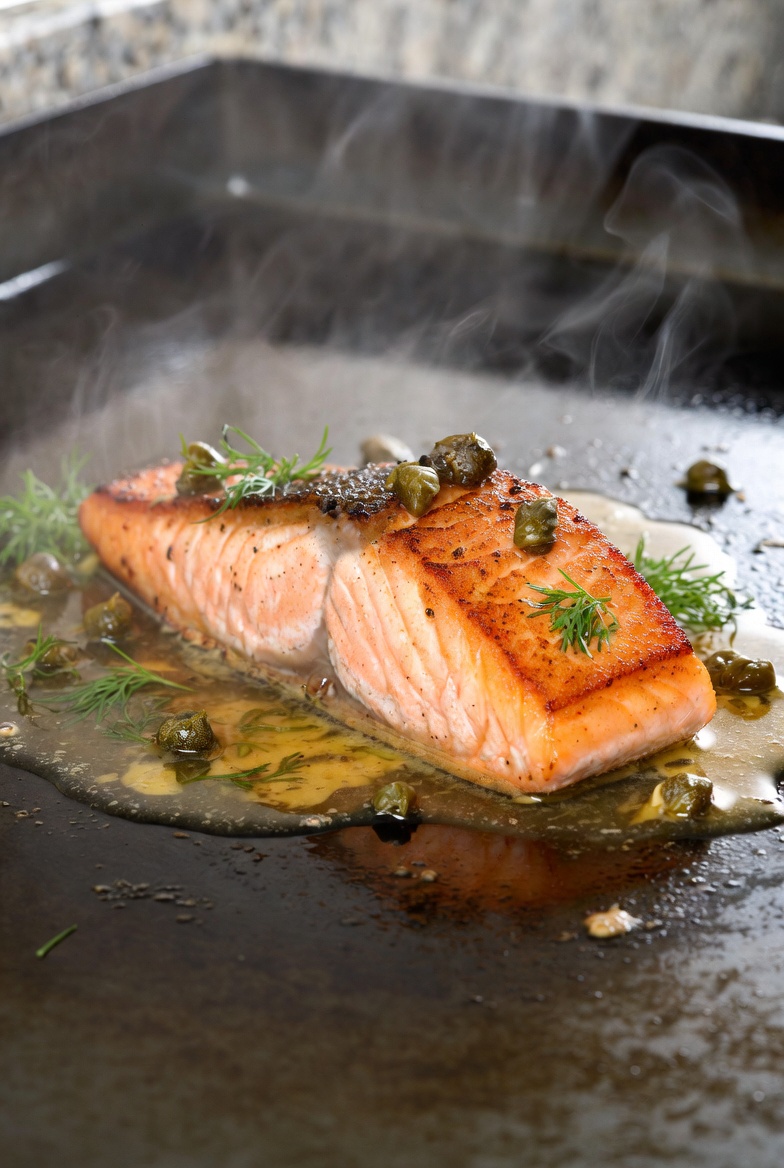
Lemon Butter Salmon on Blackstone Griddle
Ingredients
Method
- Remove salmon from fridge 20 minutes before cooking to bring to room temperature.
- Pat salmon fillets completely dry with paper towels and check for pin bones, removing any found.
- Season both sides of salmon with salt, black pepper, garlic powder, and paprika if using.
- Preheat Blackstone griddle to medium-high heat, aiming for 400-425°F surface temperature, about 8-10 minutes.
- Add 2 tablespoons olive oil to the cooking zone and spread evenly with spatula until shimmering.
- Place salmon fillets skin-side up (or prettier side down if skinless) on the griddle and cook undisturbed for 4-5 minutes.
- While salmon cooks, melt butter in a small metal bowl or pan on a cooler zone of the griddle.
- Add minced garlic to melted butter and cook for 1-2 minutes until fragrant and just golden.
- Add lemon juice, lemon zest, and red pepper flakes to butter mixture and simmer for 1 minute.
- Turn off burner under sauce, stir in parsley, and season with salt.
- After 4-5 minutes, flip salmon fillets carefully using a spatula. Cook for another 3-4 minutes.
- Spoon lemon butter sauce over the top of each fillet during the last few minutes of cooking.
- Remove salmon when it reaches internal temperature of 135-140°F.
- Plate salmon and drizzle with remaining lemon butter sauce. Serve immediately.
Notes
- Salmon is done at 145°F per USDA, but 135-140°F yields a moister, slightly translucent center
- Adjust cooking time based on fillet thickness: thinner pieces need about 3 minutes per side, thicker cuts may need 6 minutes per side
- Fish will release from griddle naturally when ready to flip - do not force it
- Use a thin fish spatula for easier flipping if available
- Clean griddle while still warm to prevent fish proteins from hardening and sticking
Why Salmon Works So Well on a Blackstone
I picked up my 36-inch Blackstone back in April, and I spent the first couple weeks just doing the obvious stuff – burgers, smash burgers, more burgers, breakfast. Then I started wondering what else this thing could handle. Salmon wasn’t even on my radar until I had some fillets in the fridge that needed to get used, and honestly, it turned out better than when I do it in the oven.
The even heat distribution means you’re not getting hot spots that overcook one section while another part stays underdone. And that flat surface? Perfect for getting a nice crust without the fish falling through grill grates. Plus, you can build the lemon butter sauce right there on the griddle alongside the fish. Everything happens in one place.
What You’ll Need
For the Salmon
- 4 salmon fillets, about 6 ounces each and roughly 1-inch thick
- 2 tablespoons olive oil
- Salt and black pepper
- 1 teaspoon garlic powder
- 1/2 teaspoon paprika (optional, but it adds a nice color)
For the Lemon Butter Sauce
- 6 tablespoons unsalted butter
- 4 cloves garlic, minced
- Juice of 2 lemons (about 1/4 cup)
- Zest of 1 lemon
- 2 tablespoons fresh parsley, chopped
- 1/4 teaspoon red pepper flakes (optional)
- Salt to taste
Equipment
- Your Blackstone griddle
- Metal spatula (the thin kind works best for fish)
- Infrared thermometer or the one built into your griddle if you have it
- Small metal bowl or pan for the butter sauce
- Tongs
- Basting brush or spoon
Getting the Salmon Ready
About twenty minutes before you’re ready to cook, take the salmon out of the fridge. You want it closer to room temperature so it cooks evenly. I learned this one the hard way when my first fillet was crusty on the outside and still cold in the middle.
Pat the fillets completely dry with paper towels. This is actually important – any moisture on the surface will steam instead of sear, and you’ll miss out on that golden crust. Check for any pin bones by running your finger along the flesh. If you find any, pull them out with tweezers or pliers.
Season both sides with salt, black pepper, garlic powder, and paprika if you’re using it. Don’t go crazy with the salt since you’ll be adding butter sauce later, but don’t be shy either. I do a solid sprinkle on both sides.
Step-by-Step Cooking Instructions
Step 1: Preheat Your Blackstone
Turn your Blackstone on to medium-high heat. You’re aiming for a surface temperature around 400-425°F. This took me about 8-10 minutes of preheating. If your griddle has a built-in thermometer, use it. If not, grab a dual probe infrared thermometer because guessing on fish is risky.
I usually fire up two burners on my 36-inch – one for the salmon and one slightly cooler zone for the butter sauce. This gives me control over both components without rushing.
Step 2: Oil the Griddle
Once you hit temperature, add about 2 tablespoons of olive oil to your cooking zone. Spread it around with your spatula. You want a thin, even layer. The oil should shimmer but not smoke like crazy. If it’s smoking heavily, back your heat down a touch.
Step 3: Place the Salmon Skin-Side Up
If your fillets have skin, start with the skin side facing up, flesh side down. If they’re skinless, just put the prettier side down first. Lay each fillet down gently, placing it away from you so you’re not splashing hot oil toward yourself.
Here’s something I wish someone had told me on my first attempt: once you put that salmon down, leave it alone. Don’t move it, don’t peek under it, don’t mess with it. Let it cook undisturbed for about 4-5 minutes. The fish will release from the griddle naturally when it’s ready to flip.
Step 4: Make the Lemon Butter Sauce
While the salmon is getting its crust, move over to your cooler zone or turn one burner down to low. Drop your butter into a small metal bowl or pan right on the griddle. Let it melt completely, then add the minced garlic. Having a set of restaurant squeeze bottles nearby makes it easy to drizzle extra lemon juice or oil exactly where you need it without making a mess.
Cook the garlic in the butter for about 1-2 minutes until it smells amazing and just starts to turn golden. Don’t let it brown too much or it gets bitter. Add your lemon juice, lemon zest, and red pepper flakes if using. Let this simmer together for another minute, then turn off that burner and stir in the parsley. Season with a pinch of salt.
Step 5: Flip the Salmon
After 4-5 minutes, slide your spatula under one fillet. If it releases easily, you’re good to flip. If it sticks, give it another minute. When I tried to force it too early, I tore the flesh and it looked rough.
Flip each fillet carefully. If there’s skin, it should now be facing down and will get crispy. Cook for another 3-4 minutes on this side. Salmon is done when it reaches an internal temperature of 145°F, but honestly, I pull mine at around 135-140°F because it continues cooking a bit after you remove it, and I prefer mine slightly medium in the center rather than fully opaque.
Step 6: Baste and Finish
During those last few minutes, spoon some of that lemon butter sauce over the top of each fillet. Use a basting brush or just a spoon. The butter will sizzle and create more flavor on the surface. Bronco and Gunner go absolutely crazy at this point, by the way. The smell is incredible.
Once your salmon reaches your desired doneness, remove it from the griddle and plate it immediately.
Step 7: Serve
Drizzle the remaining lemon butter sauce over the plated salmon. I usually serve this with roasted vegetables or a simple salad, but rice or potatoes work great too. Sometimes I’ll griddle some asparagus right alongside the fish.
Pro Tips I’ve Picked Up
Check your fillet thickness: If your salmon pieces are thinner or thicker than one inch, adjust your cooking time. Thinner pieces might only need 3 minutes per side, while really thick cuts could need 6 minutes per side.
Use a fish spatula if you have one: Those thin, slotted spatulas are designed for delicate stuff like fish and they make flipping so much easier. Regular spatulas work fine, but a fish spatula is a game changer.
Don’t skip the lemon zest: I almost left it out the first time because I didn’t have a zester and thought it wouldn’t matter. Sierra noticed immediately when I included it the next time. The zest adds a brightness that straight lemon juice doesn’t give you.
Keep your butter sauce warm: Once you make the sauce, you can leave it in a pan on the warming rack if your Blackstone has one, or just keep it on the lowest heat zone. Cold butter sauce on hot salmon doesn’t spread as nicely.
Clean your griddle while it’s still warm: After you eat, scrape off any stuck bits while the griddle is still warm with a Blackstone scraper. Fish proteins can really stick if you let them cool and harden. I just scrape, wipe with paper towels, and add a thin layer of oil.
Common Mistakes to Avoid
Cooking straight from the fridge: Cold salmon doesn’t cook evenly. That room temperature rest really matters.
Too much heat: I cranked my griddle to high the first time thinking I needed a hard sear like with steak. The outside burned before the inside cooked. Medium-high is the sweet spot for salmon.
Moving the fish too soon: This is the biggest one. When salmon sticks, your instinct is to force it. Don’t. It’ll release when the proteins have cooked enough to form that crust. Patience is everything here.
Overcooking: Salmon goes from perfect to dry really fast. Start checking it at the 7-minute mark total. Remember it keeps cooking after you remove it.
Not drying the fish: Wet salmon steams. Dry salmon sears. Pat it dry thoroughly before seasoning.
Using too little oil: I tried to be healthy and barely oiled the griddle once. The salmon stuck immediately and tore when I tried to flip it. You need enough oil for the fish to make proper contact with the heat.
Variations You Can Try
Once you nail the basic lemon butter version, there are tons of ways to switch it up. I haven’t tried all of these yet since I only got my Blackstone a few months ago, but these are on my list:
Cajun Lemon Butter: Add Cajun seasoning to your salmon rub instead of the paprika and garlic powder. Mix some into the butter sauce too for extra kick.
Herb Butter: Swap the parsley for dill, or use a mix of fresh herbs like thyme, basil, and chives in your butter sauce.
Asian-Inspired: Skip the lemon butter entirely and make a glaze with soy sauce, honey, ginger, and sesame oil. Baste it on during the last few minutes of cooking.
Maple Glazed: Combine maple syrup, Dijon mustard, and a little soy sauce. Brush it on during cooking for a sweet and savory situation.
Frequently Asked Questions
Should I cook salmon with the skin on or off?
Either works, but I actually prefer skin-on. The skin protects the flesh from direct heat and gets crispy on the griddle, plus it’s easier to flip. If you don’t want to eat the skin, you can just slide your spatula between the skin and flesh after cooking and leave the skin on the griddle.
What’s the best type of salmon to use?
I’ve used both Atlantic and King salmon on my Blackstone. King salmon has higher fat content and is more forgiving if you slightly overcook it. Atlantic salmon is leaner but still works great with this recipe. Just grab whatever looks freshest at your store or fish counter.
Can I use frozen salmon?
You need to thaw it completely first. I thaw mine in the fridge overnight, then let it come to room temperature before cooking. Cooking frozen salmon on a griddle doesn’t work well – the temperature difference is too extreme.
How do I know when salmon is done?
The flesh should be opaque and flake easily with a fork. If you have an instant-read thermometer, 145°F is the USDA recommendation, but I prefer 135-140°F for a slightly translucent center. At these temperatures, it’s still safe and way more moist.
What if my salmon has a white residue on it while cooking?
That’s albumin, a protein that can leak out when salmon cooks. It’s completely harmless but can look unappetizing. It happens more with farm-raised salmon or when you cook at too high a temperature. Cooking at medium-high instead of high heat helps minimize it.
Can I prep this ahead of time?
You can season the salmon and make the lemon butter sauce ahead of time. Keep the seasoned salmon covered in the fridge for up to a few hours before cooking, just remember to let it come to room temp first. Store the butter sauce in a sealed container and reheat it gently on the griddle when you’re ready to cook.
What sides go well with this?
I’ve done griddled asparagus, zucchini, and bell peppers right alongside the salmon. Rice pilaf, roasted potatoes, or a simple green salad all work great too. Sometimes Sierra makes this cucumber salad that’s perfect with the lemon butter.
Will salmon smell up my griddle?
It’ll smell while you’re cooking, but if you clean your griddle properly afterward, the smell doesn’t linger. Scrape it well, wipe it down, and do a light oil coating. The fish smell disappears once everything cools down.
Why This Recipe Works on a Blackstone
The even heat of a flat top griddle is perfect for delicate fish. You’re not dealing with flare-ups like on a regular grill, and you’re not heating up your kitchen with the oven. The large cooking surface means you can do the salmon and sides all at once, and everything finishes at the same time.
That lemon butter sauce would be harder to manage on a regular grill because it would drip through the grates. On the Blackstone, you can make it right there in a pan and baste directly. Everything stays in one place and cleanup is straightforward.
Plus there’s something about cooking outside that makes dinner feel more like an event. Even on a random Tuesday, firing up the Blackstone turns it into something special.
Final Thoughts
This lemon butter salmon has become one of my go-to recipes when I want something that feels fancy but isn’t complicated. The whole thing takes maybe 20 minutes once your griddle is hot, and it tastes like something you’d order at a restaurant.
If you’ve been intimidated by cooking fish on your Blackstone, start with this recipe. The lemon butter is forgiving, the technique is straightforward, and even if you slightly overcook it, that sauce keeps everything moist and flavorful. After you nail it once, you’ll wonder why you ever bothered with the oven.
The key is just managing your heat, being patient with the flip, and not overthinking it. Salmon is more forgiving than you’d expect, especially with all that butter involved. Give it a shot this week and let me know how it turns out.