Best Oil for Blackstone Griddle: Seasoning & Cooking Guide
So here’s something nobody tells you when you buy a Blackstone griddle: choosing the right oil actually matters way more than you’d think. I figured oil was oil, right? Wrong. After spending the last few weeks cooking on my 36-inch Blackstone almost every day (Sierra says I have a problem, but she’s not complaining about the breakfasts), I’ve learned that the oil you use affects everything from your seasoning to how your food tastes to whether your bacon sticks or slides around like it’s supposed to.
After I started reading about smoke points and polymerization, I realized I was thinking about this all wrong. Let me save you the trial and error and break down exactly which oils work best for different situations on your Blackstone.
Why Oil Choice Actually Matters on a Blackstone
Your griddle needs oil for two completely different purposes, and this is where it gets interesting. You need oil for seasoning the griddle surface itself, which builds up that non-stick black layer everyone talks about. And you need oil for actual cooking. Turns out the best oil for one job isn’t always the best for the other.
When you’re seasoning, you want an oil that polymerizes well, which is a fancy way of saying it bonds to the steel and creates a hard, protective coating. When you’re cooking, you want an oil that can handle high heat without smoking up your backyard and tasting weird.
The smoke point is the temperature where oil starts to break down and smoke. On a Blackstone, you’re often cooking at temperatures between 400°F and 550°F, so you need oils that can handle that kind of heat. I keep a dual probe infrared thermometer handy to check my griddle surface temperature, which takes the guesswork out of knowing when you’re in the right range for different oils.
The Best Oils for Seasoning Your Blackstone
Flaxseed Oil
This is what I switched to after my initial seasoning, and the difference was noticeable. Flaxseed oil has a relatively low smoke point (around 225°F), but it creates an incredibly hard seasoning layer because it’s loaded with omega-3 fatty acids that polymerize really well. The seasoning it builds up is almost glass-like.
The downside? It’s expensive compared to other options, and you have to apply thin layers or it can flake. I learned that the hard way when I got overzealous on my second seasoning session.
Grapeseed Oil
This has become my go-to for seasoning. Smoke point around 420°F, which is high enough to handle the seasoning process without smoking excessively. It creates a solid, durable seasoning layer and costs way less than flaxseed oil. A bottle lasts me quite a while, and the results have been excellent.
I’ve done a few seasoning layers with grapeseed oil now, and the surface just keeps getting better. It’s also pretty neutral, so you’re not adding any weird flavors to your griddle.
Canola Oil
The budget-friendly option that actually works. Smoke point around 400°F, widely available, and dirt cheap. If you’re doing your initial seasoning and want to save money, canola oil will get the job done. It’s not quite as hard as the seasoning you get from flaxseed or grapeseed, but it’s perfectly functional.
Some people swear by canola for everything, and honestly, there’s nothing wrong with that approach.
The Best Oils for Cooking on Your Blackstone
Avocado Oil
This is my number one choice for high-heat cooking. Smoke point around 520°F, which means you can crank your Blackstone up and not worry about it. The flavor is clean and neutral, and it handles everything from smash burgers to stir fry without breaking a sweat.
I keep a squeeze bottle of avocado oil right next to my griddle now. It’s more expensive than vegetable oil, but the performance is worth it. When I’m doing breakfast and the griddle is screaming hot for hash browns, avocado oil just performs.
Peanut Oil
Smoke point around 450°F and adds a subtle, slightly nutty flavor that works great with Asian-inspired dishes. I used this when I made fried rice last week, and it was perfect. The dogs (Bronco and Gunner) went absolutely insane when I was cooking the chicken in peanut oil, so take that as an endorsement.
Just be aware of allergies if you’re cooking for other people. That’s not an issue at my house, but it’s worth mentioning.
Vegetable Oil
The workhorse. Smoke point around 400-450°F depending on the blend, cheap, available everywhere. This is what I use for everyday cooking when I’m not doing anything special. Eggs, pancakes, regular burgers—vegetable oil handles it all without any fuss.
There’s a reason most restaurants use this stuff. It works.
Olive Oil
Here’s where I have to pump the brakes. Regular olive oil has a smoke point around 350-410°F depending on quality. Extra virgin olive oil is even lower, around 350°F. On a flat-top griddle that’s running hot, olive oil can start smoking and tasting bitter pretty quickly.
That said, I do use olive oil sometimes for lower-heat cooking. If I’m warming up some vegetables or doing quesadillas at a moderate temperature, olive oil adds nice flavor. Just don’t use it for high-heat searing.
Oils to Avoid on Your Blackstone
Butter burns fast. Smoke point around 300-350°F, which is way too low for most griddle cooking. I love butter, don’t get me wrong. Sometimes I’ll add a little butter at the very end of cooking something for flavor, but cooking with it from the start is asking for burnt, bitter flavors.
Coconut oil is similar. Smoke point around 350°F for unrefined, 400°F for refined. It can work, but the coconut flavor doesn’t belong on everything, and there are better options.
Extra virgin olive oil for high-heat cooking is just wasting money and creating smoke. Save the good stuff for salads.
Step-by-Step: How to Season Your Blackstone with the Right Oil
Here’s exactly how I do it now after learning what works:
What You’ll Need
- Your oil of choice (I recommend grapeseed or flaxseed)
- Paper towels or a clean cloth
- Tongs or heat-resistant gloves
- Your Blackstone griddle
The Process
- Start with a clean, dry griddle surface. If this is your first seasoning, you’ve already cleaned off the factory coating. If you’re adding more seasoning layers, make sure the surface is scraped clean.
- Turn all burners to high and let the griddle heat up until it starts to change color slightly. You want it hot—around 500°F or until water instantly evaporates when dropped on the surface.
- Turn the heat down to medium or medium-high (around 400-450°F). This is your working temperature.
- Pour about a tablespoon of oil onto one section of the griddle. This might seem like not enough, but trust me, thin layers are key.
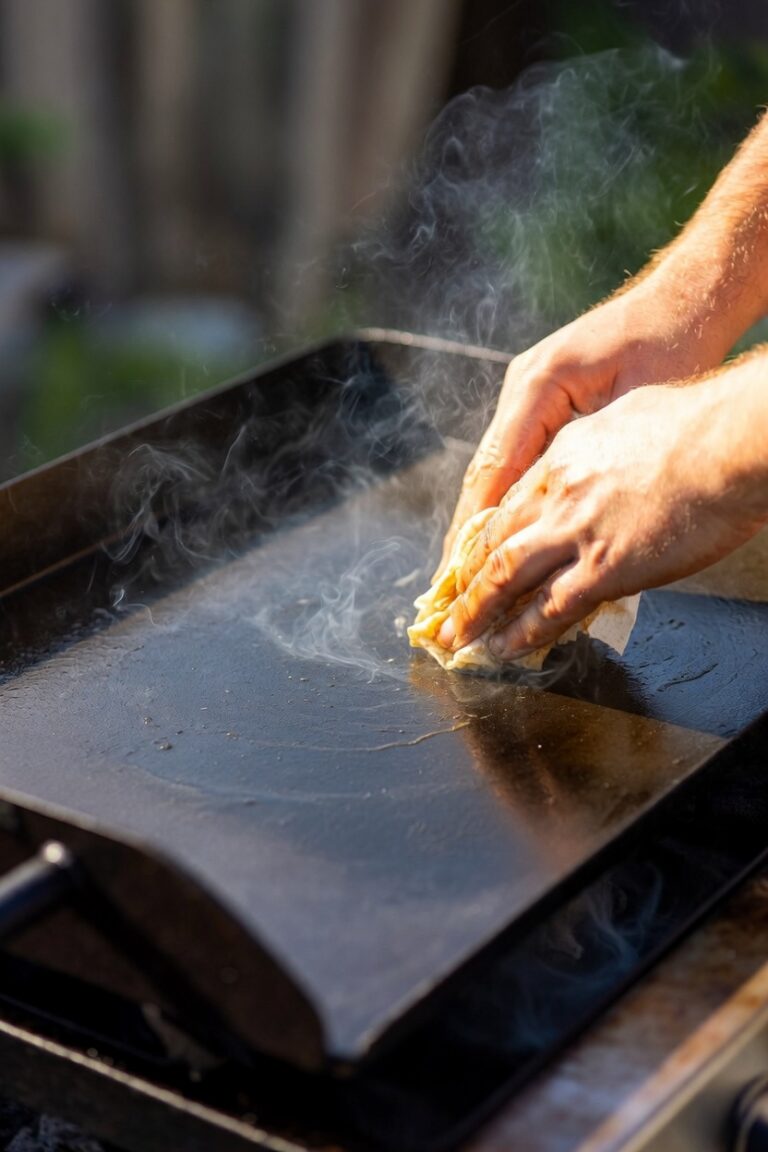
- Use your paper towels with tongs to spread the oil in a very thin, even layer across that section. You want it so thin it almost looks dry. This was my mistake early on—I used too much and ended up with sticky patches.
- Let it smoke and cook until the smoking stops. This takes maybe 15-20 minutes. The oil will darken and bond to the steel.
- Repeat for all sections of the griddle.
- Once the first layer is done and smoking has stopped, apply another thin layer the same way. For initial seasoning, I did four layers total. Now when I’m maintaining the seasoning, I just do one layer after cleaning.
- After your final layer, let the griddle cool completely. The surface should be dark and smooth, not sticky or tacky.
How to Apply Oil When Cooking
This is simpler but still worth getting right:
- Preheat your griddle to the temperature you need for what you’re cooking. For most breakfast items, I run around 350-375°F. For smash burgers or searing, I go 450-500°F.
- Apply oil directly to the griddle surface, not to the food. I use a squeeze bottle for control. You can also pour and spread with a spatula.
- For most cooking, you need less oil than you think. A thin layer is enough. The seasoning on your griddle is already providing non-stick properties.
- Add more oil as needed during cooking. If things start sticking, that’s your sign.
- After cooking, while the griddle is still warm (not hot), I usually add a thin coat of oil as part of my cleaning process. This maintains the seasoning.
Pro Tips from Trial and Error
Keep your cooking oil in a squeeze bottle right by the griddle. I got a pack of restaurant squeeze bottles online, filled one with avocado oil for cooking and one with grapeseed oil for post-cook seasoning. Game changer for convenience.
Temperature matters more than oil quantity. I kept adding more oil thinking that was the issue when food stuck, but usually the griddle just wasn’t hot enough. Get your temps right first.
The paper towel trick for seasoning is worth it. Use tongs to hold the paper towels—I tried using a cloth the first time and it was harder to get thin, even layers. Paper towels let you really work that oil in and wipe away excess.
Don’t mix up your seasoning oil and cooking oil. I keep them separate now. The oil I use for maintaining seasoning stays in its own bottle and doesn’t get used for cooking. Keeps things consistent.
When the griddle is screaming hot, even high smoke point oils will smoke a bit when they first hit the surface. That’s normal. It’s different from the acrid smoke you get when oil is actually burning.
Room temperature oil spreads easier than cold oil. I learned this when I tried to do a quick seasoning layer with grapeseed oil straight from the fridge. It was thicker and harder to spread thin.
Common Mistakes (That I Definitely Made)
Using too much oil when seasoning is probably the most common mistake. More is not better here. You want thin layers that can fully polymerize. Thick layers stay sticky and gummy. My second seasoning session looked terrible because I got impatient and globbed it on.
Not letting the oil smoke off completely during seasoning. If you rush this and don’t let each layer fully cure, you end up with uneven seasoning. I learned to just let it do its thing, even if it takes 20 minutes per layer.
Using olive oil for high-heat cooking. Did this once with extra virgin olive oil when making smash burgers. The griddle was at 475°F and that olive oil did not appreciate it. Tasted bitter and smoked like crazy.
Applying oil to cold food instead of the hot griddle. The oil needs to be on the cooking surface, getting hot and creating that non-stick layer between the food and the steel.
Not wiping away excess oil after seasoning. If your griddle feels sticky after seasoning, you left too much oil. It should feel smooth and dry to the touch once it’s completely cooled.
Switching oils constantly. Consistency helps build better seasoning. I stick with grapeseed for seasoning and avocado for most cooking. Jumping around between different oils every time makes it harder to learn what works.
Frequently Asked Questions
Can I use the same oil for seasoning and cooking?
You can, and plenty of people do. Avocado oil works for both. But I’ve found that having one oil dedicated to seasoning (grapeseed for me) and one for cooking (avocado for high heat, vegetable for everyday) gives me better results and makes more sense economically.
How much oil should I use when cooking?
Start with about a tablespoon for a medium-sized cooking area. You can always add more. On a well-seasoned griddle, you need surprisingly little oil. I was using way too much at first and food was basically shallow frying instead of griddling.
What if my griddle is sticky after seasoning?
You used too much oil or didn’t let it fully polymerize. Heat the griddle back up to high, let it smoke off, and wipe away any excess with paper towels. Then apply a thinner layer and let it fully cure. I dealt with this after my second seasoning and this fixed it.
Can I use cooking spray?
Technically yes, but I don’t recommend it for seasoning. Cooking sprays often contain additives and lecithin that can leave residue. For quick cooking application, it works fine, but I prefer the control of a squeeze bottle with real oil.
Does expensive oil make a difference?
For seasoning, not really. Mid-range grapeseed oil works as well as premium brands in my experience. For cooking, higher-quality avocado oil does seem to perform a bit better at high heat, but the difference isn’t huge. Don’t break the bank on this.
How often should I re-season my griddle?
If you’re maintaining it properly by adding a thin layer of oil after each cook, you shouldn’t need to do a full re-seasoning often. I add a light coat of grapeseed oil while the griddle is still warm after cooking, and the seasoning just keeps improving. A full re-season is only needed if the seasoning gets damaged or stripped.
What about animal fats like bacon grease or lard?
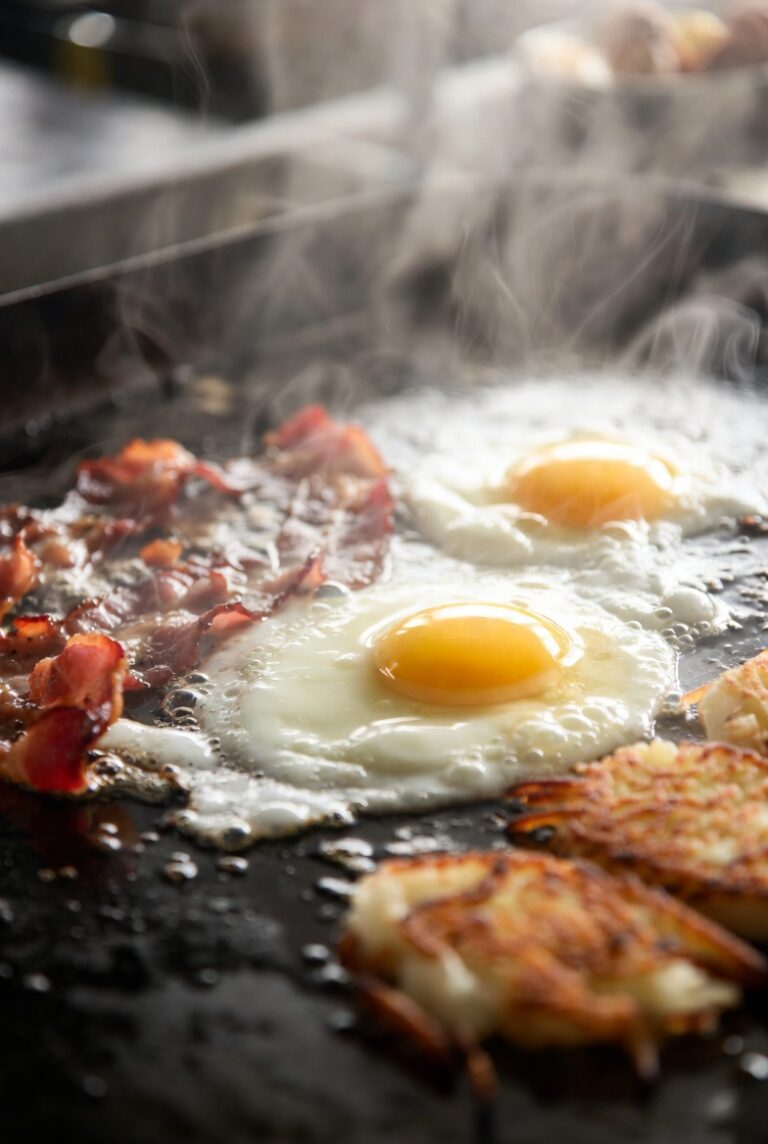
These can work for cooking, and bacon grease adds great flavor. For seasoning, they’re okay but not ideal—they can go rancid over time and don’t create as hard a finish as plant oils. I save my bacon grease for cooking eggs and hash browns, not for seasoning layers.
My Current Setup
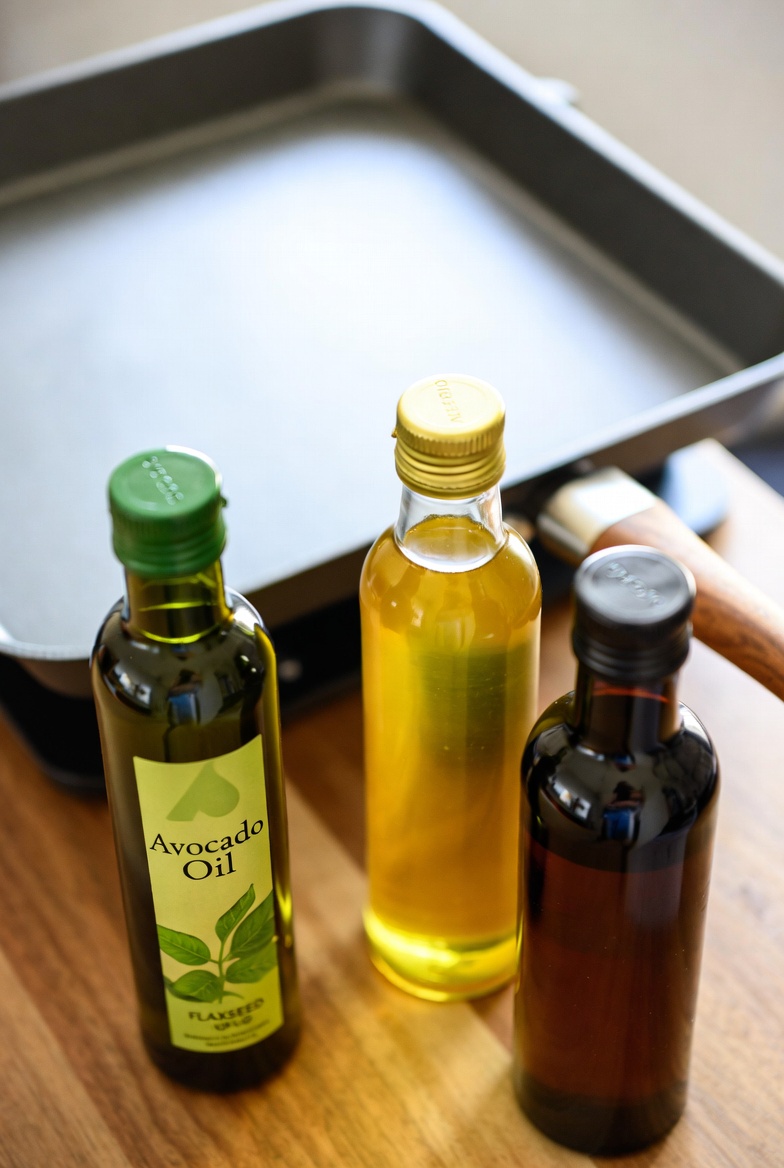
After these few weeks of figuring this out, here’s what’s living next to my griddle: a squeeze bottle of avocado oil for high-heat cooking, a squeeze bottle of vegetable oil for everyday stuff, and a bottle of grapeseed oil for seasoning maintenance. That covers everything I need.
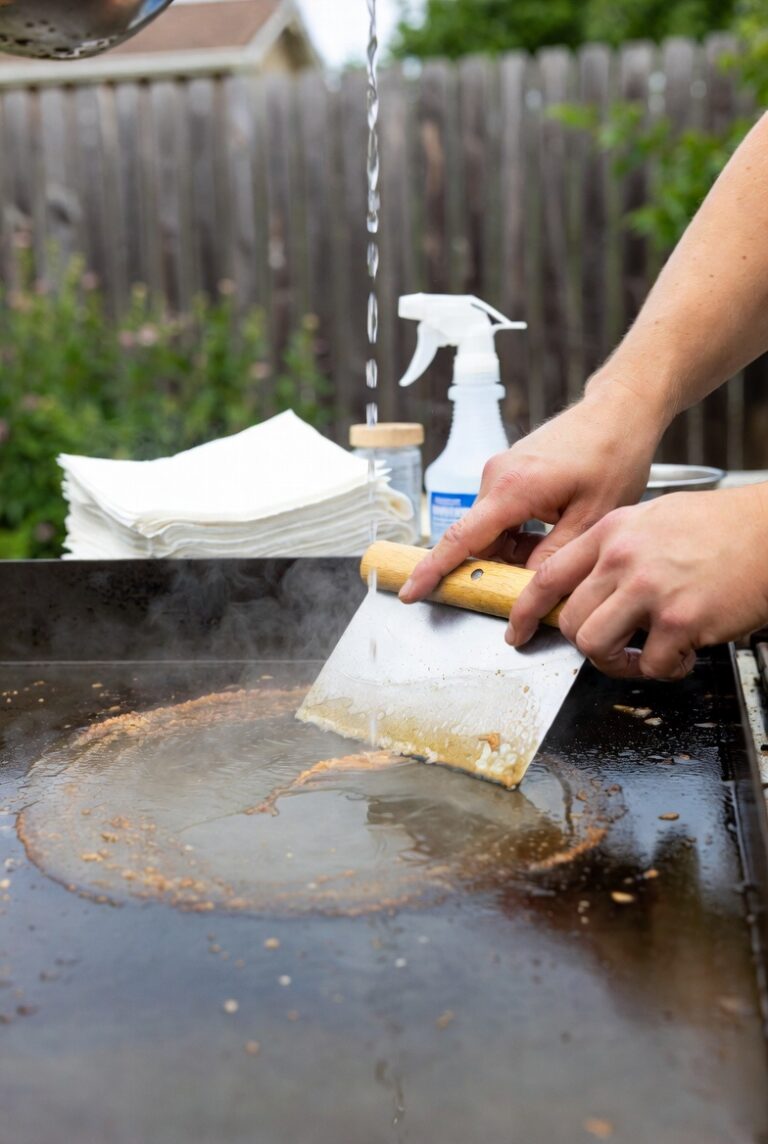
I keep paper towels and tongs in a container nearby for quick post-cook seasoning. The whole routine takes maybe two minutes after cooking—scrape the griddle clean while it’s still warm, wipe it down, apply a thin coat of grapeseed oil, spread it around, let it smoke off for a minute, done.
The griddle surface keeps getting better with each use. It’s darker now than when I first seasoned it, and things just slide around on it effortlessly. Eggs don’t stick. Smash burgers release perfectly. It’s what everyone said would happen, and they were right.
Bottom Line
The best oil for your Blackstone depends on what you’re doing with it. For seasoning, grapeseed oil gives you the best balance of performance and cost, with flaxseed oil being the premium choice if you want the hardest possible finish. For cooking, avocado oil handles high heat like a champ, while vegetable oil is the reliable everyday option.
Don’t overthink this to the point of paralysis. I spent way too much time reading forum debates about oil before just trying things and learning what worked. Honestly, you can do everything with just two oils: grapeseed for seasoning, avocado for cooking. That’s simpler than what I’m running now, and it would work great.
The key things are using thin layers when seasoning, choosing oils that can handle your cooking temperatures, and being consistent. The griddle will tell you if something’s not working—food will stick, seasoning will look uneven, or you’ll get weird tastes. Listen to what it’s telling you and adjust.
Now if you’ll excuse me, Sierra just asked what I’m making for dinner, and Bronco and Gunner are already positioning themselves near the back door because they know that question means the griddle’s about to fire up. I’m thinking smash burgers with avocado oil at 475°F. The seasoning on this thing is finally exactly where I want it, and I’m not messing that up with the wrong oil choice.