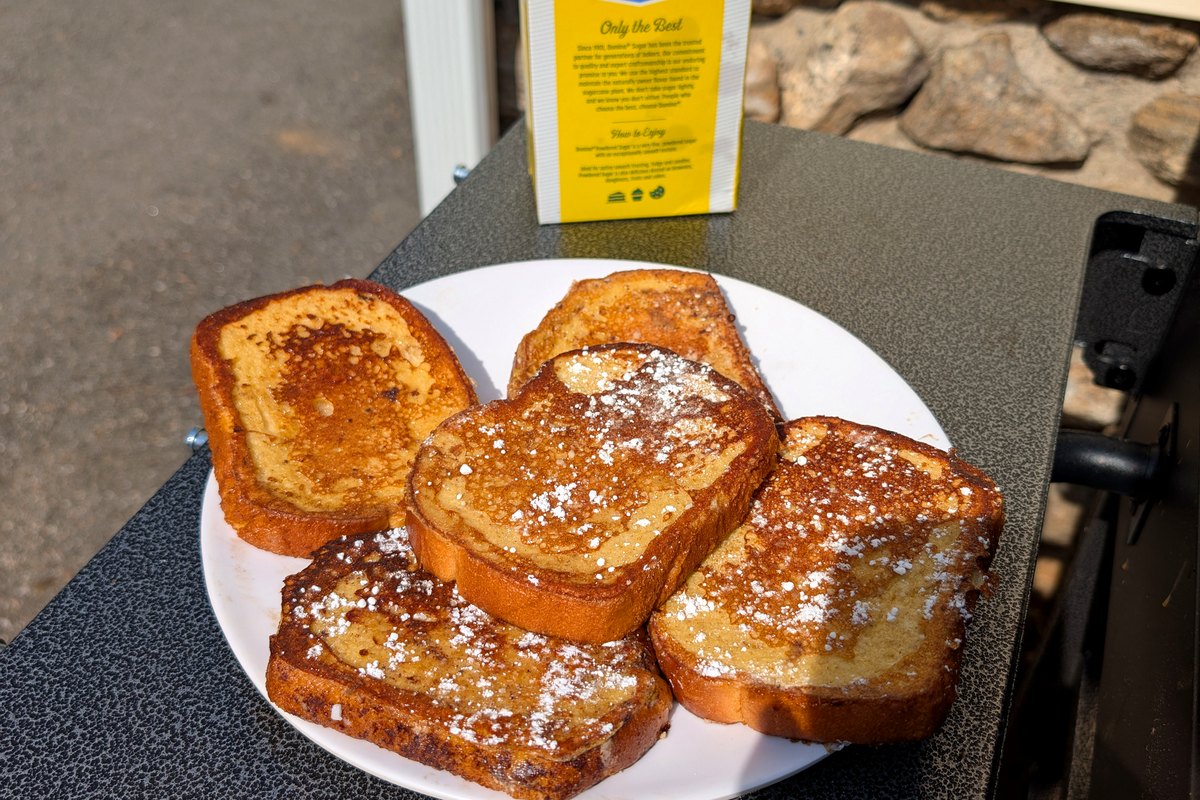
Blackstone French Toast Recipe – Easy Griddle Breakfast
Look, I’ve made French toast in a regular pan probably a hundred times over the years, and I thought I had it figured out. Move it to the Blackstone, though, and the math changes completely. The amount of French toast you can crank out on a 36-inch griddle is kind of ridiculous. Even heat across the entire surface means no more babysitting individual slices, no more burnt edges with raw middles, and you can feed a crowd without standing at the stove for 45 minutes like some kind of breakfast martyr.
Blackstone Griddle French Toast
Ingredients
Method
- Crack eggs into a large shallow dish (9x13 baking dish works well). Add the milk, sugar, vanilla, cinnamon, nutmeg if using, and a pinch of salt.
- Whisk everything together really well for about 30 seconds until completely combined with no streaks of egg white and sugar is dissolved.
- Turn Blackstone burners to low-medium and let the griddle preheat for about 10 minutes until surface temp reaches 300 to 325 degrees F.
- Add about 2 tablespoons of butter to the preheated griddle, spreading it around with a spatula to coat the cooking area. Butter should melt and foam but not brown immediately.
- Take a slice of bread and lay it in the egg mixture. Let it soak for about 5 seconds, then flip and soak the other side for another 5 seconds. Adjust timing based on bread thickness.
- Place soaked bread directly on the buttered griddle, leaving space between slices.
- Cook for 3 to 4 minutes on the first side until deep golden brown and edges look set.
- Flip and cook another 3 to 4 minutes on the second side until golden brown and center feels firm when pressed gently.
- Move finished slices to a cooler zone on the griddle to keep warm, or transfer to a baking sheet in a 200-degree oven.
- Add more butter to the griddle before each new batch and repeat until all slices are cooked.
Notes
- Griddle temperature should be maintained at 300 to 325 degrees F - lower than typical griddle cooking to prevent burning the outside while the inside cooks through
- Day-old bread works better than fresh bread as it absorbs the egg mixture more evenly
- Don't oversoak the bread - quick dips of 5 seconds per side are sufficient for most thick breads
- Use real butter instead of oil or cooking spray for better flavor and caramelization
- Scrape any burnt bits off the griddle and add fresh butter between batches
- A 36-inch Blackstone can fit 12 to 16 slices at once depending on bread size
This Blackstone French toast recipe is dead simple, uses ingredients you probably already have, and will make you look like you actually know what you’re doing. Whether you’re cooking for two or twelve, this is the move.
Why French Toast on a Blackstone Is Different
The griddle changes the game completely. First, you’ve got all that surface area — I can fit probably 12 to 16 slices on my 36-inch griddle at once depending on bread size. That means everyone eats at the same time instead of the first person finishing breakfast before the last person gets served.
Second, the heat distribution is just better. You set your zones, let the griddle preheat properly, and every single slice cooks exactly the same. No hot spots, no guessing, no flipping something over to find one side perfect and the other side pale and sad.
Third — and this matters more than you’d think — you can butter the entire cooking surface. You’re not trying to get a tablespoon of butter to cover a small pan. You can be properly generous with it, which means better caramelization and flavor on every single piece.
Ingredients
Here’s what you need for about 10 slices, which serves about 5 people depending on how hungry everyone is:
For the French Toast
- 8 to 10 slices of thick-cut bread (challah, brioche, or Texas toast work best — don’t use regular sandwich bread, it falls apart)
- 6 large eggs
- 1 cup whole milk (you can use 2% but whole milk is better)
- 2 tablespoons sugar
- 1 tablespoon vanilla extract
- 1 teaspoon cinnamon
- 1/4 teaspoon nutmeg (optional but good)
- Pinch of salt
- Butter for the griddle (I go through probably 4 to 6 tablespoons — don’t be shy)
For Serving
- Maple syrup
- Powdered sugar
- Fresh berries
- Whipped cream
- Extra butter
Step-by-Step Instructions
Step 1: Make the Egg Mixture
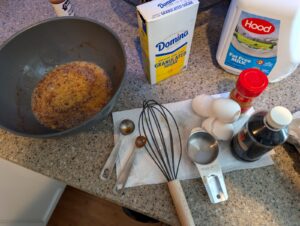
Crack your eggs into a large shallow dish — I use a 9×13 baking dish because it’s the right size for dipping full slices of bread. Add the milk, sugar, vanilla, cinnamon, nutmeg if you’re using it, and a pinch of salt.
Whisk everything together really well. You want the mixture completely combined with no streaks of egg white floating around. The sugar should be dissolved. This takes maybe 30 seconds of actual whisking.
Step 2: Preheat the Blackstone
This is important — don’t rush it. Turn your burners to low-medium and let the griddle preheat for about 10 minutes. You’re aiming for a surface temp around 300 to 325 degrees F. If you have a dual probe thermometer, use it. If you don’t, you can test it by flicking a few drops of water on the griddle — they should sizzle and evaporate within a couple seconds but not instantly vaporize.
French toast needs lower heat than you think. If you cook it too hot, you’ll get dark golden outsides with insides that are still eggy and raw. Not great.
Step 3: Butter the Griddle
Once your griddle is preheated, add butter. Add about 2 tablespoons to start, spreading it around with a spatula to coat the area where I’m laying down the first batch. The butter should melt and foam but not brown immediately. If it’s browning right away, your temp is too high — turn it down and wait a minute.
Step 4: Dip the Bread
Take a slice of bread and lay it in your egg mixture. Let it soak for about 5 seconds, then flip it and let the other side soak for another 5 seconds. You want the bread fully saturated but not falling apart. Thick bread can handle more soaking time than thin bread.
If you’re using really thick challah or brioche, you might go 8 to 10 seconds per side. If it’s regular Texas toast, stick with 5 seconds. You’ll figure out the timing after the first couple slices.
Step 5: Cook the French Toast
Place your soaked bread directly on the buttered griddle. Don’t crowd them — leave a little space between slices so you can get your spatula in there easily.
Cook for about 3 to 4 minutes on the first side. You’re looking for a deep golden brown color. The edges should look set, not wet and eggy.
Flip and cook another 3 to 4 minutes on the second side. If you’re not sure if they’re done, you can press gently on the center of a slice — it should feel firm, not squishy. The internal temp should hit around 160 degrees F if you want to check with a thermometer, but honestly, once both sides are golden brown and the middle feels set, you’re good.
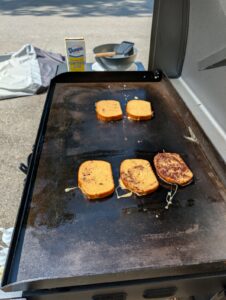
Step 6: Keep Warm and Repeat
If you’re cooking in batches, you can move finished slices to a cooler zone on the griddle to keep them warm, or transfer them to a baking sheet in a 200-degree oven. Add more butter to the griddle before each new batch.
Pro Tips for Perfect Blackstone French Toast
Here’s what makes the difference between okay French toast and the kind that makes people ask you for the recipe even though it’s just French toast.
Use Thick Bread
This isn’t optional. Regular sliced bread gets soggy and falls apart. You want bread that’s at least 3/4 inch thick, ideally closer to an inch. Challah is the top pick — rich, eggy, and enough structure to soak up custard without disintegrating. Brioche is a close second. Texas toast works in a pinch.
Day-Old Bread Is Better
Fresh bread is too soft and absorbs liquid unevenly. If your bread is a day or two old and slightly dried out, it actually soaks up the egg mixture better and holds together during cooking. If all you have is fresh bread, you can leave the slices out on the counter for an hour before you start, or put them in a 200-degree oven for 10 minutes to dry them out slightly.
Don’t Oversoak
The first time most people make this, they let the bread sit in the egg mixture for too long thinking more soaking equals more flavor. What you actually get is soggy bread that falls apart when you try to flip it. A quick dip on each side is enough — the bread will continue absorbing the custard as it sits waiting to go on the griddle.
Keep Your Temp Consistent
Run the Blackstone around 300 to 325 degrees F for French toast. This is lower than you’d use for bacon or smash burgers, and that’s on purpose. Lower heat gives the inside time to cook through and set while the outside caramelizes slowly. If you go too hot, you get dark exteriors and raw interiors.
Use Real Butter
Cooking spray and oil don’t cut it here — actual butter is the move. Butter adds flavor and helps with that golden-brown caramelization. Don’t skimp on it. Plan on at least 4 tablespoons for a full batch, sometimes more.
Add Butter Between Batches
After your first batch comes off, scrape any burnt bits off the griddle with your spatula, then add fresh butter before the next batch goes on. This keeps every piece tasting good instead of the last batch tasting like burnt butter residue.
Common Mistakes to Avoid
Cooking Too Hot
This is the big one. If your griddle is screaming hot, your French toast will be dark brown or even black on the outside before the egg mixture in the middle cooks through. You end up with a crispy shell and a wet, eggy center. Not good. Keep your temp around 300 to 325 degrees F. Use a thermometer if you have one.
Using Thin Bread
Regular sandwich bread is too thin and flimsy. It soaks up the egg mixture and turns into a soggy mess that tears when you flip it. Save yourself the frustration and get thick-cut bread.
Skipping the Preheat
If you throw bread on a cold or barely-warm griddle, it just sits there absorbing grease and cooking unevenly. Let your Blackstone preheat for a solid 10 minutes. You want the entire surface at a consistent temp before anything goes on it.
Not Whisking the Eggs Enough
If you don’t whisk your egg mixture thoroughly, you get streaks of egg white that don’t incorporate with the milk and sugar. Those streaks cook into weird white bits on your French toast. Just whisk it well for 30 seconds until everything looks uniform.
Flipping Too Early
I get it — you want to check if it’s browning properly. But if you flip too early, the bottom isn’t set yet and you’ll tear the bread or have it stick to the griddle. Wait the full 3 to 4 minutes. You’ll see the edges start to look dry and set. That’s your signal that it’s ready to flip.
Variations to Try
Once you’ve got the basic recipe down, there are about a million directions you can take it.
Stuffed French Toast
Spread cream cheese or Nutella between two slices of bread, press them together, then dip and cook like normal. You basically end up with a French toast sandwich situation that’s pretty incredible.
Cinnamon Roll French Toast
Use thick-sliced cinnamon bread instead of challah, add an extra teaspoon of cinnamon to your egg mixture, and drizzle with cream cheese glaze after cooking. This is aggressively sweet but in a good way if that’s what you’re going for.
Banana Foster French Toast
After your French toast is done, push it to a cooler zone. In the hot zone, melt butter, add sliced bananas, brown sugar, and a splash of rum if you want. Let it caramelize for a couple minutes, then spoon it over the French toast. Fancy and really not that hard.
Savory French Toast
Skip the sugar, vanilla, and cinnamon. Just do eggs, milk, salt, and pepper. Cook the same way, then top with bacon, cheese, and a fried egg. It’s weird but it works.
Frequently Asked Questions
What temperature should I cook French toast on a Blackstone?
Aim for 300 to 325 degrees F. This is lower than most other griddle cooking because French toast needs time for the egg mixture to cook through without burning the outside. If you don’t have a thermometer, set your burners to low-medium and let the griddle preheat for about 10 minutes.
Can I make French toast ahead of time on the Blackstone?
Yeah, it reheats pretty well. Cook your French toast, let it cool completely, then store it in the fridge in an airtight container for up to 3 days. Reheat it in a toaster oven or back on the Blackstone at low heat for a couple minutes per side. It won’t be quite as good as fresh, but it’s still solid.
What’s the best bread for Blackstone French toast?
Challah is the top choice — it’s rich, slightly sweet, and has great structure. Brioche is a close second. Texas toast works if that’s what you’ve got. Just make sure whatever you use is thick-cut, at least 3/4 inch. Regular sandwich bread is too thin and falls apart.
How do I keep French toast warm while cooking multiple batches?
If your griddle has multiple zones, move finished French toast to a cooler zone to keep it warm while you cook more. Or transfer it to a baking sheet in a 200-degree oven. Don’t stack the slices or they’ll steam and get soggy — lay them in a single layer.
Why is my French toast soggy in the middle?
Usually this means your griddle is too hot. The outside cooks and browns before the inside has time to set. Lower your temp and cook slower. It should take about 3 to 4 minutes per side at 300 to 325 degrees F.
Can I use almond milk or oat milk instead of regular milk?
Yeah, it works. The texture might be slightly different — not quite as rich — but it’ll still cook up fine. I’d stick with whole milk if you can, but if you’re cooking for someone who can’t have dairy, the non-dairy milks are a decent substitute.
Do I need to oil the griddle or just use butter?
Just butter. It adds way more flavor than oil or cooking spray, and it helps with that golden-brown caramelization. You’ll use more butter than you think — probably 4 to 6 tablespoons for a full batch — but it’s worth it.
How many slices can I fit on a 36-inch Blackstone?
Depends on your bread size, but I usually get 12 to 16 slices on mine at once. That’s enough to feed a group without doing a million batches. If you’re using really big slices of challah or sourdough, you might fit fewer.
Serving Suggestions
French toast is pretty great on its own, but here’s how I usually serve it:
The classic move is maple syrup and powdered sugar. Can’t go wrong. Add some fresh berries if you want to pretend it’s healthy.
If you want to go bigger, add a side of bacon or breakfast sausage. Cook those on the griddle first, then push them to a warm zone while you do the French toast. Everything stays hot and you’re only using one cooking surface.
Whipped cream is always a good call. Fresh whipped cream if you’re feeling ambitious, the canned stuff if you’re being realistic about morning effort levels.
A pat of butter on top of the stack sounds redundant but it’s actually great. The butter melts down into the layers and adds richness.
If you’re doing brunch and want it to look fancy, add some sliced strawberries, a drizzle of syrup, a dusting of powdered sugar, and a mint leaf. Takes 30 seconds and suddenly it looks like you tried.
Cleanup Tips
Let the griddle cool down to warm but not hot. Scrape off any stuck bits with your long spatula and wipe it down with a paper towel. If there’s butter residue, use a little water and scrape again until the surface is clean.
Once it’s clean, do a thin layer of oil while it’s still warm to keep the seasoning intact. This literally takes two minutes and keeps your griddle in good shape.
Final Thoughts
Honestly, the griddle is hard to beat for French toast. The even heat, the huge cooking surface, the ability to make enough for a crowd without spending your entire morning at the stove — it all just works better on the Blackstone.
This is the kind of thing that earns a spot in the weekend rotation. It’s easy enough that I’m not stressed about it, but it feels special enough that it doesn’t seem like I just phoned in breakfast. The win is nobody waits 20 minutes between the first serving and the last — everyone eats hot, at the same time.
Start with the basic recipe here, get your temps dialed in, and you’ll have it figured out after one or two attempts. Then you can start messing around with the toppings and variations. But honestly, even the straightforward version with just syrup and butter is good enough that you don’t need to overcomplicate it.
Make a big batch, pour some coffee, and enjoy the fact that outdoor breakfast cooking is way more fun than being stuck inside at the stove.